Ateneo Field School Advances Nature-Based Solutions and Biodiversity Planning
22 Sep 2026





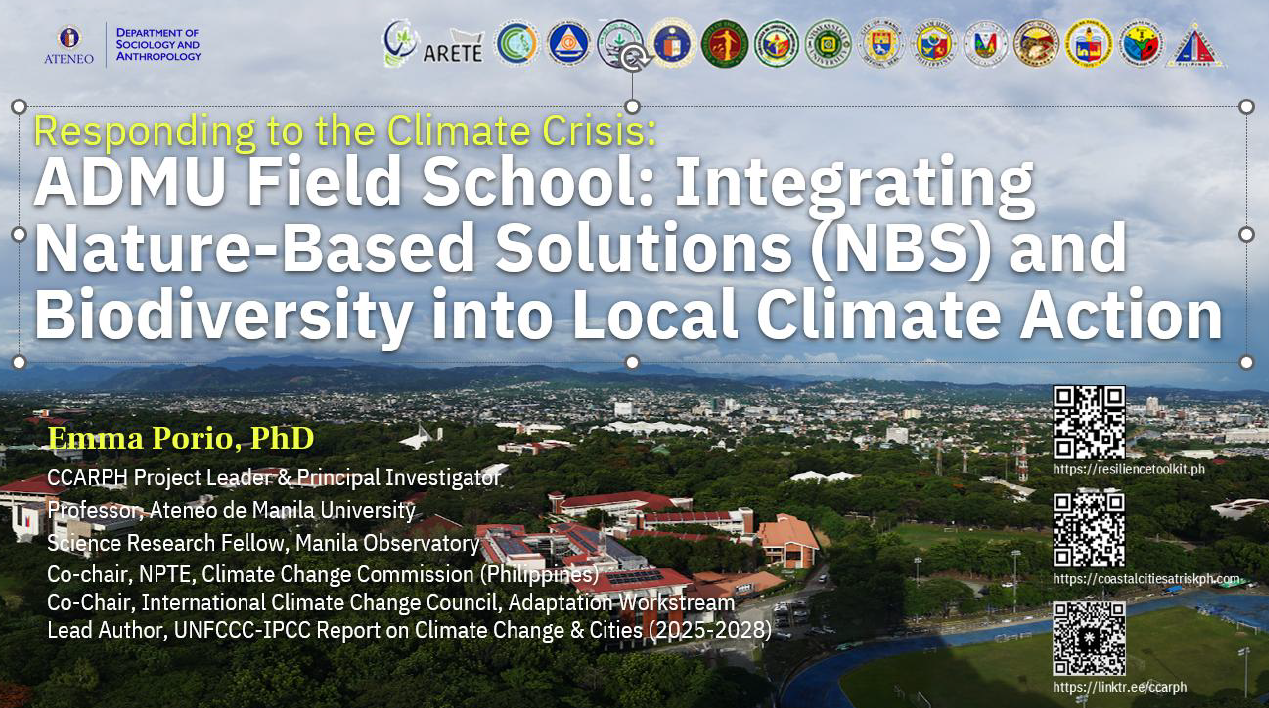
Ateneo de Manila University continues to strengthen its commitment to sustainability and climate resilience through its Field School for Integrating Nature-Based Solutions (NbS) and Biodiversity into Local Climate Action, an initiative that equips students and communities with practical approaches to biodiversity conservation and climate adaptation. Led by Professor Emma Porio, the program integrates research, fieldwork, and community engagement to develop locally driven strategies that address pressing environmental challenges.
The field school highlights the importance of biodiversity as a cornerstone of resilient urban development. Through the framework of the Local Biodiversity Strategy and Action Plan (LBSAP), participants examine how cities and communities can conserve ecosystems while responding to the impacts of climate change, rapid urbanization, and disaster risks. The program emphasizes evidence-based planning and collaboration among universities, local governments, civil society organizations, and community stakeholders.
The Loyola Heights campus serves as one of the program's primary learning sites, showcasing Ateneo's existing sustainability initiatives and nature-based infrastructure. These include solar rooftop systems, rainwater harvesting facilities, decentralized wastewater treatment systems, rainwater detention ponds, permeable campus walkways, and pollinator pockets that collectively improve water management, reduce flood risks, and promote biodiversity across the campus.
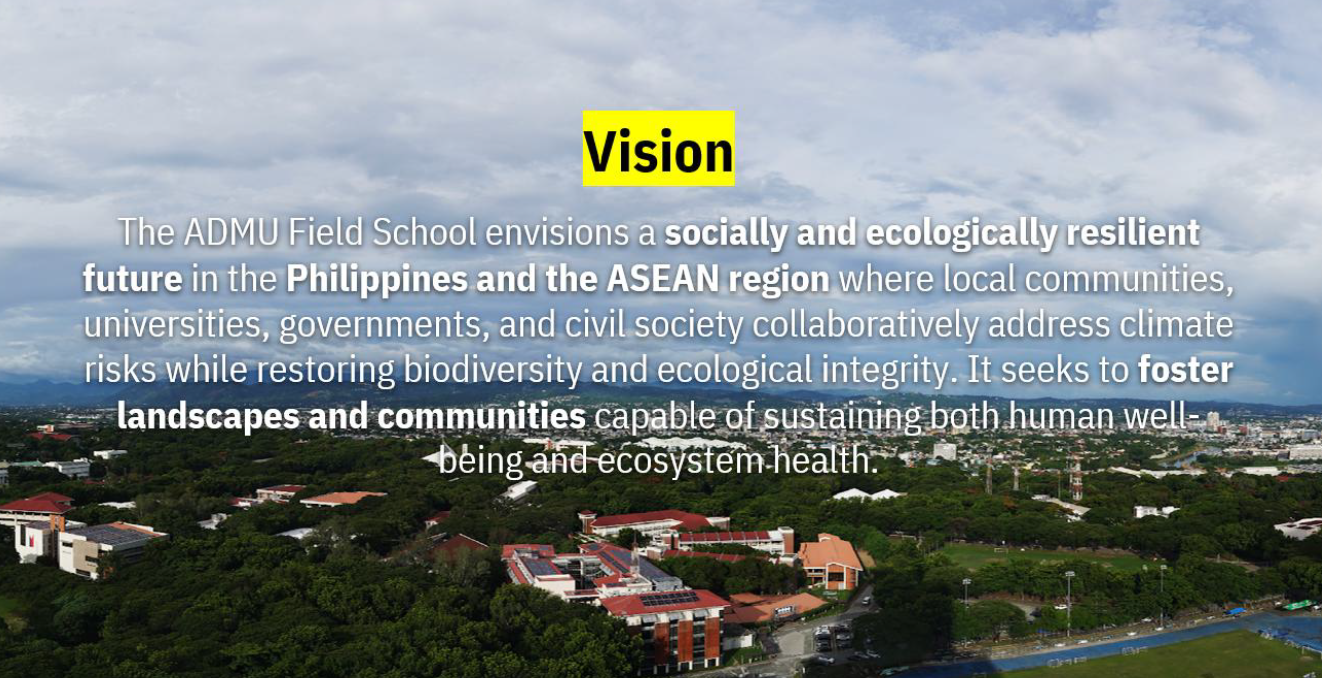
The field school also highlights Ateneo's ongoing biodiversity conservation efforts through its Urban Forest and Wildlife Sanctuary, Campus Tree Inventory, The Ateneo Wild citizen-science initiative, and the University's Biodiversity Action Plan. Together, these initiatives document native flora and fauna, protect forested areas through campus planning, and encourage the broader university community to participate in biodiversity monitoring and stewardship.
Beyond the university, participants work with surrounding communities, including Barangay Payatas in Quezon City, to develop locally appropriate nature-based solutions for flooding, landslides, extreme heat, and other climate-related hazards. Proposed interventions include bioswales, rain gardens, riparian restoration, tree planting, vegetated corridors, rainwater harvesting, and community-led greening initiatives that enhance ecosystem services while improving public safety and quality of life.
Recent News
You may also like these articles

Growing with purpose: How Mekeni Food Corporation turns adversity into shared value
From a small backyard operation in Porac, Pampanga, to an internationally recognized food brand exporting to 25 countries, Mekeni Food Corporation's journey demonstrates how businesses

Three Ateneo-incubated startups secure DOST-PCIEERD’s startup grant fund
Last 9 November, during the opening day of Philippine Startup Week 2026, Soolok Properties Inc, Pili AdheSeal Inc, and Saltric Power (PDG Engineering Services), three

Ateneo de Manila Grade 2 students are the little Earth helpers
It was a great day for saving the world when Ateneo Institute of Sustainability (AIS) came to Ateneo Grade School to give a session on

JGSOM representatives complete green finance training in Poland, sets sights on 2027 micro-credential launch
Representatives of Ateneo de Manila University's John Gokongwei School of Management (JGSOM) completed the second phase of their Erasmus+ Green Finance international mobility activities at

JGSOM Representatives Participate in Green Finance Training at the University of Twente
Enschede, Netherlands | October 15–16, 2026 Representatives of Ateneo de Manila University's John Gokongwei School of Management (JGSOM) participated in a specialized Green Finance training

Professor Emeritus Dr Emma Porio highlights climate resilience and biodiversity at international conferences
Emma E Porio, PhD, Professor Emeritus of Ateneo de Manila University and Principal Investigator of Ateneo's Manila Observatory Center for Climate Resilience and Public Health