PH peace gains offer lessons for ASEAN amid evolving security challenges
27 Aug 2026



QUEZON CITY – As Southeast Asia confronts increasingly complex threats to peace and security, Philippine peace practitioners and international security experts highlighted the value of community-driven peacebuilding, inclusive governance, and locally grounded solutions during the Association of Southeast Asian Nations–Institute of Peace and Reconciliation (ASEAN-IPR) University Tour 2026, held on 27 August at the Ateneo de Manila University.
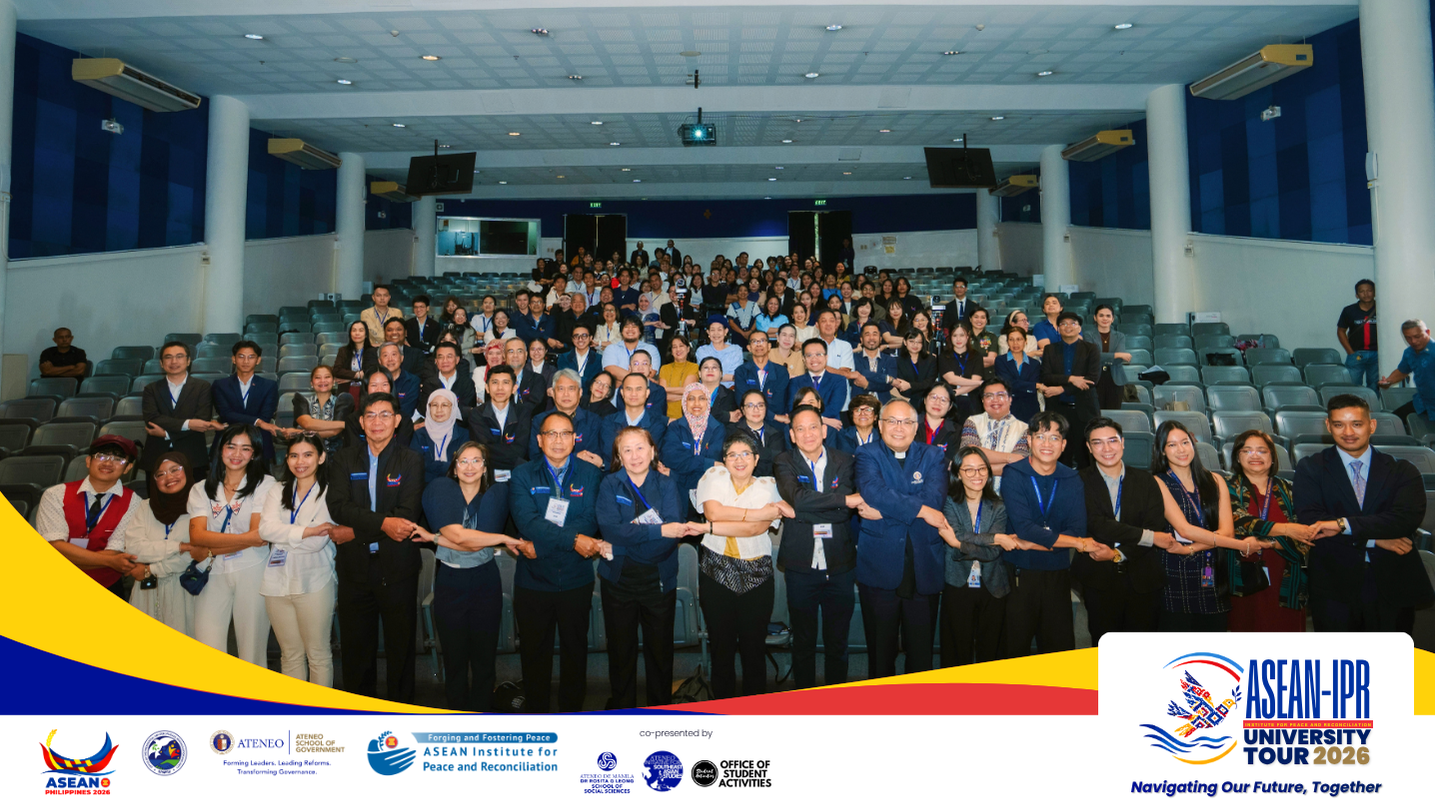
More than 180 participants, including diplomats from the 11 ASEAN Member States, peace and security practitioners, local government officials, academics, and students, attended the University Tour, which examined how experiences from the Philippines can contribute to broader regional approaches to conflict prevention, reconciliation, and peacebuilding.
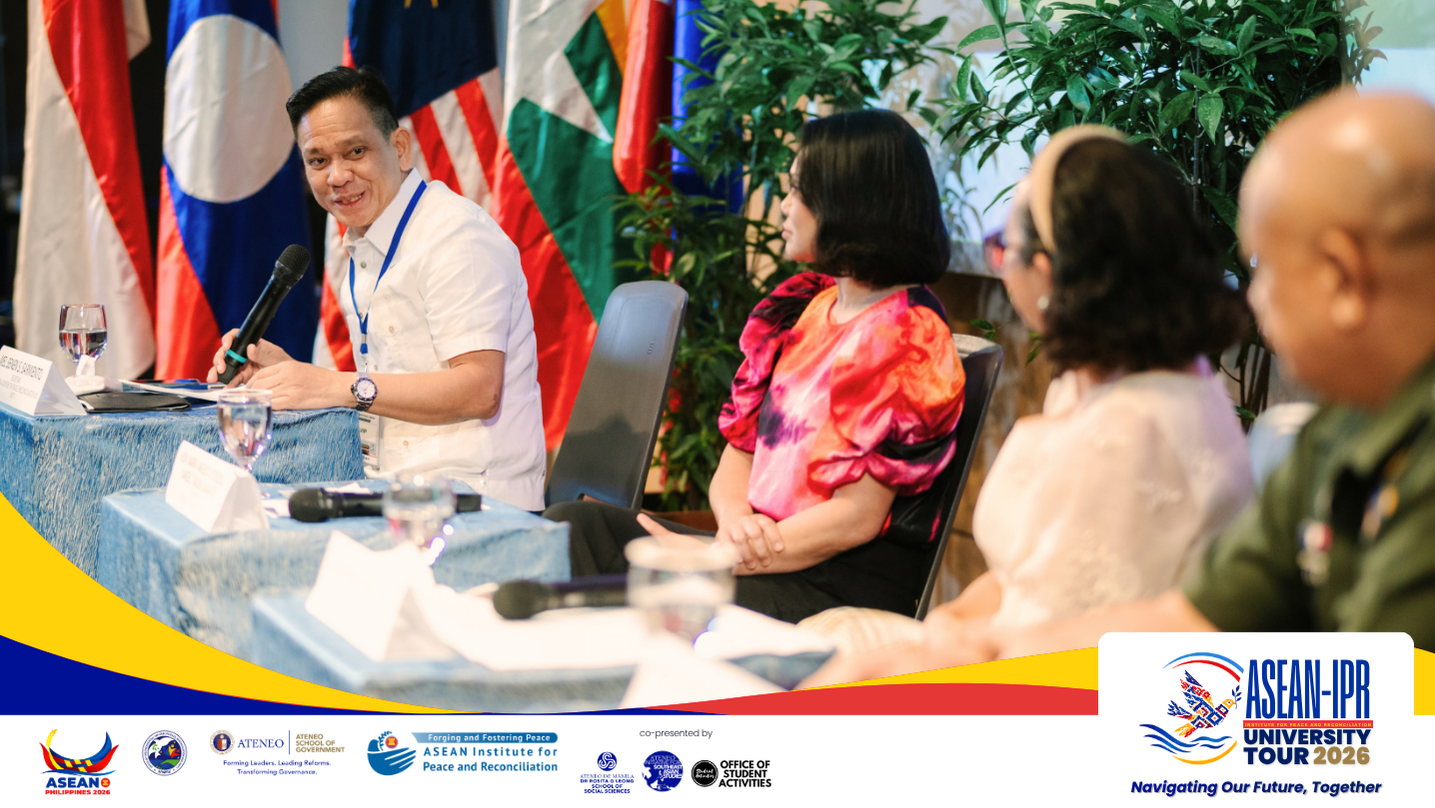
Presidential Adviser on Peace, Reconciliation and Unity Secretary Mel Senen Sarmiento emphasized that experiences that have worked in one community can provide practical lessons for others, provided they are adapted to local realities.
“As I always tell our students here at the Ateneo: copying in school is a mortal sin. But in governance, copying best practices, especially programs that have proven effective, is not only allowed, it should be encouraged,” Sarmiento said.
He stressed that effective peacebuilding requires more than replicating programs. “We learn from what works, understand why it works, adapt it to our own circumstances, and improve upon it,” he added.
Moreover, Secretary Sarmiento pointed out that this principle extends beyond national borders, as ASEAN Member States can learn from one another’s peacebuilding experiences while developing approaches suited to their own histories, institutions, and communities.
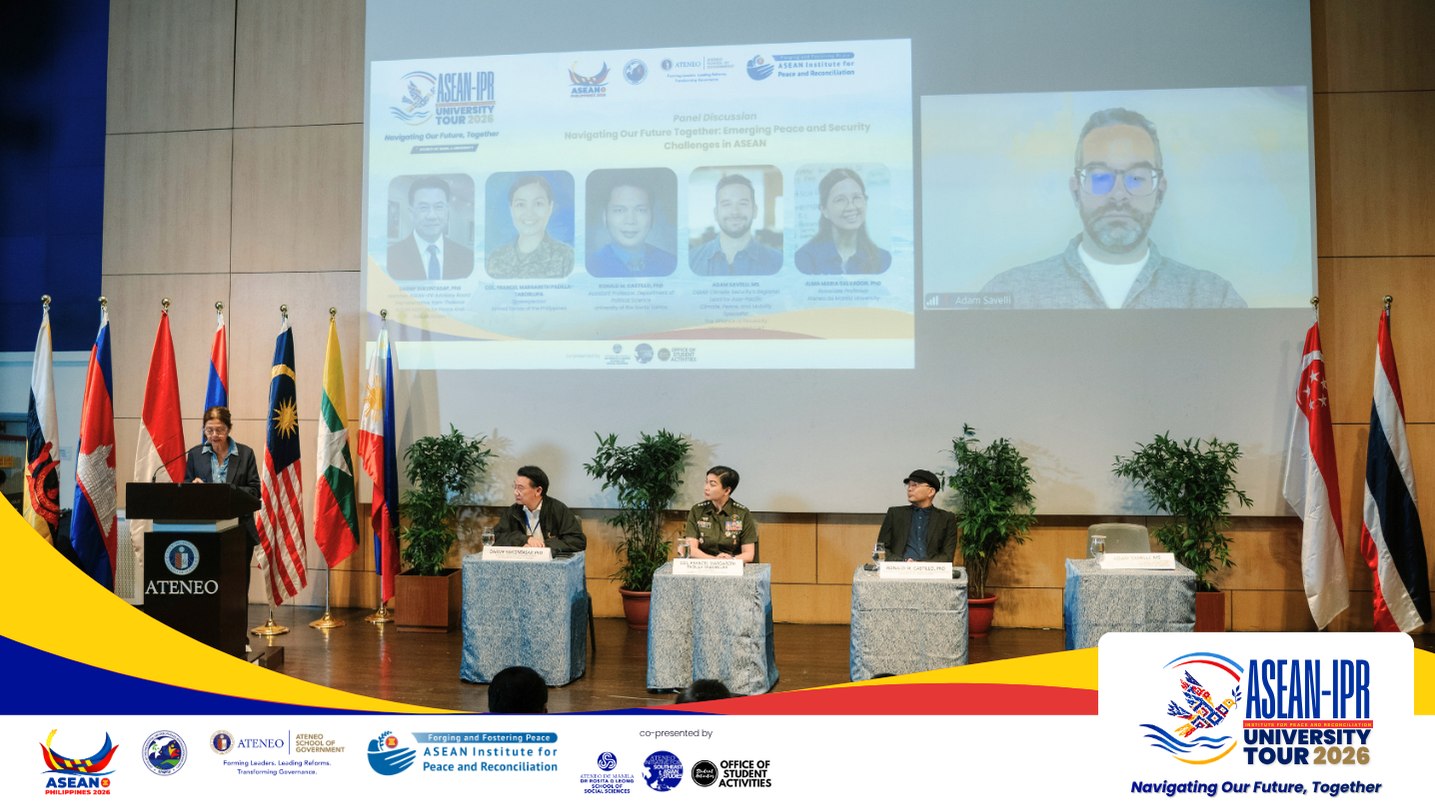
Organized by the Office of the Presidential Adviser on Peace, Reconciliation and Unity (OPAPRU) and the ASEAN Institute for Peace and Reconciliation (ASEAN-IPR), in partnership with the Ateneo School of Government (ASOG), the high-level event was co-presented by the Dr. Rosita G. Leong School of Social Sciences, the Ateneo Initiative for Southeast Asian Studies, and the Office of Student Activities of Ateneo de Manila University.
Sustaining peace means regional trust and cooperation
The discussions also reflected the importance of sustaining peace through trust and cooperation among ASEAN Member States. In her welcome remarks, ASOG Dean Dr. Jennifer S. Oreta emphasized that peace is a continuing process requiring institutions, dialogue, and shared responsibility.
“Peace is not simply the absence of conflict. It is a continuing process that requires dialogue, trust, institutions, and a shared commitment to cooperation,” Oreta said.
She noted that universities have a particular responsibility in this work as spaces where ideas are examined, assumptions are challenged, and future leaders are prepared to engage with complex regional issues.
“The future of ASEAN will depend not only on how we manage our differences, but on how effectively we build the trust and cooperation necessary to face our shared challenges,” Oreta said.
A key discussion focused on the Philippine experience of localized peacebuilding and community-based conflict resolution, with speakers sharing how local governments, communities, civil society, security institutions, and other stakeholders can work together to address the conditions that allow conflict to persist. Agusan del Norte Governor Maria Angelica Rosedell “Angel” Amante, Palapag, Northern Samar Mayor Florence “Fawa” A. Batula, and Armed Forces of the Philippines Assistant Deputy Chief of Staff for Civil-Military Operations BGen. Victor M. Llapitan, PA, shared perspectives on local development, community engagement, governance, and the transition from conflict-oriented approaches toward sustained peace.
The discussions underscored that peacebuilding does not end with the signing of peace agreements. They noted that it must be sustained through institutions and communities that can translate peace dividends into better governance, livelihood opportunities, basic services, and meaningful participation.
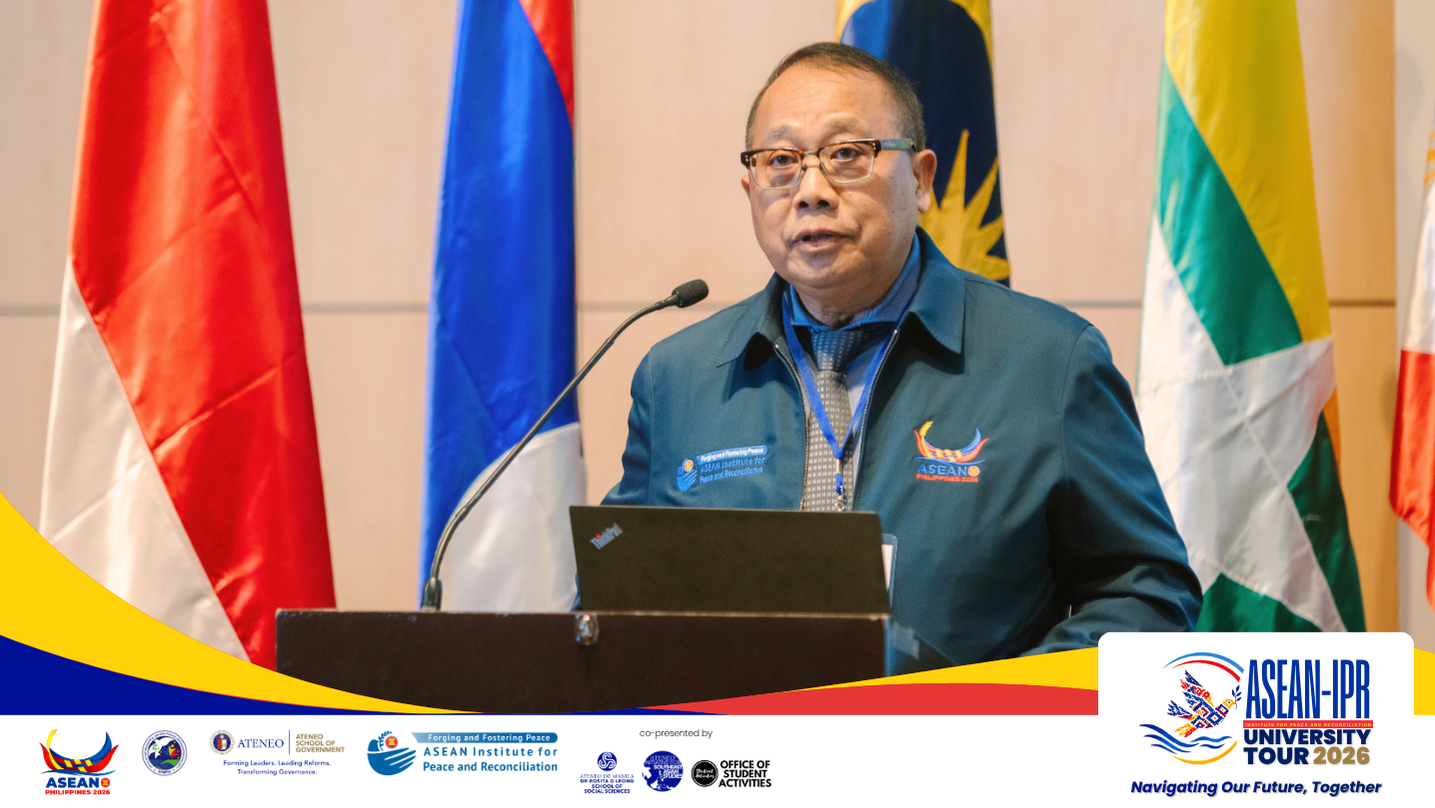
The broader regional discussion examined emerging challenges, including violent extremism, cybersecurity threats, disinformation, maritime concerns, climate-related risks, and social polarization. ASEAN-IPR Executive Director I Gusti Agung Wesaka Puja called on ASEAN Member States to recognize that these challenges increasingly intersect and require cooperation across governments, communities, universities, think tanks, and other institutions.
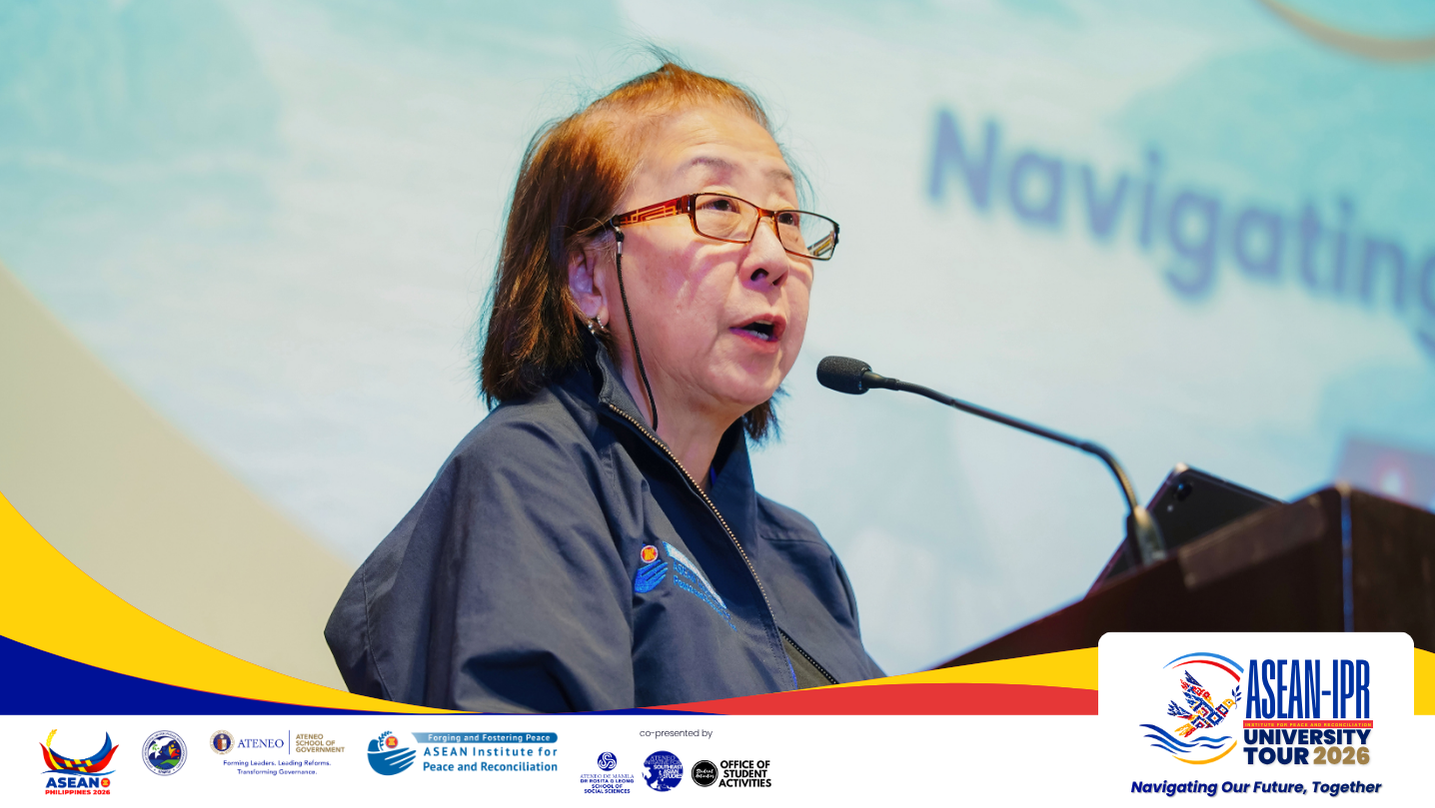
Meanwhile, ASEAN-IPR Governing Council Chair and Philippine Ambassador to ASEAN Evangeline T. Ong Jimenez-Ducrocq highlighted the Institute’s role in strengthening regional cooperation through research, capacity building, and dialogue. The University Tour also featured a roundtable on ASEAN–Republic of Korea think tank cooperation, which explored how universities and research institutions can contribute to conflict prevention, knowledge exchange, and peacebuilding.
Held in celebration of ASEAN Month and as part of the ASOG@25 Anniversary Celebration, the University Tour reflected the shared commitment of the Ateneo community and its partners to forming ethical, transformative, and globally engaged public leaders. It also resonated with the Ateneo de Manila University’s Academic Year 2026–2027 mission theme, “Cultivating Peace and Building Communion,” by fostering dialogue, solidarity, and mutual understanding across nations and communities.
Recent News
You may also like these articles

APC hosts brownbag session on Southern Philippines maritime security
On 19 October 2026, the Ateneo School of Government (ASOG), through its research and policy unit, the Ateneo Policy Center (APC), and in partnership with
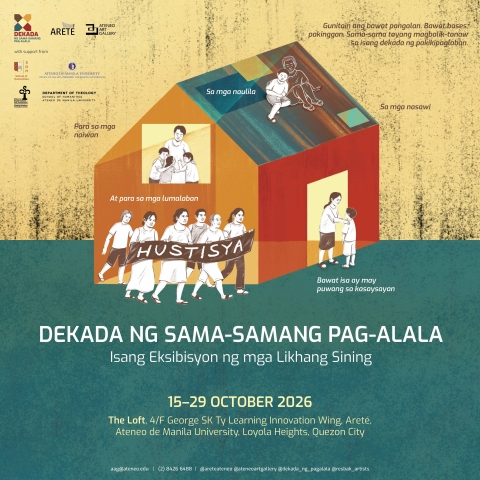
Dekada: Remembering and Commemorating the Tenth Year of the War on Drugs
Dekada ng Sama-samang Pag-alala: Isang Eksibisyon ng mga Likhang Sining holds its second iteration at The Loft, 4/F George S.K. Ty Innovation Wing, Areté, Ateneo

Migrante (AsiaVisions, 1987) Film Screening and Talkback on October 8
As part of the Philippine leg of the Migrant Workers Film Festival 2026, the Ateneo Art Gallery, in collaboration with the Concerned Artists of the

Eight outstanding individuals to be honored at the 2026 Traditional University Awards
Ateneo de Manila University will recognize eight individuals for its 2026 Traditional University Awards. The Traditional University Awards is the University's recognition for individuals and

Ateneo Press, ADMU Journals bring great reads to MIBF 2026
Looking for your next great read? Ateneo de Manila University is bringing a fresh lineup of books, authors, journals, and literary offerings to the 2026

Ateneo hosts inaugural Kyiv-Manila Strategic Dialogues
Ateneo de Manila University hosted the inaugural Kyiv-Manila Strategic Dialogues on 24 July 2026 at the Betty Dy Go Auditorium of the Ateneo Rockwell Campus