Neurodiversity in the classroom: Fostering inclusive learning through faculty collaboration
24 Aug 2026




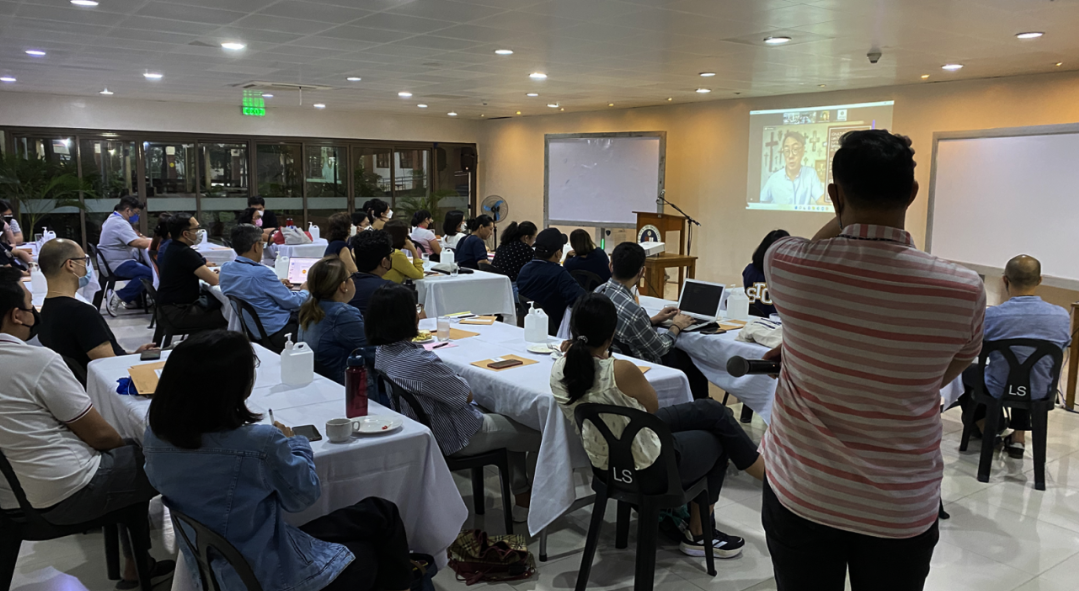
Recognizing the growing diversity of student learning needs, the Office of the Vice President for Higher Education (OVPHE) and the then School of Social Sciences – now the Dr Rosita G Leong School of Social Sciences (RGLSOSS) – convened the first SOSS Learning Circle session on "Neurodiversity in our Classes: Understanding and Accommodating Students with Special Needs" on 7 November 2024 at Escaler Hall, SEC Building.
The learning session brought together faculty members to deepen their understanding of neurodiversity and its implications for teaching and learning. Designed as a collaborative space for dialogue and shared learning, the session explored how educators can cultivate classrooms that are both inclusive and responsive to students with diverse cognitive, developmental, and learning profiles.
Facilitated by Dr Ma. Tonirose D Mactal, Managing Director of the Ateneo Center for Organization Research and Development (CORD); Dr Arsenio Sze Alianan, Executive Director of the Ateneo Bulatao Center; and Mr Gary Aguedo G Faustino, Director of the Office of Guidance and Counseling for Higher Education, the session examined key issues surrounding neurodiversity in higher education. Discussions highlighted the distinctions between viewing neurodiversity through the lenses of diversity and deficit, the realities of data privacy when students choose to disclose, or not disclose, their special needs, and practical behavioral and academic accommodations that faculty can implement while also safeguarding their own wellbeing.
More than introducing concepts, the learning circle created an opportunity for faculty members to exchange experiences and reflect on the realities of teaching increasingly diverse classrooms. Through these conversations, participants gained a deeper appreciation of the importance of empathy, evidence-based accommodations, and institutional support in fostering equitable learning environments.
The significance of the November 2024 session extended well beyond the event itself. According to members of the Teaching for Inclusion (TFI) team, the discussions and faculty engagement during the learning circle inspired the integration of a Neurodiversity in the Classroom segment into the Teaching for Inclusion (TFI) Orientation for New and Returning Faculty beginning in January 2025.
The collaboration emerged through a timely alignment of initiatives between RGLSOSS and the TFI team. As RGLSOSS coordinated the learning circle under the leadership of then Dean Dr Maria Lourdes "Bopeep" Saloma-Akpedonu, TFI was simultaneously exploring opportunities to recognize the session as part of its faculty learning requirements. Following the event, conversations among organizers and resource speakers affirmed the value of making neurodiversity a permanent component of faculty orientation.
The experience underscored two important realities for educators: first, that faculty members are often the first to encounter manifestations of neurodiversity in their classrooms; and second, that while instructors play a vital role in responding with sensitivity and care, they are supported by institutional systems and offices equipped to assist both students and faculty when specialized interventions are needed.
The inaugural TFI orientation session on neurodiversity in January 2025, facilitated by Dr Mactal and Mr Faustino, generated meaningful engagement from new and returning faculty. Participants raised thoughtful questions about the evolving challenges of today's classrooms while expressing appreciation for the practical guidance on navigating neurodiverse learning environments. The positive response reinforced the need for sustained conversations on inclusive pedagogy across the University.
Today, the neurodiversity segment remains an integral part of the TFI Orientation, reflecting the continuing commitment of faculty leaders, resource persons, and program coordinators who have worked together to strengthen Ateneo's culture of inclusive teaching. What began as a learning circle has since evolved into a lasting institutional practice, one that equips educators with greater awareness, compassion, and confidence in supporting every learner.
Through initiatives such as the SOSS Learning Circle, Ateneo continues to affirm its commitment to creating learning spaces where diversity is understood as a strength and where faculty are empowered to respond thoughtfully to the varied needs of the students they serve.
Recent News
You may also like these articles

Cultures of care: Mental health and pathways to well-being in Southeast Asia
The Ateneo Initiative for Southeast Asian Studies (AISEAS) and the Department of Psychology, both under the Dr Rosita G Leong School of Social Sciences (RGLSOSS)

Disiplinang walang palo: Challenging common Filipino parenting misbeliefs
More frequent spanking is linked to greater anxiety and aggression in children over time, according to international research that includes Filipino families presented by Psychology

[AGS] Mental Health Week
Brave Heart, Strong Minds: Healing, Growing and Blossoming Together The AGS community joins the celebration of Mental Health Week with the theme “Brave Heart, Strong

Caught between adolescence and parenthood: Pinoy teen parents tell their stories through photographs
“I’m a student, a worker, and a mother. Sometimes, I feel like I have three bodies.” For this senior high school student, motherhood meant learning

2026 Leong Institute Fellows Forum highlights Philippine and Asian perspectives on global issues
Six Ricardo Leong Grants for SY 2026-2027 were awarded during the 2026 Leong Institute Fellows Forum (LIFF), held on 28 September 2026 at the Leong

Ateneo posts 100% passing rate, remains top performing school in Sept 2026 Psychologist and Psychometrician Licensure Exam
Warmest congratulations to all our newly licensed psychologists and psychometricians! 🎉 We are happy to announce that the Ateneo de Manila University has garnered a