MathEd Eagles navigate math assessments in 1st RFAME
24 Aug 2026 | Christian Galope (MS Math Education)



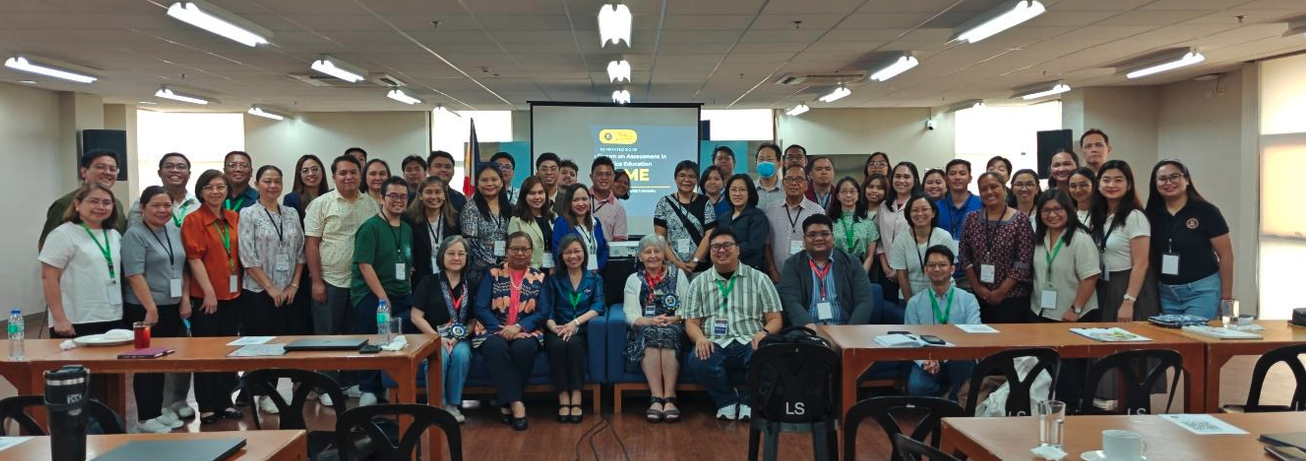
The first ever Research Forum on Assessment in Mathematics Education (RFAME) was held on 19 April 2026, at Ateneo de Manila University. Organized by the Special Interest Group 05 (Assessment in Mathematics Education) of the Philippine Council of Mathematics Teacher Educators (MATHTED), Inc. in collaboration with the Ateneo Didactics of Mathematics Research Group (DiMRG), the forum brought togethers 60 mathematics educators, researchers, graduate students, and teacher educators to examine pressing issues in mathematics assessment under the theme “Navigating Complexities in Mathematics Assessments.”
The forum responded to growing concerns about mathematics assessments, particularly in light of results from international large-scale assessments such as PISA and TIMSS. It aimed to bridge theory, research, and classroom practice by creating a space for dialogue on how assessments can better support teaching and learning.
The forum opened with welcome remarks from MATHTED President Dr Catherine P Vistro-Yu who emphasized the importance of advancing research and collaboration to strengthen the assessment of mathematics learning in the Philippines.
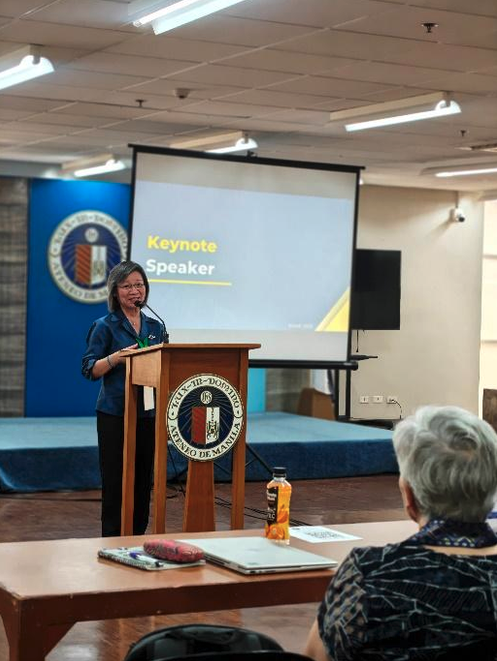
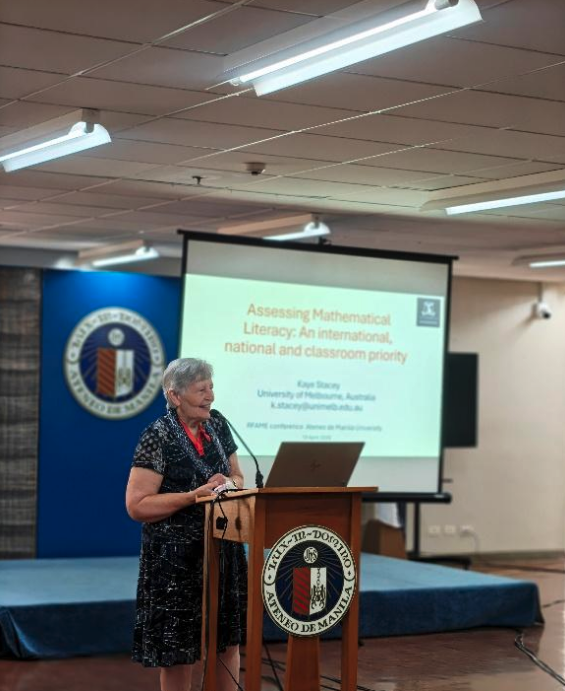
The keynote address, delivered by Professor Emeritus Kaye Stacey of the University of Melbourne, former Chair of the PISA 2012 Mathematics Expert Group, framed assessment around the concept of mathematical literacy. She emphasized that mathematical literacy goes beyond procedural knowledge, involving the ability to formulate, employ, and interpret mathematics in real-world contexts. Drawing from the PISA framework, Professor Stacey highlighted that assessments should capture how learners apply mathematics in meaningful situations, rather than simply measure isolated skills. She also demonstrated how PISA tasks and ideas can be adapted for classroom assessment and suggested richer assessment formats that better develop and monitor students’ mathematical literacy.
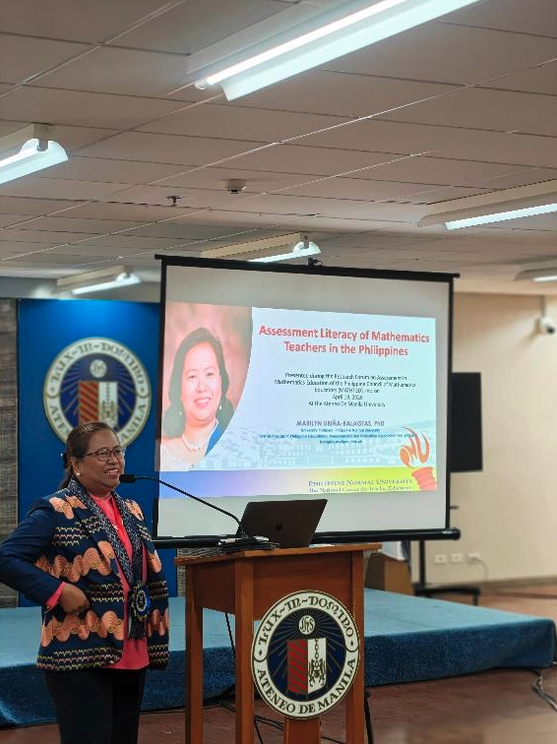
The plenary sessions provided complementary perspectives on assessments at both classroom and system levels. In the first plenary session, Dr Marilyn U Balagtas, Vice President for Academics at the Philippine Normal University, discussed the assessment literacy of mathematics teachers in the Philippines. She defined assessment literacy as the capacity to design, administer, interpret, and use assessment to improve student learning. Findings from a nationwide study revealed that while teachers are generally proficient in communicating assessment results, many face challenges in selecting and designing appropriate assessment methods. These findings highlight the need for targeted professional development to strengthen teacher competencies in assessment.
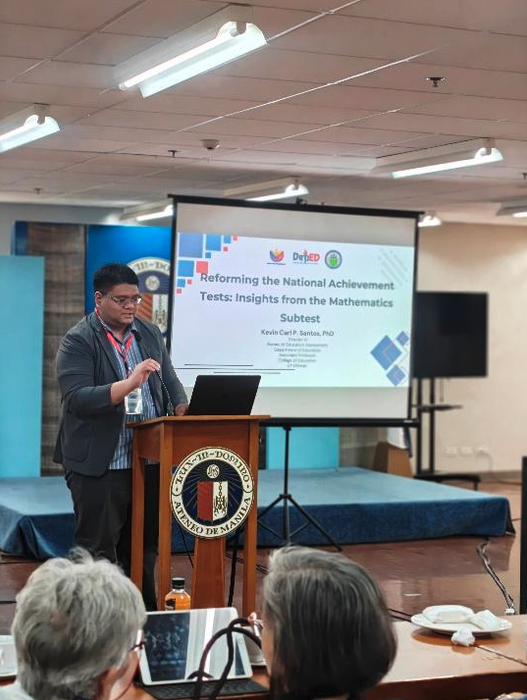
In the second plenary session, Dr Kevin Carl P Santos, Director IV of the Bureau of Education Assessment of the Department of Education and Associate Professor at the University of the Philippines – Diliman, examined national assessment systems, particularly the National Achievement Test (NAT). He emphasized the importance of aligning assessments with curriculum standards and 21st-century competencies, and of using assessment data not merely for reporting, but for improving teaching, curriculum, and policy. His discussion underscored the role of national assessments as both evaluative tools and drivers of educational reform.
The breakout sessions, organized into four research groups, provided insights into the realities of classroom assessment. The sessions were led by members of MATHTED SIG 05: Dr Eva M Rodriguez for Research Group 1: Alignment of Learning Outcomes with Assessment tasks in Instructional Materials (but had to be substituted by Ms Mary Joy P Escalona, Ateneo MS Mathematics Education student), Ms Kimberly May M Vallesteros for Research Group 2: Learning Taxonomies in Constructing Assessment Tasks, Mr Rommel John L. Aballe for Research Group 3: Multidimensional Facets of Assessment, and Ms Ma. Kristina G Ignacio for Research Group 4: Validity Evidence in Assessments. Across the discussions, participants identified recurring issues such as misalignment among curriculum, instruction, and assessment, the overemphasis on lower-order thinking skills, and the superficial use of learning taxonomies. Other issues that surfaced were the multidimensional nature of assessment as shaped by cognitive, affective, and contextual factors, as well as the influence of teacher training, beliefs, and classroom conditions.
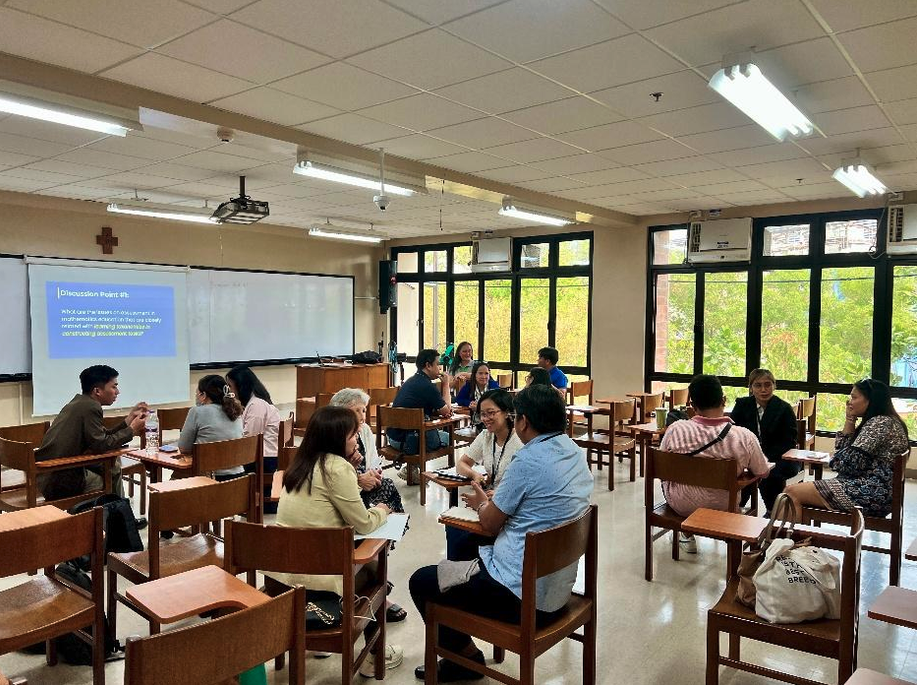
Despite these challenges, the breakout sessions generated several directions for future research, including strengthening teacher assessment literacy, improving alignment across curriculum and assessment, exploring the use of artificial intelligence in assessment, and developing assessment frameworks responsive to the Philippine context.
The panel discussion synthesized these perspectives by addressing how the Philippines can navigate the complexities of mathematics assessment. The panel featured Professor Emeritus Kaye Stacey of the University of Melbourne; Dr Kevin Carl P Santos, Director IV of the Bureau of Education Assessment, Department of Education and Associate Professor at the University of the Philippines Diliman; and Dr Minie Rose C Lapinid, Assistant Dean for Research and Graduate Studies of the Br Andrew Gonzalez College of Education at De La Salle University and Vice President of MATHTED. The panel discussion was moderated by Dr Hadji C Alegre of the Technological University of the Philippines and SIG 05 Co-Chair, and Dr Romina Ann S Yap of Ateneo de Manila University and Head of the DiMRG.
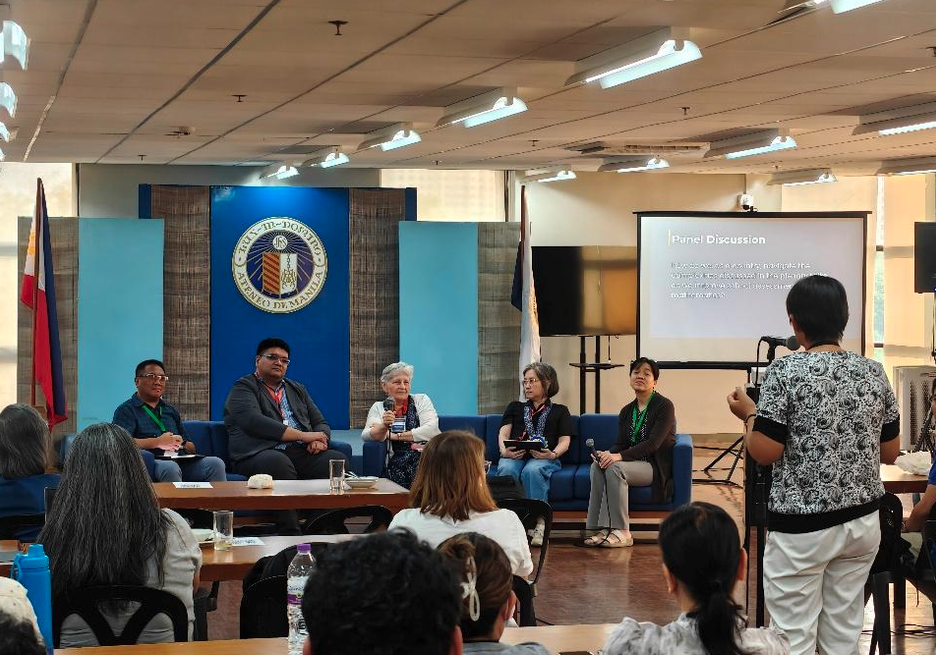
During the panel discussion, the panelists shared distinct responses to the question: How do we, as a country, navigate the complexities discussed in the plenary talks as we improve school assessments in mathematics?
Professor Stacey emphasized that improving mathematics assessment requires recognizing that assessment literacy differs across classroom, school, division, regional, and national levels. She noted that assessment alone does not automatically improve learning and stressed that each stakeholder has a distinct role in strengthening assessment practices. She also highlighted how countries can use assessment results to inform improvements in teaching and learning.
Dr Lapinid highlighted the role of teacher education institutions and professional organizations such as MATHTED in supporting teachers through research, professional development, and assessment resources. She encouraged the gradual integration of authentic, real-life mathematical contexts into classroom instruction while empowering teachers with the resources needed to strengthen assessment practices.
Dr Santos discussed the Department of Education's initiatives to strengthen assessment literacy among teachers and school leaders through greater appreciation of international assessment frameworks. He emphasized that assessment items should be intentionally designed to measure the intended competencies and highlighted the importance of using assessment results to improve teaching and learning. He also underscored the need to support marginalized and last-mile schools through better access to educational resources and data-informed interventions.
The entire discussion underscored the need for assessment to be meaningful and relevant to students’ lives, enabling them to use mathematics in real-world contexts. Issues of equity were likewise raised, particularly in relation to marginalized and last-mile schools, emphasizing the importance of access to resources and data-informed interventions.
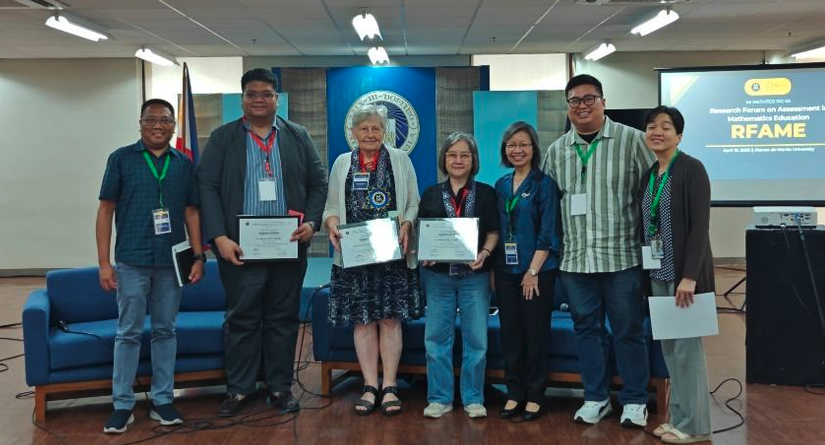
Taken together, the keynote, plenary sessions, breakout discussions, and panel synthesis highlighted a gap between the ideals of assessment and its current implementation. While global frameworks promote contextualized and meaningful assessment, classroom practices and national systems continue to face challenges related to alignment, capacity, and resources.
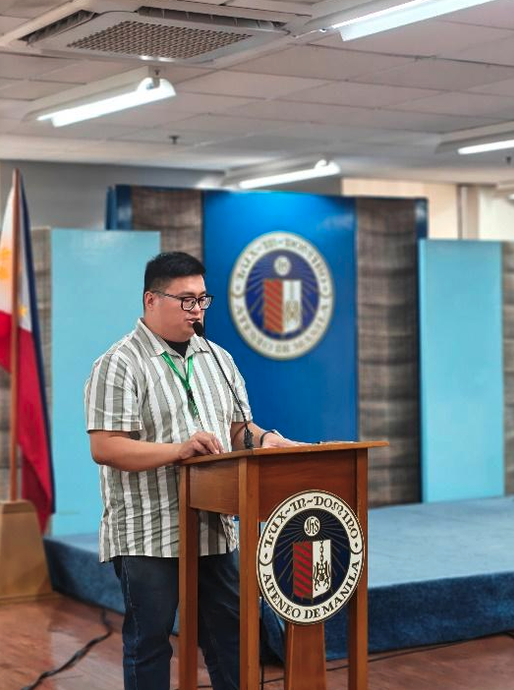
The forum concluded with closing remarks from Forum Chair Dr Mark Lester B Garcia, who thanked the participants for joining the forum and acknowledged the efforts of the organizing committee members and MATHTED board members for their support in SIG 05’s activity. He also encouraged participants to continue the conversations initiated during RFAME and to strengthen research and collaboration in the field of assessment in mathematics education.
As the inaugural event of MATHTED SIG 05, RFAME marks an important step toward building a research-informed community dedicated to advancing assessment in mathematics education. The discussions underscored that improving mathematics assessment in the Philippines required coordinated efforts across multiple levels. At the individual level, teachers can strengthen assessment literacy by designing meaningful assessment tasks that promote mathematical reasoning and connect learning to authentic contexts. Teacher education institutions, professional organizations, and education leaders can further support educators through research, collaboration, professional development, and evidence-informed initiatives. At the institutional and policy levels, education leaders can strengthen assessment systems through evidence-informed policies, equitable resource allocation, and sustained support for schools, particularly those serving marginalized communities. By bringing together researchers, teacher educators and graduate students, RFAME laid the foundation for continuing dialogue and collaborative initiatives toward more meaningful, equitable, and research-informed mathematics assessments in the Philippines.
Recent News
You may also like these articles

Karin Fernandez of AJHS guidance team presents paper on inclusive education in Chengdu
Karin Isabel O Fernandez, School Counsellor Associate of Ateneo de Manila Junior High School (AJHS), presented her research at the International University Social Responsibility Summit

Plan C Enlistment Schedule for the Second Semester, SY 2026-2027 for GBSEALD, JGSOM, SOH, SOSE, RGLSOSS
To: The Higher Education Community From: (Sgd)Marlene M. De Leon, PhD University Registrar Subject: Plan C Enlistment Schedule for the Second Semester, SY 2026-2027 for
Enlistment Schedule (Plan A and Contingency Plan B) & Regular Online Enrollment for the Second Semester, SY 2026-2027 for GBSEALD, JGSOM, SOH, SOSE, RGLSOSS
TO: The Higher Education Community FROM: (Sgd)Marlene M De Leon PhD University Registrar RE: Enlistment Schedule (Plan A and Contingency Plan B) & Regular Online
Ateneo Confucius Institute empowers local Chinese teachers through creative skills workshop
The Confucius Institute at Ateneo de Manila University (CI-Ateneo) held its annual training program for local Chinese language teachers on 24 October 2026, adopting a

Vision for a brighter future: ACED, Physicians for Peace Philippines provide free eyeglasses to learners in Bacnotan, La Union
For 256 grade school and high school students in Bacnotan, La Union, unaddressed vision issues have been silently impairing their reading ability and academic growth

2027 QS Asia Rankings: Ateneo 151st in region, still top private PH university
Ateneo de Manila is still the top private higher education institution in the Philippines, according to the 2027 QS World University Rankings: Asia released on