Ateneo Math tackle AI in workshop on automatized assessments
24 Aug 2026 | Mary Joy Escalona (MS Math Education)


Last 16 January 2026, the Ateneo de Manila Department of Mathematics hosted “A Workshop On SAPIENS: Skill Assessment for Personalized Competence” conducted by Dr David Becerra-Alonso, Associate Professor at Universidad Loyola Andalucia.
SAPIENS is an innovative educational software which aims to enhance the learning experience for students and educators through a system of personalized learning that leverages on the availability of artificial intelligence (AI) tools. The workshop drew a diverse audience of students and faculty members from the Department of Mathematics and Department of Physics, underscoring the importance of personalized learning in today's educational landscape.
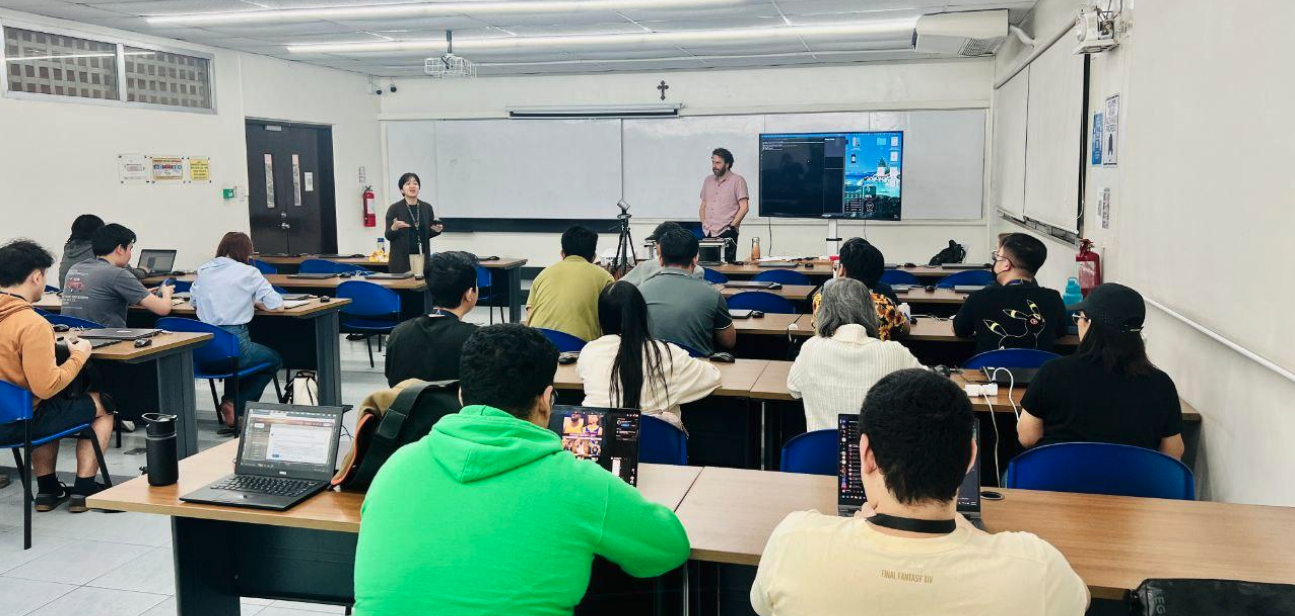
Becerra-Alonso began with providing the audience an overview of SAPIENS and its capabilities. But instead of merely demonstrating the software, he guided participants to experience firsthand how it is to be a student in a class that utilizes SAPIENS. The session particularly featured how an extensive library of assessments and exercises could be made available to students, as well as the software’s self-checking capabilities. Through this hands-on experience, participants gained a clearer understanding of how SAPIENS' can deliver personalized assessments and learning activities tailored to students’ needs.
The workshop was followed by a lively question-and-answer session, during which participants clarified SAPIENS’ capabilities and potential applications. Dr Errol Matthew C Garcia inquired about the use of LaTeX within the software, focusing on whether students who know LaTeX can use it to enter their answers in SAPIENS. Dr Catherine P Vistro-Yu raised concerns about academic integrity. She asked how the software ensures honesty and fairness in assessments, given its reliance on AI. Meanwhile, Dr Richard Eden said teachers need access to more than students' final answers. He expressed interest in ways educators could view the complete solutions that students develop, since focusing on final answers alone may overlook reasoning and problem-solving.
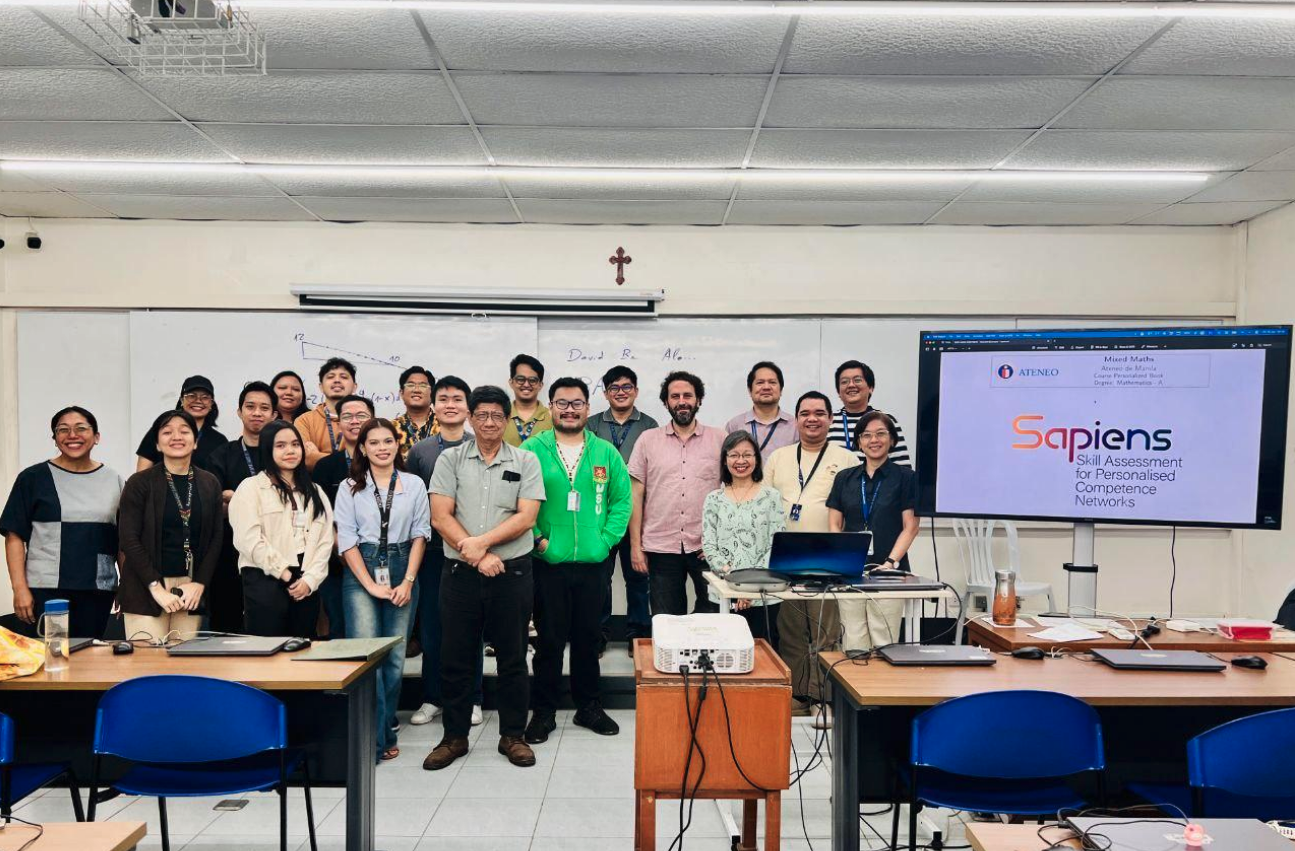
Overall, the seminar provided an engaging platform for exploring the transformative potential of SAPIENS in education. The active participation of faculty and students underscored a shared commitment to improving educational practices and enhancing the learning experience. The discussions and insights from this event may serve as a valuable foundation for future initiatives promoting personalized and technology-enhanced learning within the academic community.
Recent News
You may also like these articles

Karin Fernandez of AJHS guidance team presents paper on inclusive education in Chengdu
Karin Isabel O Fernandez, School Counsellor Associate of Ateneo de Manila Junior High School (AJHS), presented her research at the International University Social Responsibility Summit

Plan C Enlistment Schedule for the Second Semester, SY 2026-2027 for GBSEALD, JGSOM, SOH, SOSE, RGLSOSS
To: The Higher Education Community From: (Sgd)Marlene M. De Leon, PhD University Registrar Subject: Plan C Enlistment Schedule for the Second Semester, SY 2026-2027 for
Enlistment Schedule (Plan A and Contingency Plan B) & Regular Online Enrollment for the Second Semester, SY 2026-2027 for GBSEALD, JGSOM, SOH, SOSE, RGLSOSS
TO: The Higher Education Community FROM: (Sgd)Marlene M De Leon PhD University Registrar RE: Enlistment Schedule (Plan A and Contingency Plan B) & Regular Online
Ateneo Confucius Institute empowers local Chinese teachers through creative skills workshop
The Confucius Institute at Ateneo de Manila University (CI-Ateneo) held its annual training program for local Chinese language teachers on 24 October 2026, adopting a

Vision for a brighter future: ACED, Physicians for Peace Philippines provide free eyeglasses to learners in Bacnotan, La Union
For 256 grade school and high school students in Bacnotan, La Union, unaddressed vision issues have been silently impairing their reading ability and academic growth

2027 QS Asia Rankings: Ateneo 151st in region, still top private PH university
Ateneo de Manila is still the top private higher education institution in the Philippines, according to the 2027 QS World University Rankings: Asia released on