Ateneo BUILD-TRL working with PSA and BSP on National ID adoption
08 Aug 2026










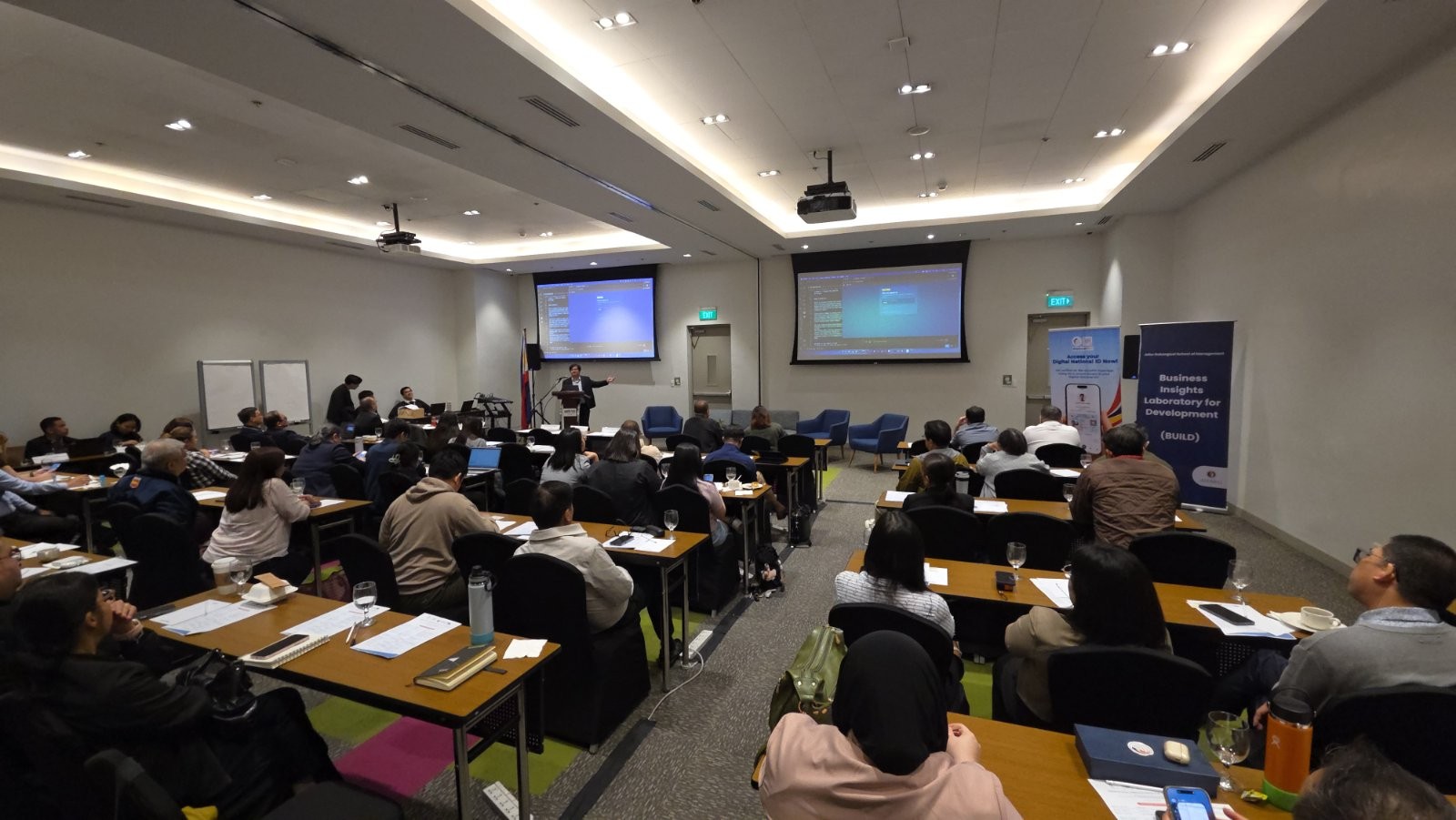
The Ateneo Business Insights Laboratory for Development (BUILD) and its Technical Resource Lab (TRL), in collaboration with the Philippine Statistics Authority (PSA), hosted the National ID Forum: Utilizing the National ID for Financial Services on 7 August 2026 at Park Inn by Radisson North EDSA in Quezon City. The forum ran from 8:30 AM to 4:30 PM and brought together more than 60 participants from financial institutions supervised by the Bangko Sentral ng Pilipinas (BSP), along with officials from the PSA and the BSP.
BUILD organized the forum with PSA's PhilSys Registry Office. Attendance held despite storms across much of the country. Participants ranged from division heads to vice presidents and chief technology officers, bringing business and technical decision-makers together. Twenty-four institutions sent representatives, among them Metropolitan Bank & Trust Company, BDO Network Bank, ING Bank N.V. Manila Branch, MUFG Bank, Mizuho Bank, Philippine Bank of Communications, Philippine Business Bank, Philippine Veterans Bank, Philtrust Bank, RCBC Bankard Services, Sterling Bank of Asia, Cathay United Bank, Industrial Bank of Korea Manila Branch, Equicom Savings Bank, Toyota Financial Services Philippines, and the Payments Network of the Philippines. Rural, thrift, and development banks were also represented, including 1st Valley Bank, Bangko Kabayan, Banco De Calamba, Bangko Mabuhay, Al-Amanah Islamic Investment Bank of the Philippines, LOLC Bank Philippines, Makiling Development Bank, TRBank, and University Savings Bank.
Independent of the forum, the BSP released a draft memorandum in early August requiring supervised institutions to build the PSA's National ID Authentication Services, or NIDAS, into their customer due diligence. The draft sets two compliance waves. Universal and commercial banks with retail operations, digital banks, electronic money issuers, and virtual asset service providers get three months from issuance. Thrift, rural, and cooperative banks, payment system operators, and the rest get six. The BSP said it may take supervisory enforcement action against institutions that fall behind.
NIDAS runs in tiers. Tier 1 returns a yes or no against a PhilSys number token. Tier 2 supports electronic know-your-customer checks against agreed demographic fields. Tier 3, which matches tokens across relying parties, is not yet operational. Separately, BSP Memorandum No. 2024-026 already requires institutions to accept every format of the National ID, including the digital version, as primary proof of identity. About 90 million Filipinos were registered with PhilSys as of October 2025.
Attorney Henedine P. Palabras, Officer-in-Charge and Assistant National Statistician for the Use Case Development and Management Service, opened the forum. Project Development Officers Angelo Jude L. Malabanan and Eladio Alamar of the PhilSys Registry Office presented the National ID Authentication Services.
Director Mynard Bryan R. Mojica, head of the BSP Financial Inclusion Office, delivered a message of support and participated in the question-and-answer session with Attorney Ruel Bumatay, a BSP director, and Attorney Hencel Joseph Gumabay, a BSP bank officer with the PSA.
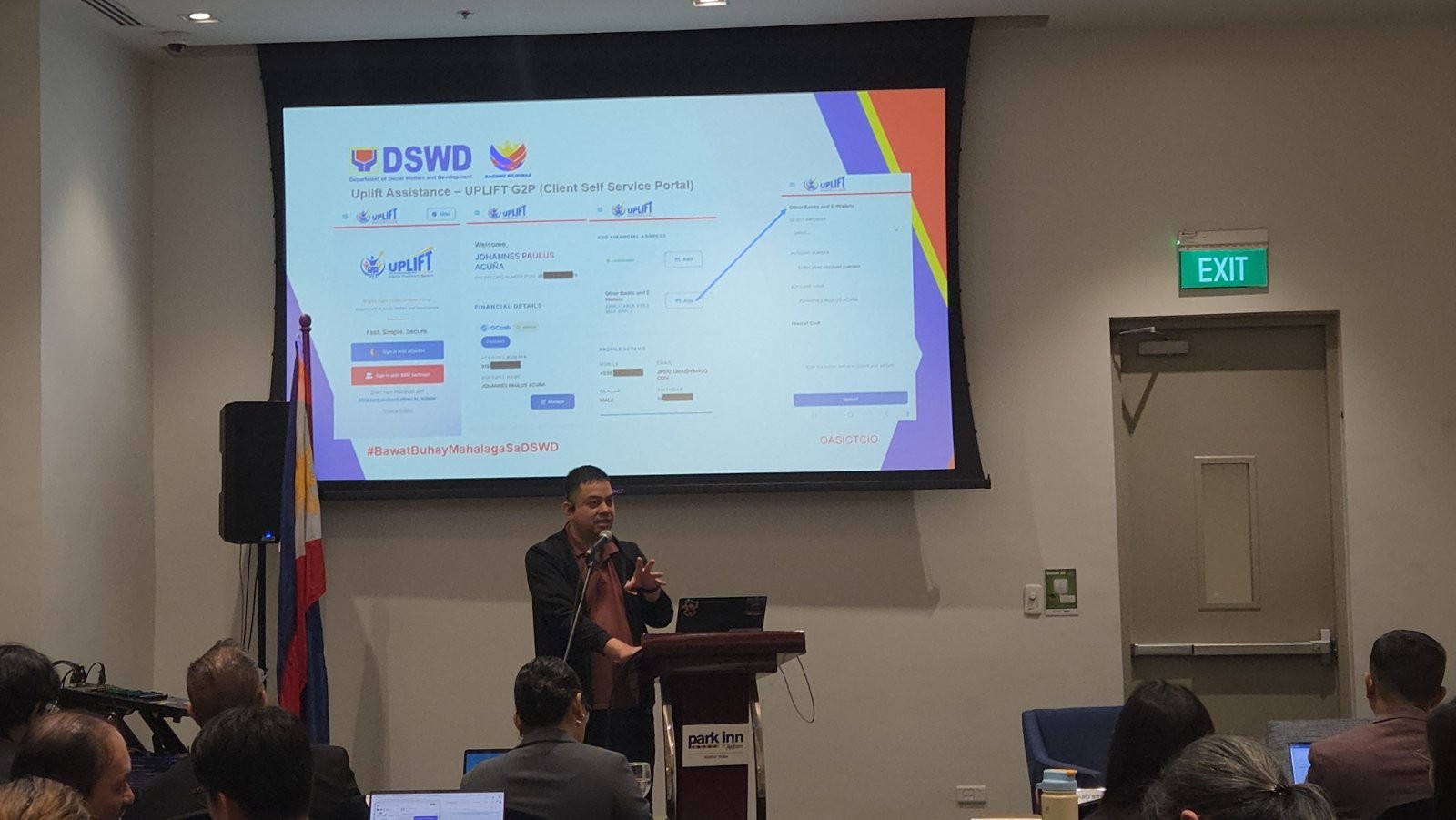
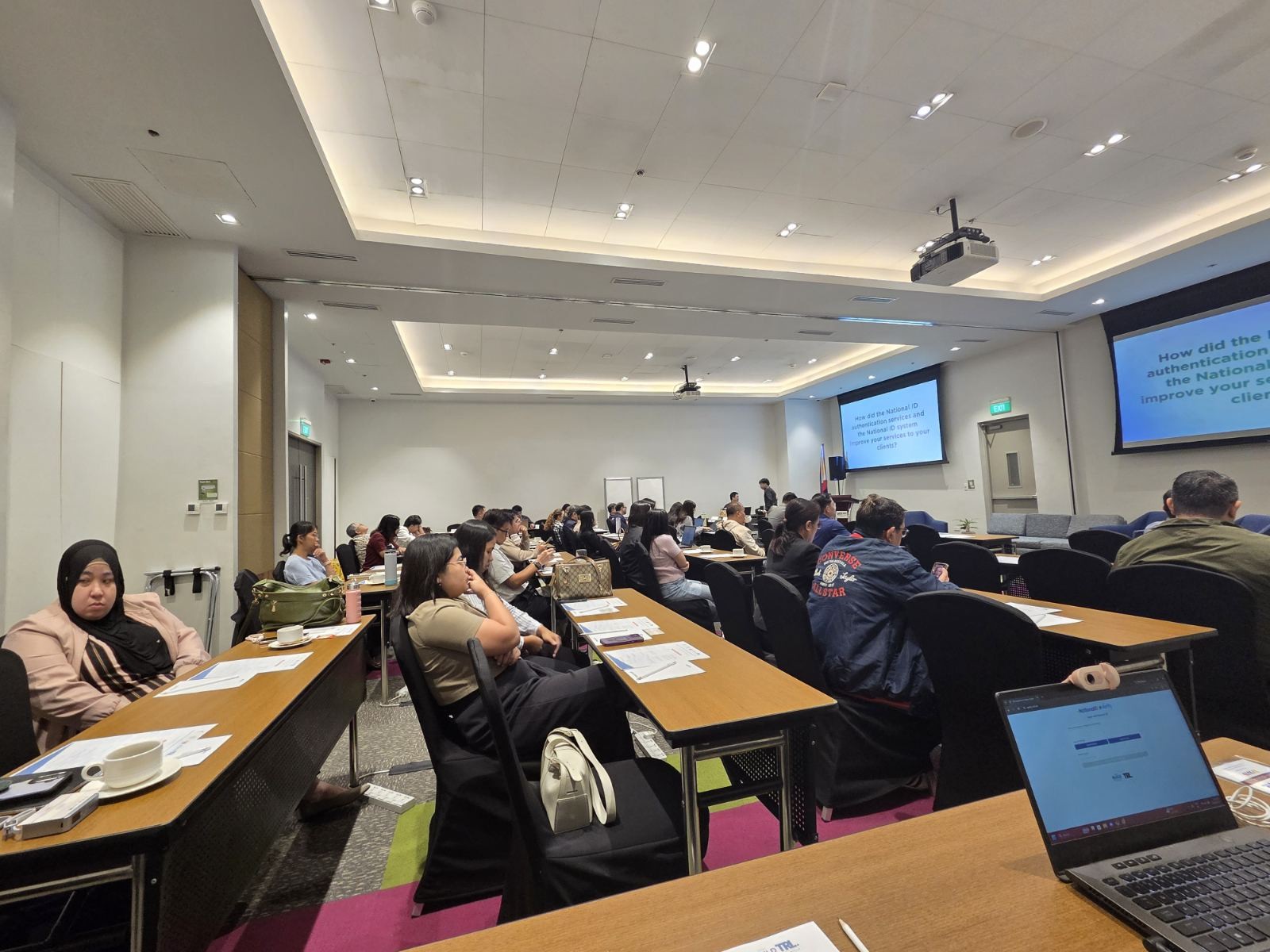
Engineer Gerald G. Divinagracia, a business process management consultant, faculty member at the John Gokongwei School of Management (JGSOM), and former Anti-Red Tape Authority undersecretary, presented the Business Process Map for the Know Your Customer use case. He also mapped how the two agencies divide the work. The PSA owns the PhilSys registry, issues the PhilID in card, paper, and digital form, sets e-KYC policy, accredits relying parties, and is legal custodian of identity data under Republic Act 11055. The Department of Information and Communications Technology (DICT) runs eVerify and National ID Check, powers the eGovPH super app and the digital National ID, and supplies the facial recognition and QR authentication. PSA requires that map from every institution applying for relying party status, and it is where many applications have challenges. TRL Director Richard P. Lozada then took the room through two live demonstrations, building a National ID verification app on screen with AI-assisted tools and deploying it to the cloud. Participants were also put to a discussion question: how the National ID authentication services and the National ID system have improved the services they give their clients. Lozada closed the program.
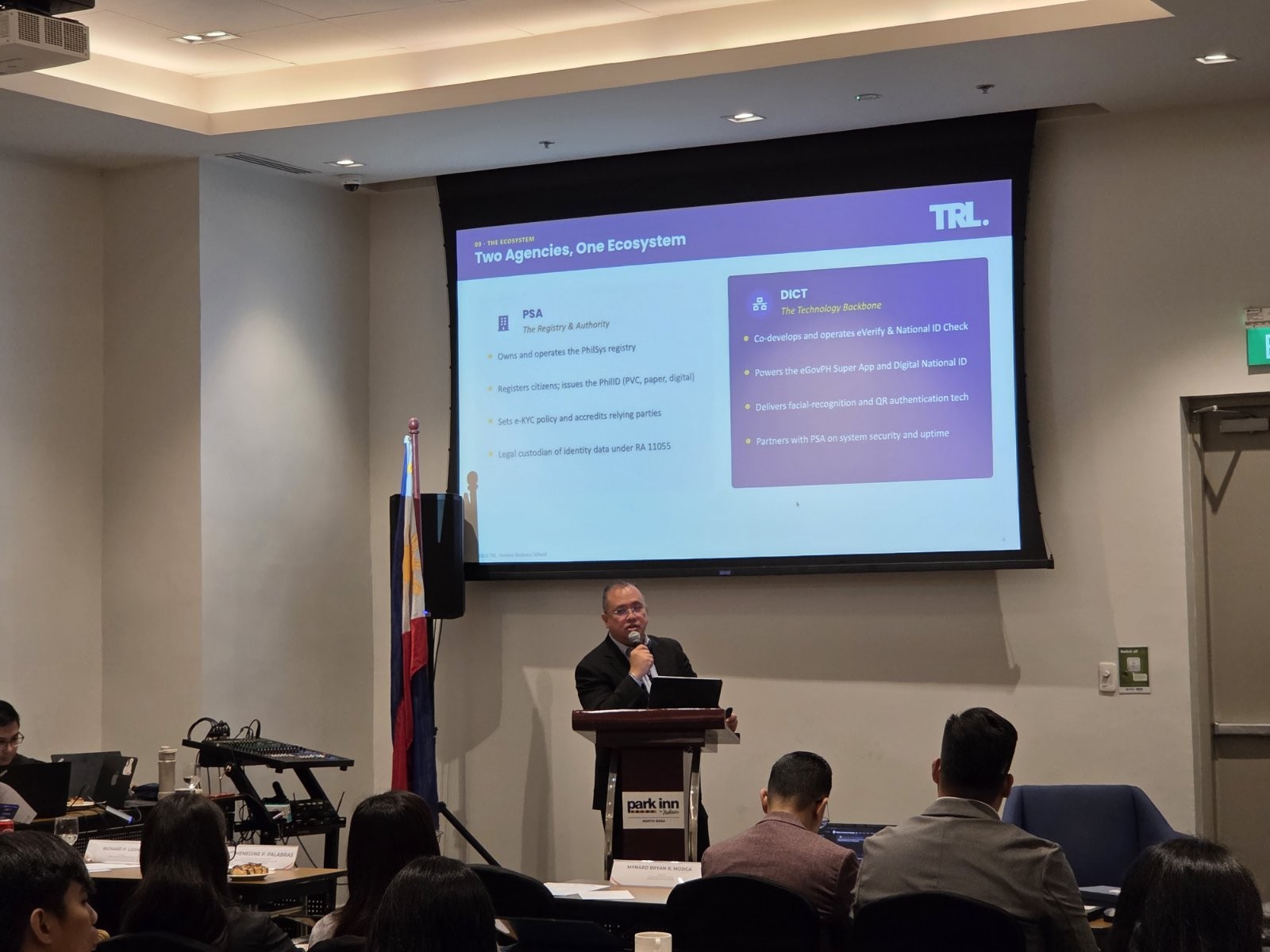
Department of Social Welfare and Development (DSWD) Assistant Secretary Johannes Paulus "JP" Acuña presented the government's social welfare programs and their use of technology. He covered UPLIFT, including the BSP-DSWD-FSP meeting and next steps for UPLIFT assistance, next-generation G2P payment projects, and the scale-up of digital payments within DSWD. He walked the room through the UPLIFT G2P client self-service portal, which identifies beneficiaries by their PhilSys card number and lets them register a bank account or e-wallet to receive payments. He invited the banks to an upcoming virtual summit with financial service providers and encouraged them to integrate with the National ID as soon as possible.
Frederick M. Faustino, Vice President and Head of Digital Partnerships and Ecosystem at the Bank of the Philippine Islands, followed. About 89 percent of BPI clients who onboard digitally choose the PhilSys National ID route, he said, and the bank has seen roughly a 30 percent increase in new-to-bank clients. He tied this to BPI's financial inclusion efforts. BPI is one of the earliest banks approved as a relying party.
As of late July 2026, 48 private financial institutions held approved relying party status out of more than 500 banks and e-money issuers in the country.
BUILD is one of four centers under JGSOM. It applies data analytics, operations research, financial modeling, artificial intelligence, geospatial analysis, and technology entrepreneurship to projects that advance economic competitiveness and support student-led innovation, working with students, faculty, and external partners.
TRL is a project incubated under BUILD, run in partnership with Co-Develop, a global non-profit fund that accelerates the adoption of safe and inclusive digital public infrastructure (DPI) at scale. TRL works to speed up DPI adoption in the Philippines and the wider ASEAN region by building a developer ecosystem across government, industry, academia, and technology communities. It runs a DPI experience center as a hands-on demonstration and experimentation hub for digital identity and other public infrastructure, alongside a learning series and convenings like this one. Its current government partners include the PSA, the DSWD, and the DICT.
Recent News
You may also like these articles

Growing with purpose: How Mekeni Food Corporation turns adversity into shared value
From a small backyard operation in Porac, Pampanga, to an internationally recognized food brand exporting to 25 countries, Mekeni Food Corporation's journey demonstrates how businesses

Three Ateneo-incubated startups secure DOST-PCIEERD’s startup grant fund
Last 9 November, during the opening day of Philippine Startup Week 2026, Soolok Properties Inc, Pili AdheSeal Inc, and Saltric Power (PDG Engineering Services), three
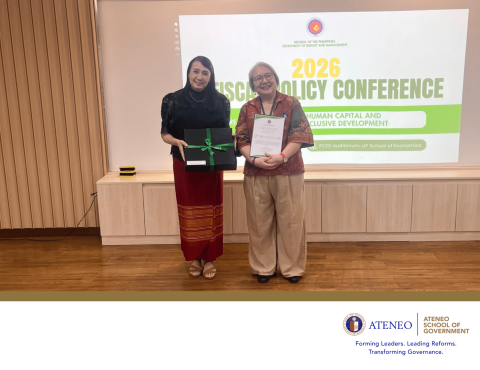
Ateneo Policy Center presents study on local health spending at DBM Fiscal Policy Conference 2026
On 19 October 2026, the Ateneo School of Government, through its research and policy unit, the Ateneo Policy Center (APC), presented findings from a study
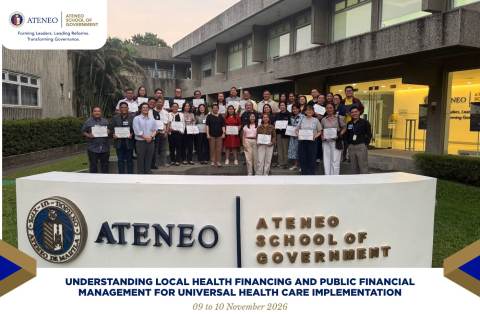
Turning health resources into services: ASOG conducts executive education course on health financing and public financial management
The Ateneo School of Government (ASOG) conducted Understanding Local Health Financing and Public Financial Management for Universal Health Care Implementation, a two-day executive education course
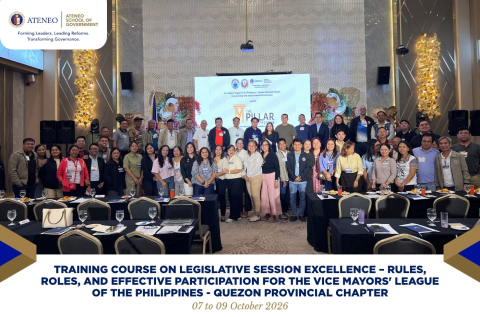
ASOG and VMLP Quezon Chapter Strengthen Legislative Leadership Through PILLAR Program Module on Session Management
The Ateneo School of Government (ASOG) through its Executive Education Center, in partnership with the Vice Mayors’ League of the Philippines (VMLP) – Quezon Provincial

Karin Fernandez of AJHS guidance team presents paper on inclusive education in Chengdu
Karin Isabel O Fernandez, School Counsellor Associate of Ateneo de Manila Junior High School (AJHS), presented her research at the International University Social Responsibility Summit