AIS hosts panel discussion on the 2026 Sustainable Development Report and the post-2030 agenda
22 Jul 2026 | by Louise Anne Estanislao and Rhys Ambros Romano


Following the publication of the 2026 Sustainable Development Report by the Sustainable Development Solutions Network (SDSN), the Ateneo Institute of Sustainability (AIS) hosted an event entitled, “Where are we in the SDGs? A Panel Discussion led by AIS” last 7 July 2026. The panel gathered experts in the fields of political science, environmental science, community development, and youth leadership for a nuanced and multidisciplinary look into the global and local progress of the Sustainable Development Goals (SDGs). The event, held at SEC-C 201 and via Zoom, was moderated by Ms Nathalie Ting-Ouano, Assistant Professor at the Department of Development Studies.
To start the discussion, Ms Chris Lacdao-Umali, Program Head for SDGs at AIS, presented the highlights of the 2026 SDR in the global landscape. Notably, most of the European countries were recognized as top-performing countries, while the East and South Asia region also outperformed all other regions in terms of SDG progress. Southeast Asia, specifically, is doing well on poverty alleviation, education, and industry, among others, relative to other regions. However, biodiversity and justice remain to face major challenges in the region.
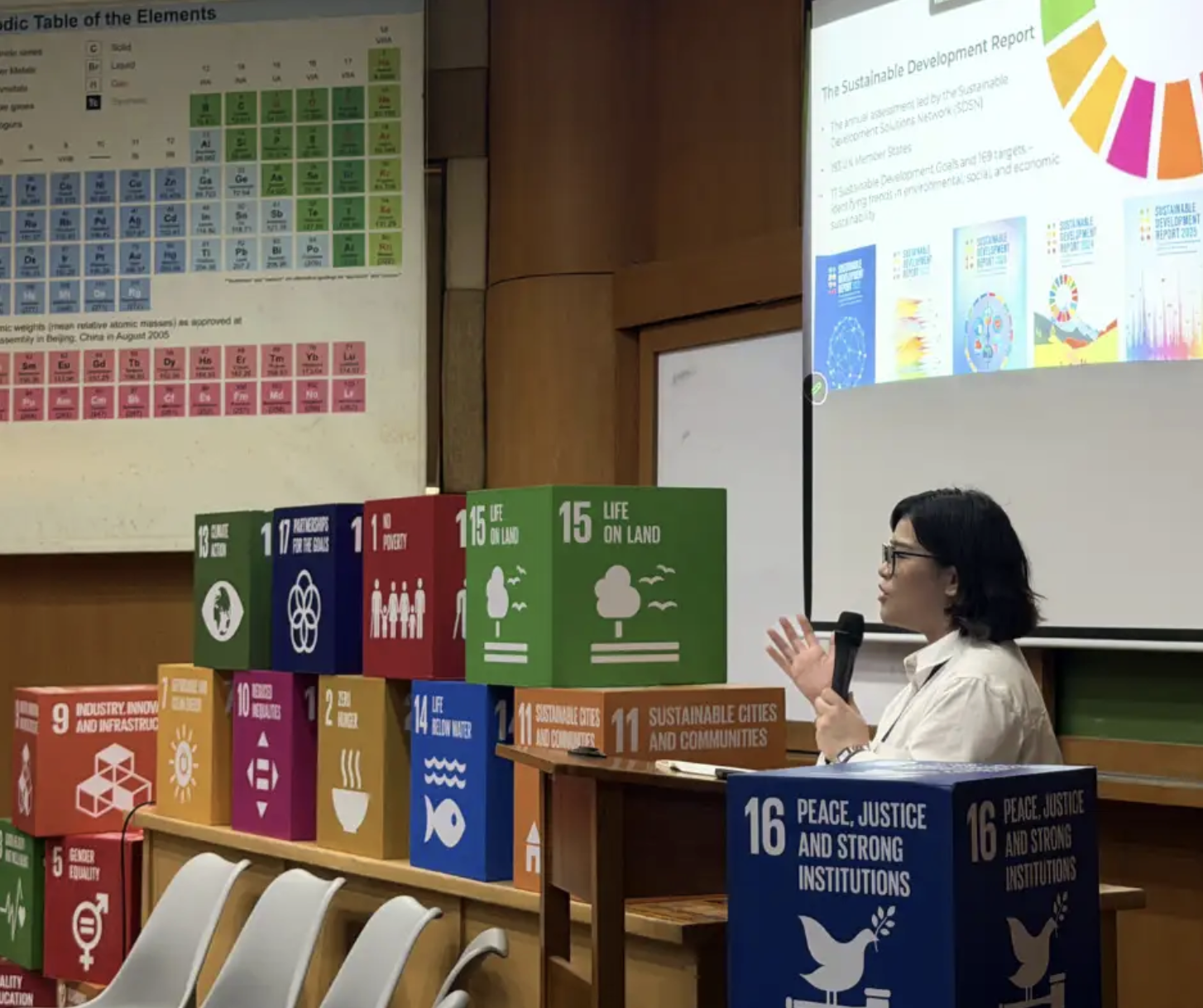
Dr Emmanuel Delocado, Director of AIS, then presented the progress of the Philippines and ways forward post-2030. Based on the initial SDR scores reported in 2015, the Philippines is said to have progressed significantly compared to other neighboring countries. He attributed the country’s progress, particularly the achievement of SDG 12 (Responsible Consumption and Production), to culture, particularly the Filipino quality of pagiging masinop (being prudent).
However, a survey revealed that the perceived country progress among Filipinos is less than the reported progress in the SDR, indicating a discrepancy in the impacts of SDG programs in the Philippines. In addition, contrary to the report findings showing the government’s strong support for SDG implementation, another survey revealed inconsistencies in the implementation efforts of the sustainable development plan.
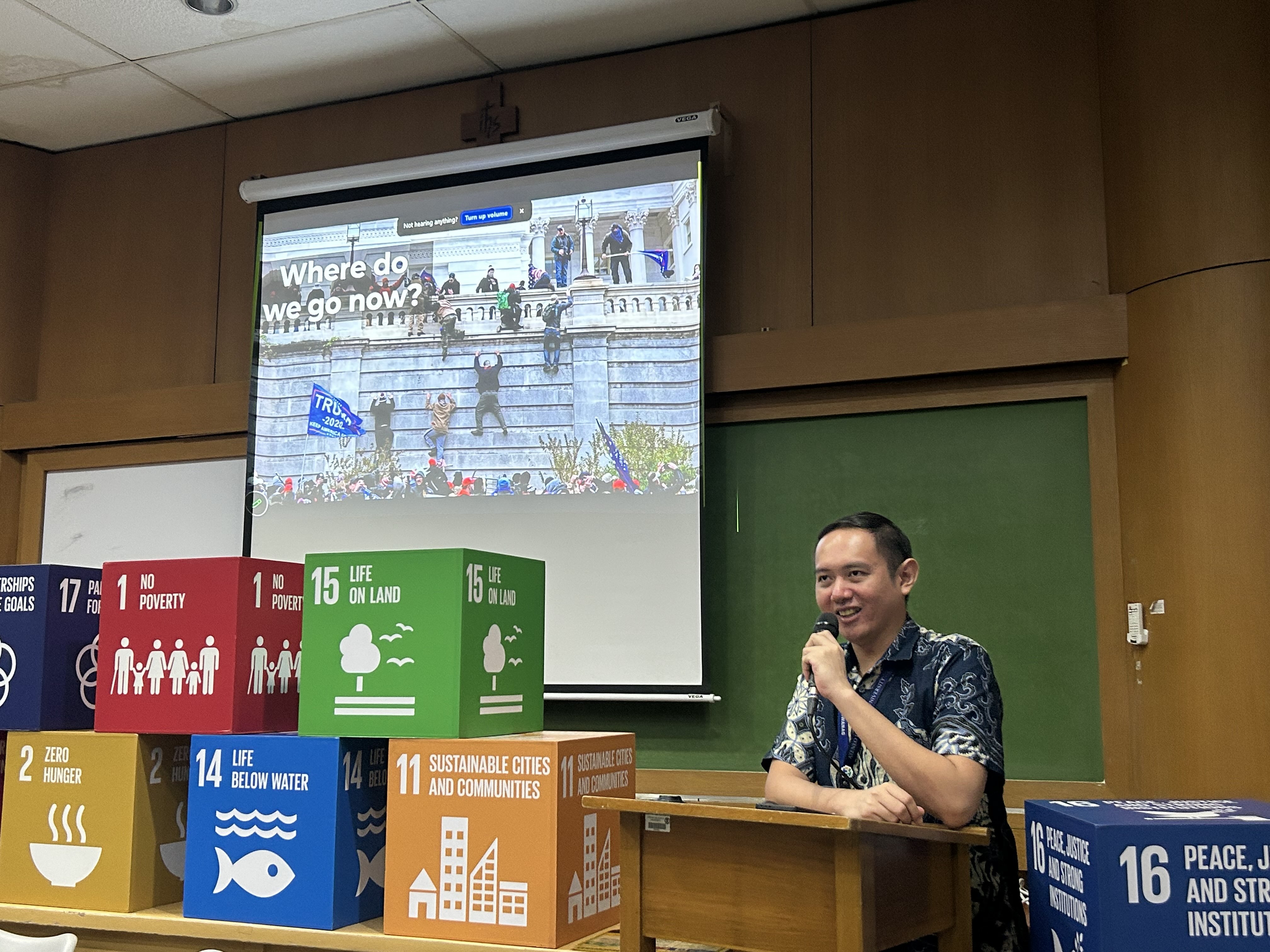
Following this, Dr Delocado shared insights on the post-2030 agenda, emphasizing the Six SDG Transformations of the SDSN as a framework to operationalize the 17 SDGs. He ended his presentation with a call to continue pursuing the 17 SDG goals and 169 targets even beyond the 2030 deadline. Quoting Prof Jeffrey Sachs, President of SDSN and Lead Author of the 2026 SDR, “As the 2030 landmark approaches, the next era of sustainable development must put the global emphasis on implementation and ensuring strong financing and effective governance at all levels.”

Following this, the panel discussants took the stage with their initial reactions to the latest SDR. The reactors identified the need for a more nuanced picture of the country’s progress in the SDGs, highlighting the gaps between the daily struggles of ordinary Filipinos and the strategies in place for SDG implementation. Mr Enrico Miguel Salvador, School of Science and Engineering (SOSE) Representative from the Sanggunian ng mga Mag-aaral ng mga Paaralang Loyola ng Ateneo de Manila, and Ms Norlie Corneby, Director of Gawad Kalinga - Ateneo, mentioned that SDG initiatives are implemented in both the national and local levels, but with fluctuating qualities of impact. According to Ms Corneby, the country’s progress is real but highly uneven.
A member of the audience also challenged the current metrics used to measure progress, noting that these methods may be insufficient to capture the full picture of local progress. Echoing this idea, Ms Giannina Feliciano, Instructor in the Department of Environmental Science, declared that institutions must move beyond regulatory compliance towards a clear understanding and a more contextualized application of goals and indices for sustainability.

Furthermore, the reactors agree that the collective failure of nations to achieve the targets by 2030 ties back to how people, at large, continue to face systemic challenges. Mr Oliver John Quintana, Assistant Professor of the Department of Political Science, opened this point by urging the audience to problematize daily life and to recognize the intersectionality between these everyday inconveniences and the SDGs.
Finally, the panelists shared their ideas on the role of government, civil society, and other sectors in mobilizing SDG achievement. Mr Salvador highlighted the efforts of certain LGUs to integrate the SDGs in various forms of public service. However, Ms Corneby pointed out that there are challenges in sustaining such efforts, especially in poorer communities. Mr Quintana, on the other hand, highlighted the responsibility of civil society organizations in engaging communities as partners for change, not just beneficiaries. He emphasized the crucial role of the public in developing solutions to everyday challenges that can be translated into SDG implementation. Ms Feliciano then put to light the importance of systems thinking and multisectoral collaboration through long-term partnerships.

Recent News
You may also like these articles

Growing with purpose: How Mekeni Food Corporation turns adversity into shared value
From a small backyard operation in Porac, Pampanga, to an internationally recognized food brand exporting to 25 countries, Mekeni Food Corporation's journey demonstrates how businesses

Three Ateneo-incubated startups secure DOST-PCIEERD’s startup grant fund
Last 9 November, during the opening day of Philippine Startup Week 2026, Soolok Properties Inc, Pili AdheSeal Inc, and Saltric Power (PDG Engineering Services), three

Ateneo de Manila Grade 2 students are the little Earth helpers
It was a great day for saving the world when Ateneo Institute of Sustainability (AIS) came to Ateneo Grade School to give a session on
JGSOM representatives complete green finance training in Poland, sets sights on 2027 micro-credential launch
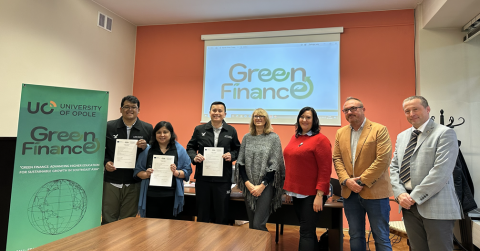
Representatives of Ateneo de Manila University's John Gokongwei School of Management (JGSOM) completed the second phase of their Erasmus+ Green Finance international mobility activities at
JGSOM Representatives Participate in Green Finance Training at the University of Twente
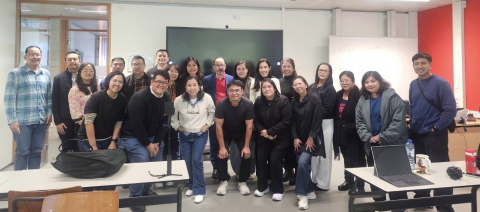
Enschede, Netherlands | October 15–16, 2026 Representatives of Ateneo de Manila University's John Gokongwei School of Management (JGSOM) participated in a specialized Green Finance training
Professor Emeritus Dr Emma Porio highlights climate resilience and biodiversity at international conferences
Emma E Porio, PhD, Professor Emeritus of Ateneo de Manila University and Principal Investigator of Ateneo's Manila Observatory Center for Climate Resilience and Public Health