RECAP: Ateneo Art Gallery hosts “Can We Stay Here?” Screening and Talkback for #IMD2026
09 Jun 2026

Ateneo Art Gallery, in collaboration with Fotomoto PH, The Unconfined Cinema, and Areté, presented a work-in-progress screening of Can We Stay Here? last 21 May 2026 at the Ben Chan ArtSuite, 2F Ateneo Art Gallery.
The screening was followed by a talkback session with director Martika Escobar, producer Erwin Romulo, photographer Neal Oshima, and was moderated by Stephanie Frondoso from Fotomoto PH.
This screening was one of Ateneo Art Gallery’s International Museum Day 2026 activities, and was also organized as part of the Ateneo Art Gallery’s Moving Image Program.

Can We Stay Here? (2026) is Martika Escobar’s work-in-progress documentary on acclaimed Philippine-based photographer Neal Oshima, whose commercial, editorial, and fine art work spans four decades. Guided by visual anthropology, Oshima has documented Indigenous cultures with unmatched depth and sensitivity. The film offers an intimate portrait of his life and practice, introducing new material created especially for the documentary and drawing from Oshima’s extensive archives to reveal the stories behind some of his most memorable photographs.
Can We Stay Here? was screened alongside Escobar’s Don’t worry we still hear you (2020) and Bintana 2060 (2024).
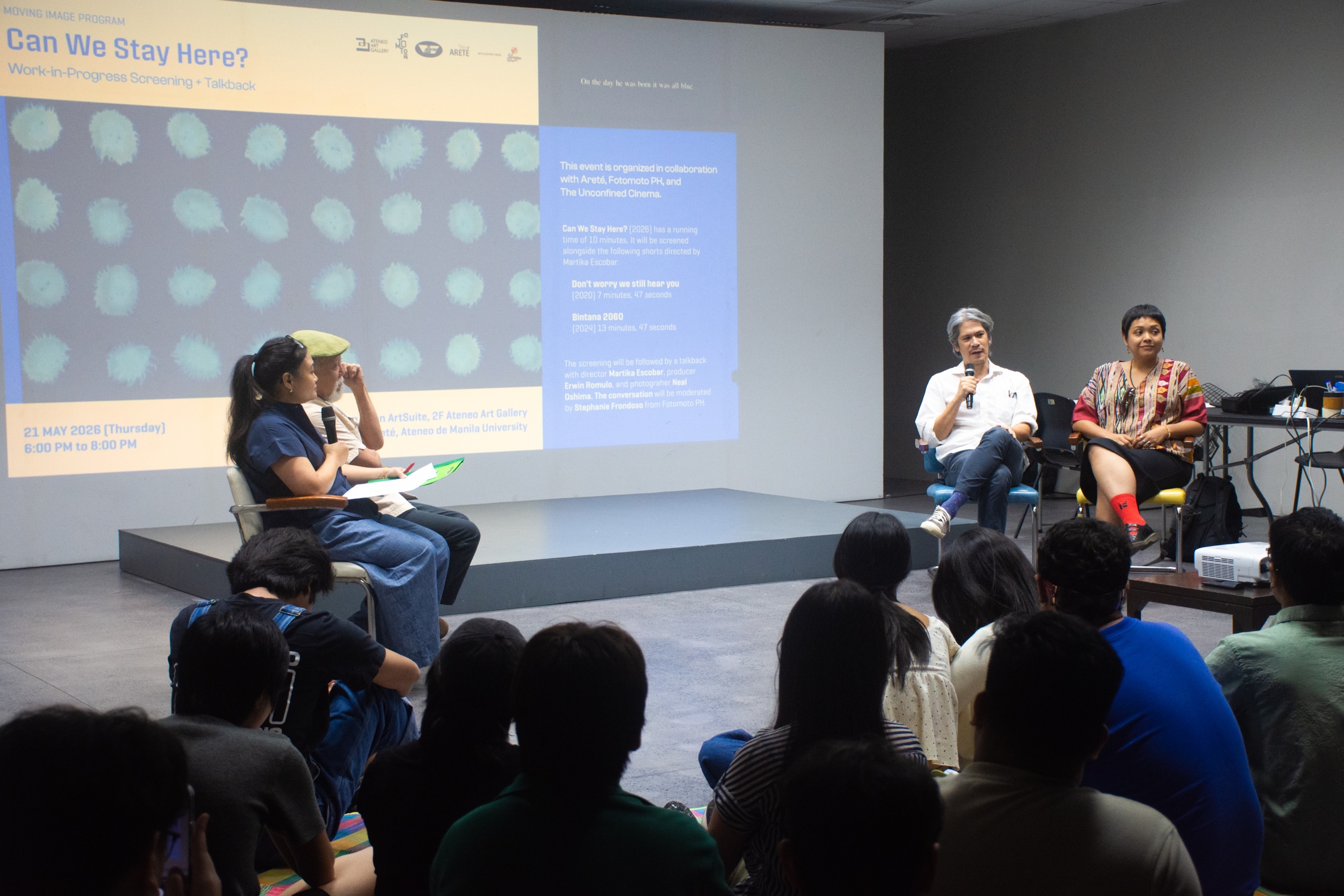
In the talkback session, Escobar and Romulo begin with a sharing of their filmmaking process and motivations. For Escobar, community building in the form of cinema and finding connections in the people she works with became motivations behind the documentary. She also shared her process of shooting with no scripts, opting to use notes or to shoot impulsively.
Romulo, on the other hand, aims to bring the art of unconfined cinema to other places and push the boundaries of the cinema we know of in the 20th century. He adds, later on, how the films they worked on started as a dare, a way to challenge themselves.
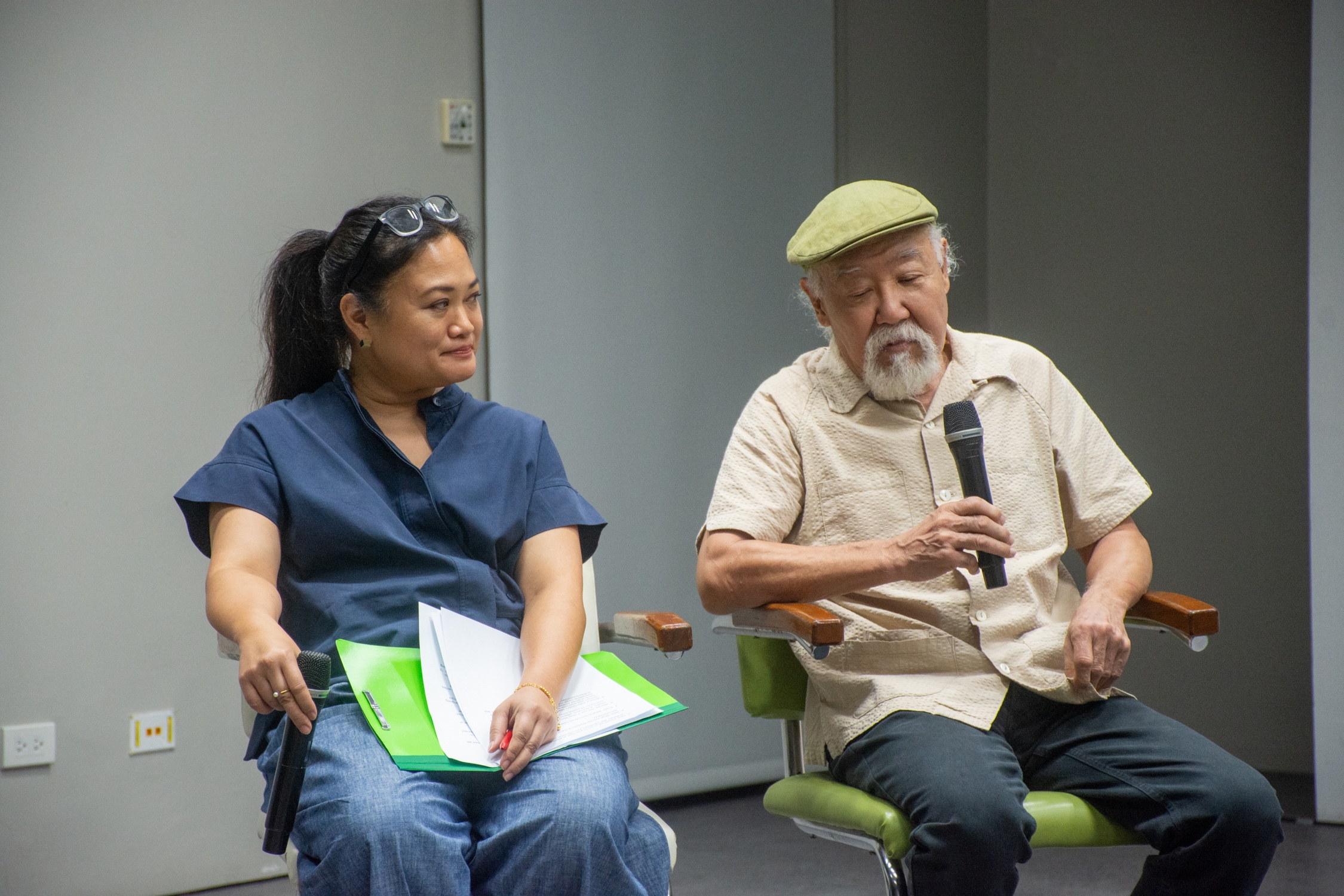
During the discussion, Oshima narrates his fiction-like stories of almost falling off a helicopter over a volcano and about the shaman and the wandering eye. It was also revealed that Oshima was the one to suggest the use of images he already shot to illustrate the stories in the film. Escobar recounts her experience in scanning Oshima’s archives, and later on notes, “You could really tell what fascinates Neal towards certain people, places, objects, sensory experiences, even, and that's what we try to add in the film.”
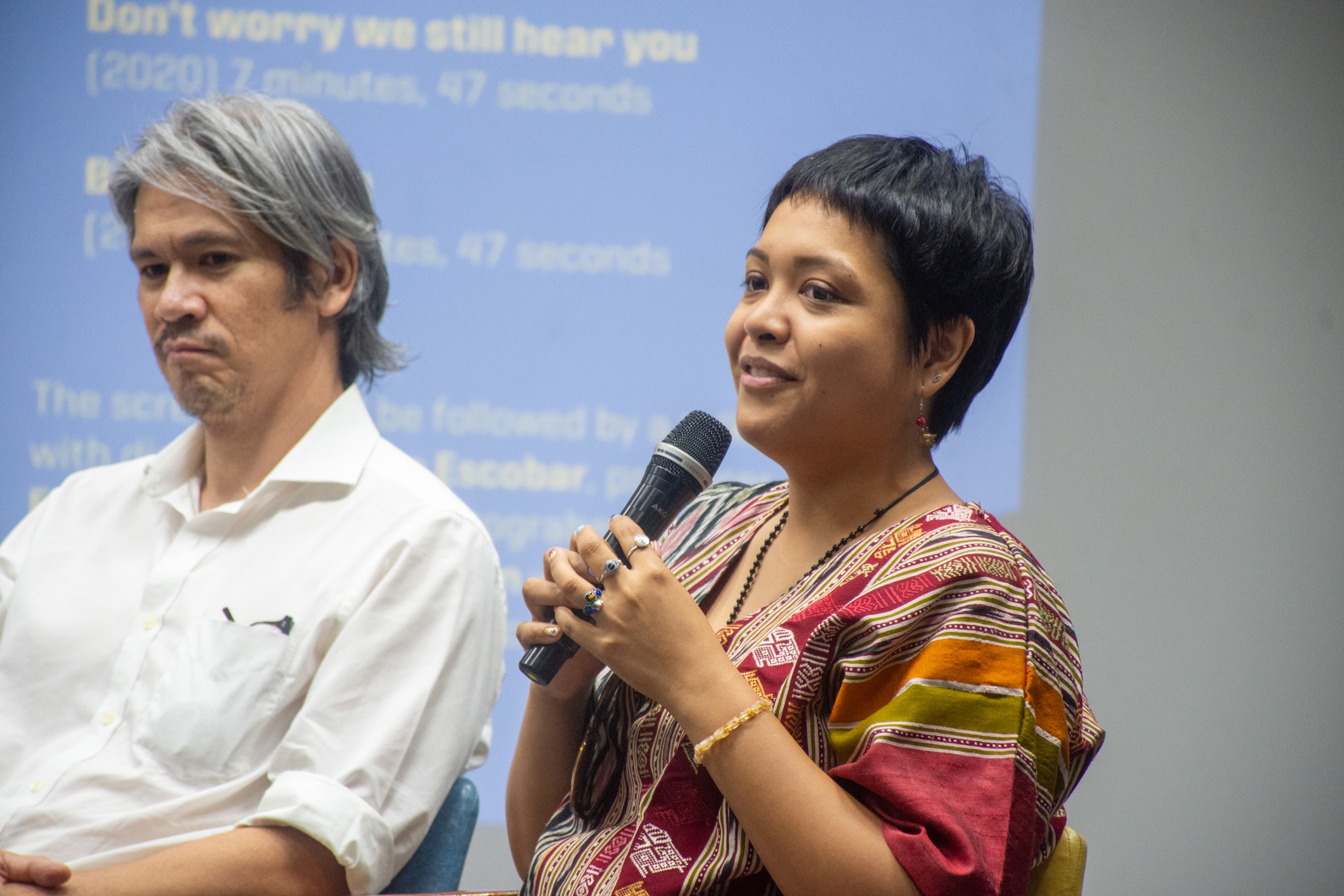
On the topic of vanity in filmmaking, Escobar replies, “I think it's in the consciousness of the people creating it, if it's not made for that intention, and it's made for others to recognize someone's work, then it is present and it will come out naturally and organically in the work.”
Building on this, Romulo explains that this is why they are open about their filmmaking process, to genuinely figure out how to make the film better. Oshima also adds, "It's not like the product is the end, it's the process that's the end, and it should be civilized and fun and interesting.”

On navigating privilege, Escobar and Oshima acknowledge their position as a filmmaker and photographer, respectively. To do so, Escobar consciously approaches her work with love and sincerity, while Oshima tries to give back through his photos, citing an experience of taking portraits of indigenous people in Bukidnon.
Concluding the talkback, Escobar shares what she saw special in Oshima’s works. “I would describe it as seeing photos taken by a neighbor. [...] It's a perspective that is so candid and intimate and close that not all people could reach that sensitivity and closeness to the places and people that you've been taking photographs of.”
Oshima also ends with his insights on belonging, stating that to be a good photographer, one must also be able to step outside of belonging in order to see with fresh eyes.
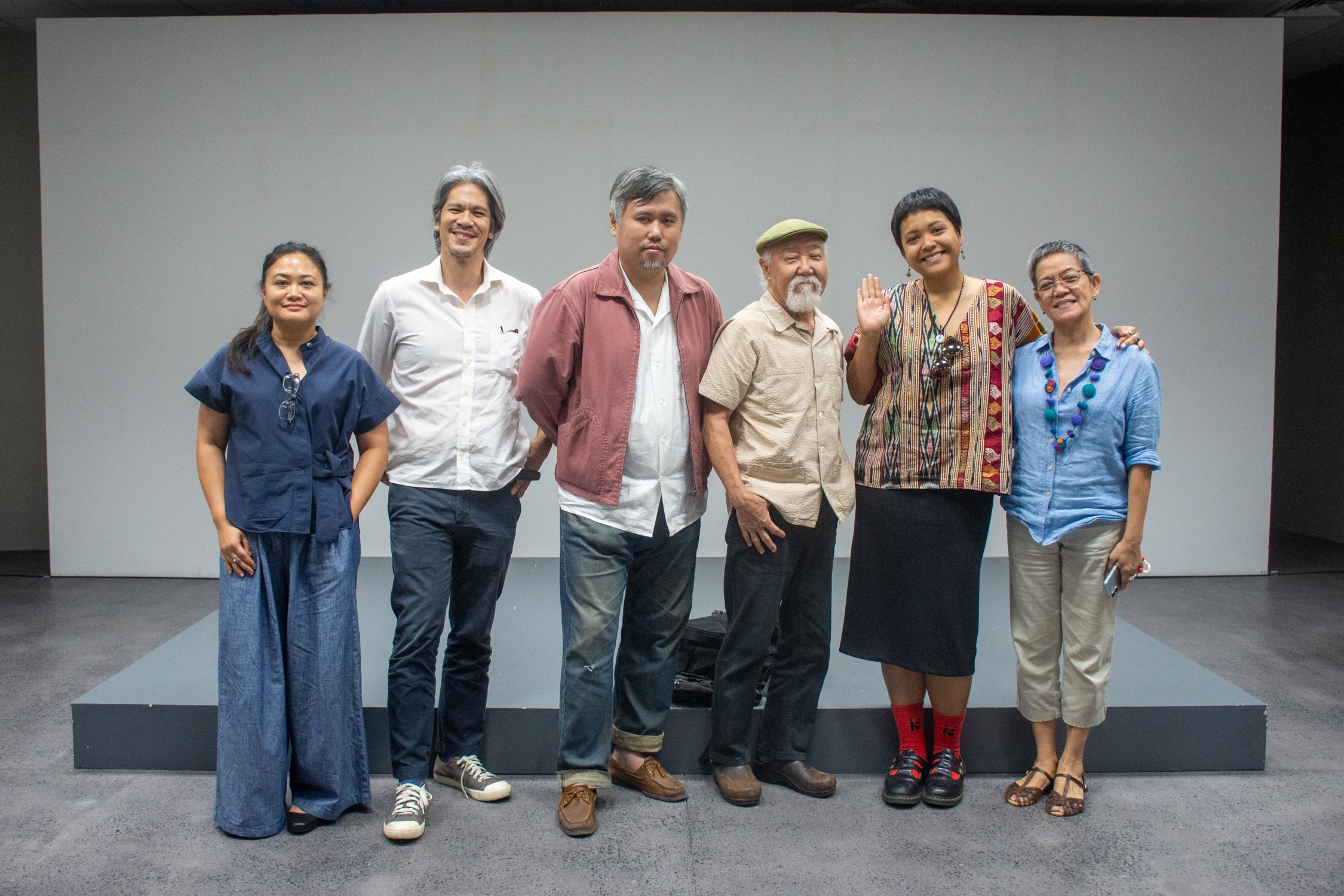
This public program was organized as part of Ateneo Art Gallery's Moving Image Program, a presentation of film, video works, and lectures that explore moving image as a medium in contemporary art practice.
For inquiries, email aag@ateneo.edu or call (2) 8426 6488.
For news on future programs and workshops, follow AAG on Facebook and Instagram or sign up for our newsletter at go.ateneo.net/AAGNewsletter.
Recent News
You may also like these articles
Updating of Medical Records Second Semester SY 2026-2027
14 November 2026 TO: Undergraduate and Graduate Students FROM: Higher Education Office of Health Services-College SUBJECT: Updating of Medical Records Second Semester SY 2026-2027 Please

Promotion of Faculty in the Senior High School (Memo U2627-050)
(Memo # U2627-050) I am pleased to announce that upon the recommendation of the Senior High School Committee on Faculty Rank and Permanent Appointment and the endorsement of the Vice President for Basic Education, I am approving the promotion of the following faculty members in the Senior High School:

Demise of Mr Silvestre P Villarin(Memo U2627-049)
(Memo U2627-049) We extend our condolences to Fr Jose Ramon “Jett” T Villarin SJ and his family on the passing of his father, Mr Silvestre Villarin, on 18 November 2026 at the age of 96. Fr Villarin is the former University President, a faculty member of the Department of Physics, and the Executive Director of the Manila Observatory.

[AGS] National Book Week
Open a Book, Stories Unfold, Wonders Flow Let us come together as one AGS community to celebrate the 92nd National Book Week with the theme

Three Ateneo-incubated startups secure DOST-PCIEERD’s startup grant fund
Last 9 November, during the opening day of Philippine Startup Week 2026, Soolok Properties Inc, Pili AdheSeal Inc, and Saltric Power (PDG Engineering Services), three
Ateneo Policy Center presents study on local health spending at DBM Fiscal Policy Conference 2026
On 19 October 2026, the Ateneo School of Government, through its research and policy unit, the Ateneo Policy Center (APC), presented findings from a study