MCR-Ateneo concludes 2026 Climate Research series with discussion on community coastal resilience
23 Jun 2026 | Louise Anne Estanislao & Almia Tumaneng





Last 17 June 2026, the My Climate Risk – Ateneo de Manila University (MCR-Ateneo) Regional Hub concluded this year’s iteration of the “Climate Research ‘As If People Mattered’” webinar series. The session was titled “Community Perspectives on Coastal Resilience: A Baseline Assessment of Three Coastal Barangays in Sablayan, Occidental Mindoro” and featured Ms Alyssa Kemp, an environmental engineer with focus on climate resilience planning, water resources, and community engagement. Having obtained both her bachelor’s and master’s degree from Drexel University, PA, USA, Ms Kemp is a Fulbright US Scholar who was hosted by the Ateneo Institute of Sustainability (AIS) and Department of Environmental Science (ES) last October 2025 prior to conducting their fieldwork in Occidental Mindoro. The session was facilitated by Mr Daniel C Ratilla, Program Head for Climate and Disaster Resilience at AIS and Focal Point of MCR-Ateneo Regional Hub.
Engr Maria Leonora Guico, Executive Director of the Ateneo Research Institute of Science and Engineering (ARISE) and collaborator of the MCR-Ateneo Regional Hub, opened the session. ARISE also co-organized the webinar. She emphasized that communities must remain at the center of research and action. “By listening to local voices, we move closer to climate solutions that are not only scientifically sound but also socially relevant, equitable, and responsive to people’s [actual] needs,” said Engr Guico.
Ms Kemp shared their experience and findings from their six-month community-based climate research in three coastal barangays located in the municipality of Sablayan, Occidental Mindoro: Poblacion, Santo Niño, and Buenavista. In these barangays, she aimed to understand how local communities experience and understand coastal resilience and risk through the use of Focus Group Discussions (FGD) and Key Informant Interviews (KII) with diverse groups and sectors—including women, fisherfolk, and tourism stakeholders, and stakeholders spanning disaster management, tourism management, and other regulatory and governing bodies.
Through the FGDs, Ms Kemp identified priority zones as determined by local stakeholders. They also raised shortcomings of current response and preventative actions against coastal hazards, which allowed them to analyze potential policy recommendations. With these responses, Ms Kemp synthesized similarities and differences in the responses across the three coastal barangays, and emphasized the importance of more accessible mechanisms for community participation in municipal hazard planning and strategies, something that was also shared by the local stakeholders. In addition to opening participatory decision-making, she also shared about flooding, storm surge, uneven coastal protection, drainage limitations, and siltation as identified challenges by the local community.
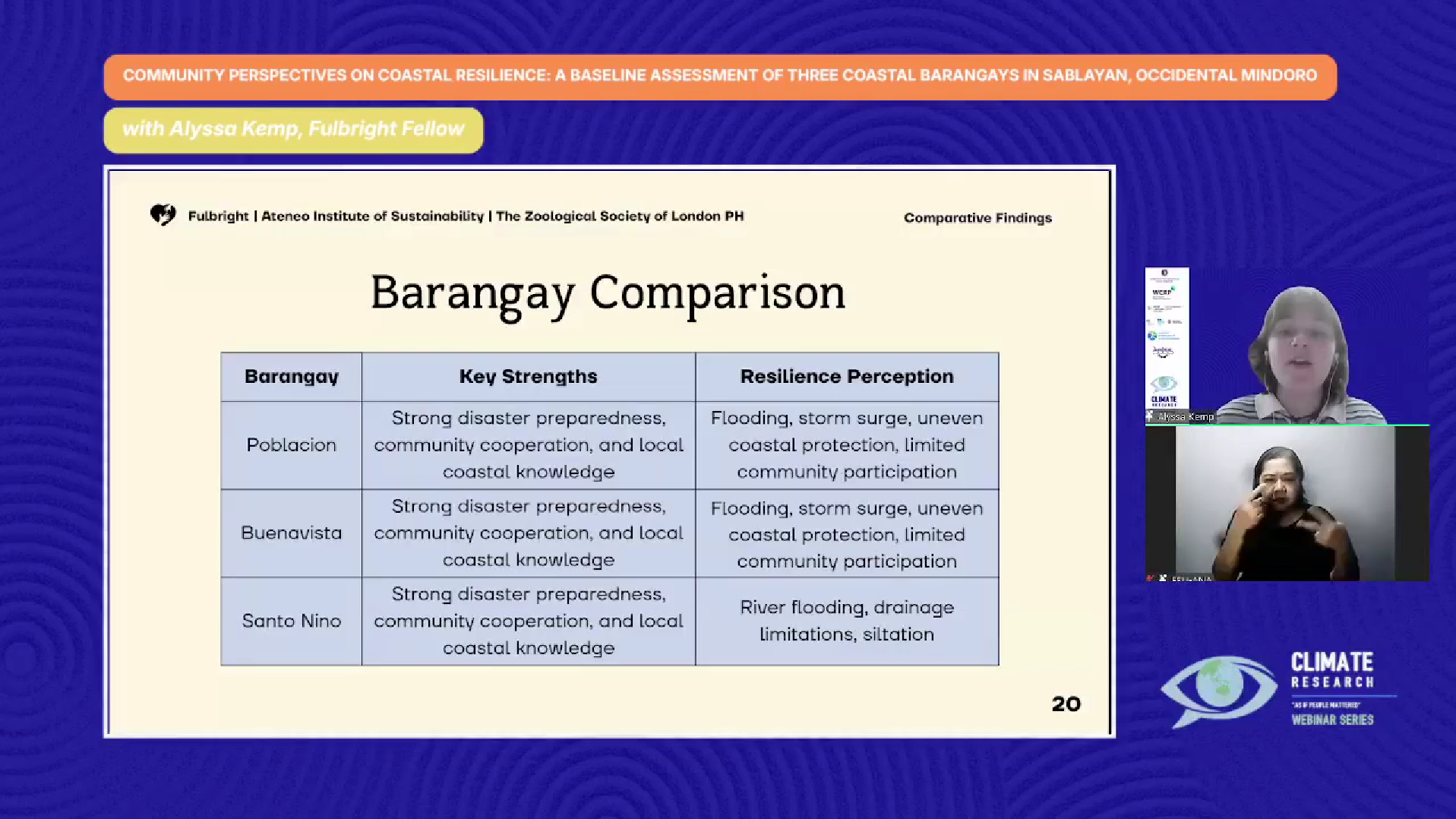
On the other hand, in the KIIs, Ms Kemp was able to surface the institutional constraints and concerns surrounding environmental management and government systems identified by representatives of regulatory bodies she interviewed. Drawing from this, she demonstrated the intersecting problems of environmental and climate impacts, fisheries and livelihood vulnerability, and drainage and infrastructure limitations. Most notably, she underscored funding challenges with regards to infrastructure limitations, efficient government enforcement, and long-term planning.
Before ending her presentation, Ms Kemp shared their research’s long-term vision to strengthen collaboration between communities, local government, and researchers in future resilience initiatives, as well as their hopes in contributing to this vision by presenting the results of their research to the barangay captains and the municipality of the localities she worked with. To close their presentation, she reflected that “[...] resilience cannot be understood only through hazard maps and infrastructure systems. Communities already possess such deep knowledge [...] and resilience planning becomes stronger when those perspectives are treated as expertise rather than simply a consultation.”
In the Open Forum, Ms Kemp further recalled their personal experiences during their six-month stay in Occidental Mindoro and their interactions with the municipalities and communities in the area. Their study helped authorities realize that the communities’ participation are crucial in identifying major issues within their area and developing solutions to address them. She also shared how she was able to fill in the gaps within existing hazard maps from government agencies by providing local- and barangay-specific mapping of hazards found within the three barangays.

The session closed with Dr Emmanuel Delocado, Director of the Ateneo Institute of Sustainability, expressing his appreciation to Ms Kemp, along with the MCR-Ateneo Regional Hub, network partners, fellow researchers, and event attendees. In his closing message, he reiterated the need to hear the voices of communities, recognize people as agents of change, and adapt bottom-up resilience mapping in research.
The session was attended by participants from the Philippines, Bangladesh, India, the United States, and Vietnam, among others. This webinar is part of the 2026 iteration of the “Climate Research ‘As If People Mattered’” webinar series, and was its concluding session. The series occurred from May to June 2026. Information on other similar events by MCR-Ateneo can be accessed here.
Recent News
You may also like these articles

Growing with purpose: How Mekeni Food Corporation turns adversity into shared value
From a small backyard operation in Porac, Pampanga, to an internationally recognized food brand exporting to 25 countries, Mekeni Food Corporation's journey demonstrates how businesses

Three Ateneo-incubated startups secure DOST-PCIEERD’s startup grant fund
Last 9 November, during the opening day of Philippine Startup Week 2026, Soolok Properties Inc, Pili AdheSeal Inc, and Saltric Power (PDG Engineering Services), three
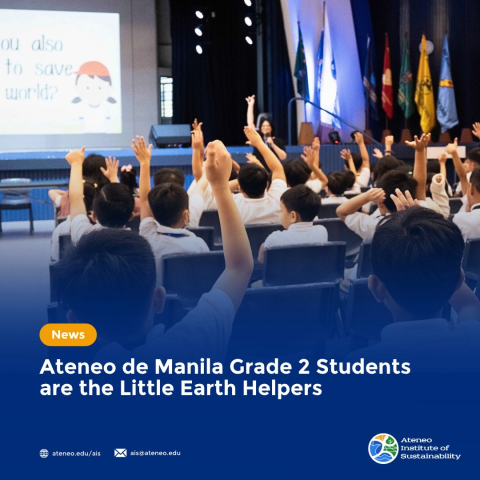
Ateneo de Manila Grade 2 students are the little Earth helpers
It was a great day for saving the world when Ateneo Institute of Sustainability (AIS) came to Ateneo Grade School to give a session on
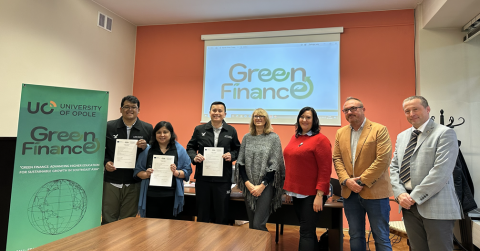
JGSOM representatives complete green finance training in Poland, sets sights on 2027 micro-credential launch
Representatives of Ateneo de Manila University's John Gokongwei School of Management (JGSOM) completed the second phase of their Erasmus+ Green Finance international mobility activities at
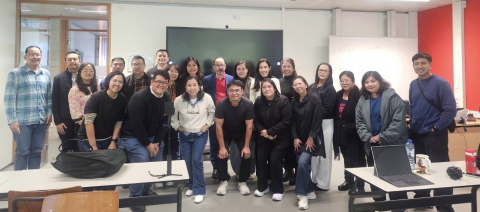
JGSOM Representatives Participate in Green Finance Training at the University of Twente
Enschede, Netherlands | October 15–16, 2026 Representatives of Ateneo de Manila University's John Gokongwei School of Management (JGSOM) participated in a specialized Green Finance training
Professor Emeritus Dr Emma Porio highlights climate resilience and biodiversity at international conferences
Emma E Porio, PhD, Professor Emeritus of Ateneo de Manila University and Principal Investigator of Ateneo's Manila Observatory Center for Climate Resilience and Public Health