Gleaning realities and socio-ecological systems in Climate Voices webinar
11 Jun 2026 | Raphael Diongco and Daniel C Ratilla






On 29 April 2026, the Ateneo Institute of Sustainability, which hosts the My Climate Risk – Ateneo de Manila University (MCR-Ateneo) Regional Hub, organized a webinar series, titled “Panghihibasan: Gleaning Stories from the Shell Gleaners”. My Climate Risk is a lighthouse activity of the World Climate Research Programme (WCRP), which aims to develop and mainstream a bottom-up approach to regional climate risk, and which has a network of hubs that span all continents except Antarctica.
The speaker, Ms Dawn Satumbaga, is an Instructor at the Department of Environmental Science at the Ateneo de Manila University, and whose research interests include coastal gleaning and community-based environmental work. She is also currently a PhD candidate at the Institute of Environmental Science and Management at the University of the Philippines-Diliman.
To open the session, Mr Raymond Rodolfo, Lecturer at the Department of Environmental Science and a Collaborator of the MCR-Ateneo Hub, underscored the importance of opening our eyes and ears to the realities of those in the peripheries, whose voices and experiences are often drowned out. In conducting research as a form of care, he encouraged participants to develop empathy, acknowledge the unequal impacts of climate change, support evidence-based solutions, and commit to meaningful action in solidarity with the voiceless.
Ms Satumbaga began her discussion by highlighting the general lack of “appeal” of mudflats and coastal ecosystems. Often overlooked in political and tourism conversations, these environments nevertheless serve as critical sources of food, income, and cultural identity for many coastal communities. One such practice is panghihibasan, or in English, gleaning. It originates from the root word “hibas,” or low tide; the entire word refers to the “gathering of invertebrates and other edible or commercially valuable organisms in coastal areas during low tide.” Gleaning is therefore an environmentally sensitive practice that requires an intimate knowledge of local environmental conditions. Ms Satumbaga noted that while gleaning is a diverse activity that anyone can partake in, women in particular were noted to be the most active in the community she studied.
Gleaning activities are often undertaken throughout the day, from sunrise to sunset, depending on the tidal cycles. This thus makes them particularly vulnerable to the ever-increasing effects of climate change on coastal ecosystems. Ms Satumbaga emphasized that climate-induced changes have cascading effects across multiple ecosystem services, which include biodiversity and food provision. On top of these, anthropogenic activities also have adverse effects on coastal ecosystems, notably habitat degradation, marine pollution, fisheries, nutrient enhancement, and the presence of invasive species.
Ms Satumbaga explained that gleaning serves a multitude of purposes and values for the community, spanning social, economic, and cultural, and which can include subsistence, livelihood generation, recreation, and social bonding. Socially, gleaning is both a means of fulfilling family obligations and a shared activity among relatives and friends. It fosters social bonding in that anyone, regardless of gender and age, can partake. Economically, gleaning contributes to both the subsistence and livelihood support of individual households and the larger community. Gleaning directly contributes to the local economy, with the selling of several products such as fermented oysters and other seafood in wholesale markets. Such a practice allows households to diversify and be more resilient, preventing them from being overly dependent on a single type of product. Culturally, gleaning is closely tied to local food preparations through variations of Filipino dishes, such as clam dinuguan (pork blood stew) and tinolang (chicken or fish and ginger soup) clam. All these serve to strengthen the communities’ connection to the local ecosystem as it increases interaction with and among it.
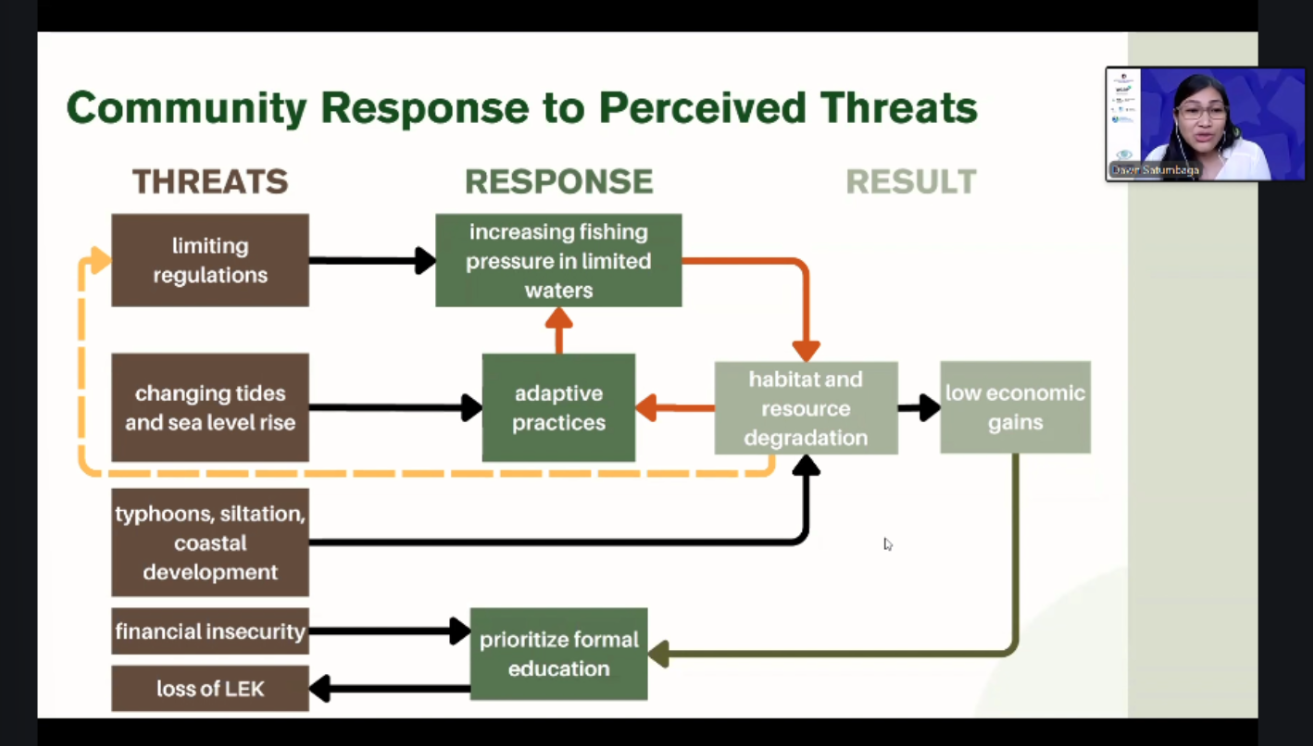
Community members reflected on various perceived threats to the practice of gleaning, which included both social and environmental threats. Ms Satumbaga also identified observed responses which further degraded the coastal ecosystem, thus triggering a positive feedback loop that ultimately places gleaners at a disadvantage, and threatens a gradual erosion of local ecological knowledge.

To conclude her talk, Ms Satumbaga quoted a member of the community who said: “Mahal ang krudo para mamangka kaya mas madalas kami magluna” (Fuel is expensive to go boating so we glean more often), which underscores how gleaning itself is a form of adaptation and a resilience practice. The line highlighted increasing fuel prices, placing relevance on the impacts driven by broader geopolitical tensions in West Asia. She further noted that rather than being understood as an isolated activity, gleaning should be seen as embedded within a broader social-ecological system in which multiple livelihoods are interconnected. Activities such as agriculture, aquaculture, and fishing are similarly dependent on the same coastal and environmental conditions that sustain gleaning. As such, she emphasized that these livelihood systems are interdependent and must be understood as part of a larger, integrated ecosystem where changes in the present dynamic cascade to affect everyone.
In this sense, it becomes necessary to amplify and listen to the voices of gleaners in coastal governance. Far from being defined solely by gleaning, gleaners are also fishers, cultural bearers, and witnesses to changing coastal environments.
The open forum section of the webinar touched upon the future of gleaning and the resilience of coastal communities amid environmental and socio-economic change. A central tension highlighted within gleaning households is the question of what their children should pursue in the future, with many encouraging formal schooling so they can join the formal economy and avoid relying on gleaning as a primary source of income.More broadly, the discussion emphasized the importance of supporting adaptation through community-specific approaches. She underscored the need for localized climate information, as they more accurately respond to local conditions and enable gleaners to better prepare for harvesting activities. Ultimately, she emphasized that strengthening resilience requires not only addressing environmental threats, but also recognizing and amplifying the voices, experiences, and knowledge systems of coastal communities themselves.
The session was attended by participants from the Philippines, Burkina Faso, Georgia, and the United Kingdom, among others. This webinar is part of the 2026 iteration of the “Climate Voices on the Ground: Perspectives from Different Sectors” webinar series, and was its second session. The series occurred in April 2026. Information on other similar events by MCR-Ateneo can be accessed here.
Recent News
You may also like these articles

Growing with purpose: How Mekeni Food Corporation turns adversity into shared value
From a small backyard operation in Porac, Pampanga, to an internationally recognized food brand exporting to 25 countries, Mekeni Food Corporation's journey demonstrates how businesses

Three Ateneo-incubated startups secure DOST-PCIEERD’s startup grant fund
Last 9 November, during the opening day of Philippine Startup Week 2026, Soolok Properties Inc, Pili AdheSeal Inc, and Saltric Power (PDG Engineering Services), three
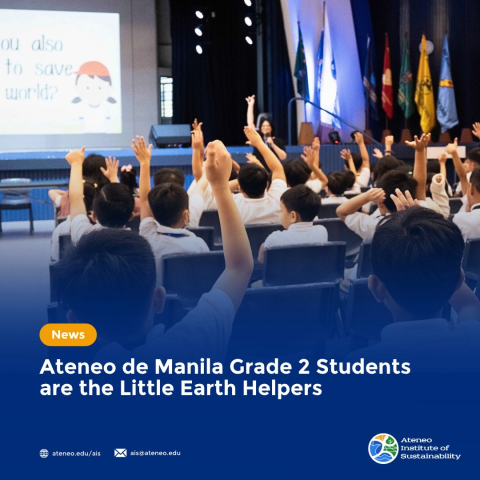
Ateneo de Manila Grade 2 students are the little Earth helpers
It was a great day for saving the world when Ateneo Institute of Sustainability (AIS) came to Ateneo Grade School to give a session on
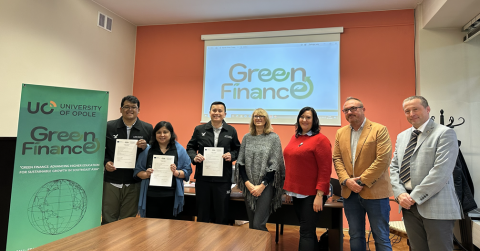
JGSOM representatives complete green finance training in Poland, sets sights on 2027 micro-credential launch
Representatives of Ateneo de Manila University's John Gokongwei School of Management (JGSOM) completed the second phase of their Erasmus+ Green Finance international mobility activities at
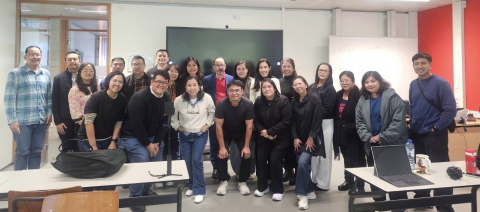
JGSOM Representatives Participate in Green Finance Training at the University of Twente
Enschede, Netherlands | October 15–16, 2026 Representatives of Ateneo de Manila University's John Gokongwei School of Management (JGSOM) participated in a specialized Green Finance training
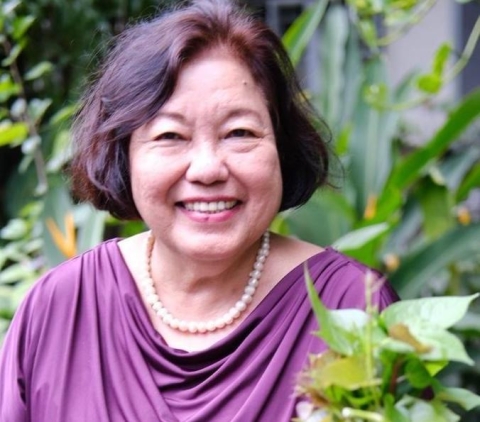
Professor Emeritus Dr Emma Porio highlights climate resilience and biodiversity at international conferences
Emma E Porio, PhD, Professor Emeritus of Ateneo de Manila University and Principal Investigator of Ateneo's Manila Observatory Center for Climate Resilience and Public Health