AIS welcomes new school year through a campus sustainability tour with Maynilad
08 Jun 2026 | by Andre Jacques Tigno




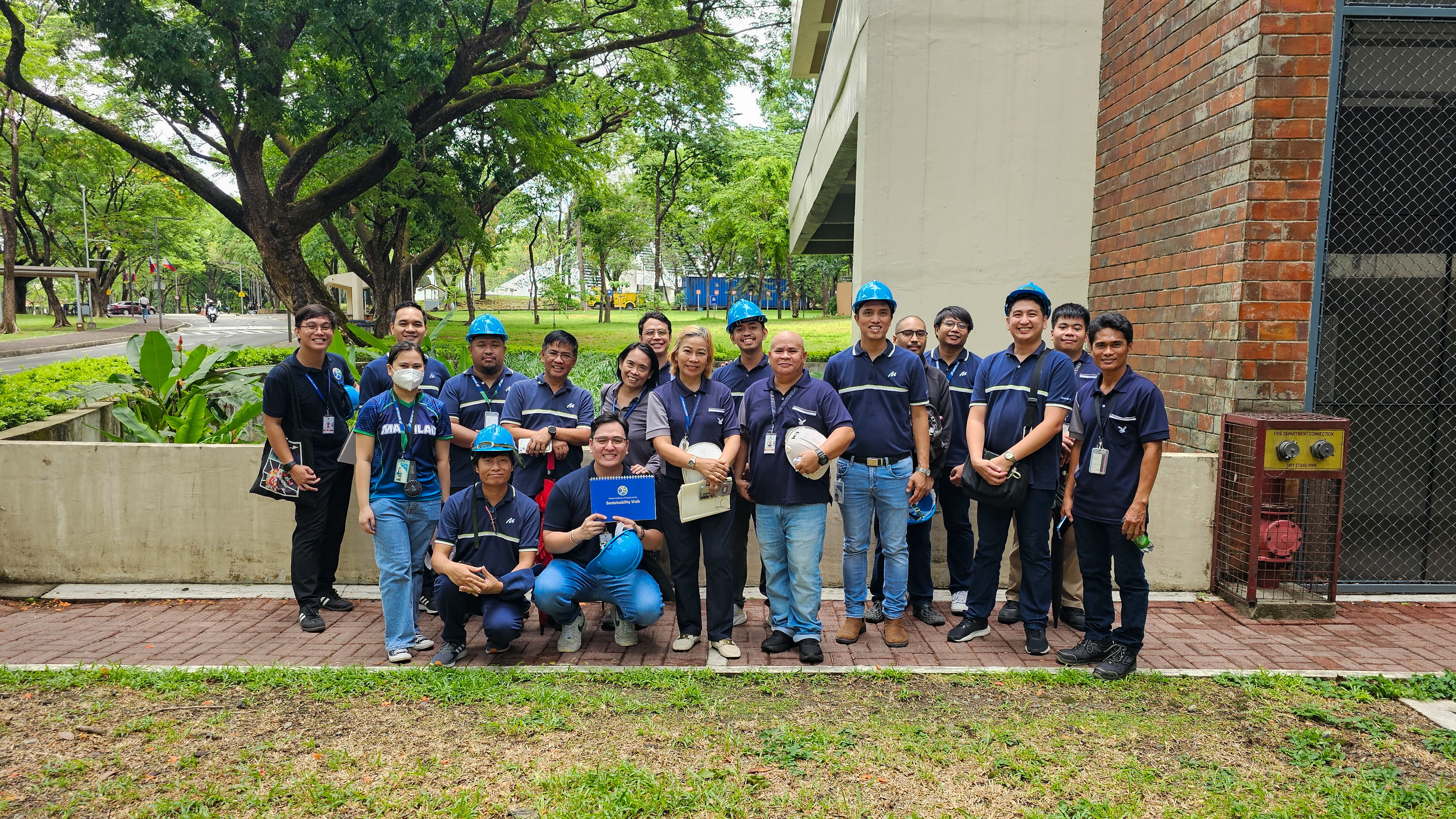
Opening the first day of SY 2026-2027, the Ateneo Institute of Sustainability (AIS), along with the Central Facilities Management Office (CFMO), facilitated a Sustainability Walk for Maynilad officials of Maynilad on 1 June 2026. The morning walk was tailored-fit to the context of Maynilad, a water utility service provider in Metro Manila. The walk highlighted Ateneo de Manila’s initiatives on water sustainability.
Eleven officials from Maynilad’s Sustainability, Water Supply, and Wastewater Divisions were on a benchmarking visit to see up close the University’s water recycling, water detention, and wastewater treatment structures. Leading the activity are Mr Theodore J Cacayan and Mr Andre Jacques Tigno of AIS’ Organizational Sustainability Program, as well as AIS Founding Director and The Lily Gokongwei Ngochua Leadership Academy Director Dr Assunta Cuyegkeng. They are joined by the CFMO Custodial Services Group Head Ms Joy R Sobremonte and Grounds, Trees and Waste Management Section Head Mr Ariel O Mendoza.
The first stop is the New Rizal Library (NRL), which is the first building to be installed with solar panels and rainwater harvesting system in the Loyola Heights Campus. Maynilad was given exclusive access to the rooftop and basement of the building to observe how the rainwater harvesting system works, including the rooftop collection, storage and filtration at the basement’s cistern, and final storage at the reservoir tank to be pumped back at the rooftop. As of June to September 2024, the University harvested around 1,500 cubic meters (cu.m.) of rainwater, which is used for dual-flushing of toilets at the library and irrigation of surrounding green spaces.
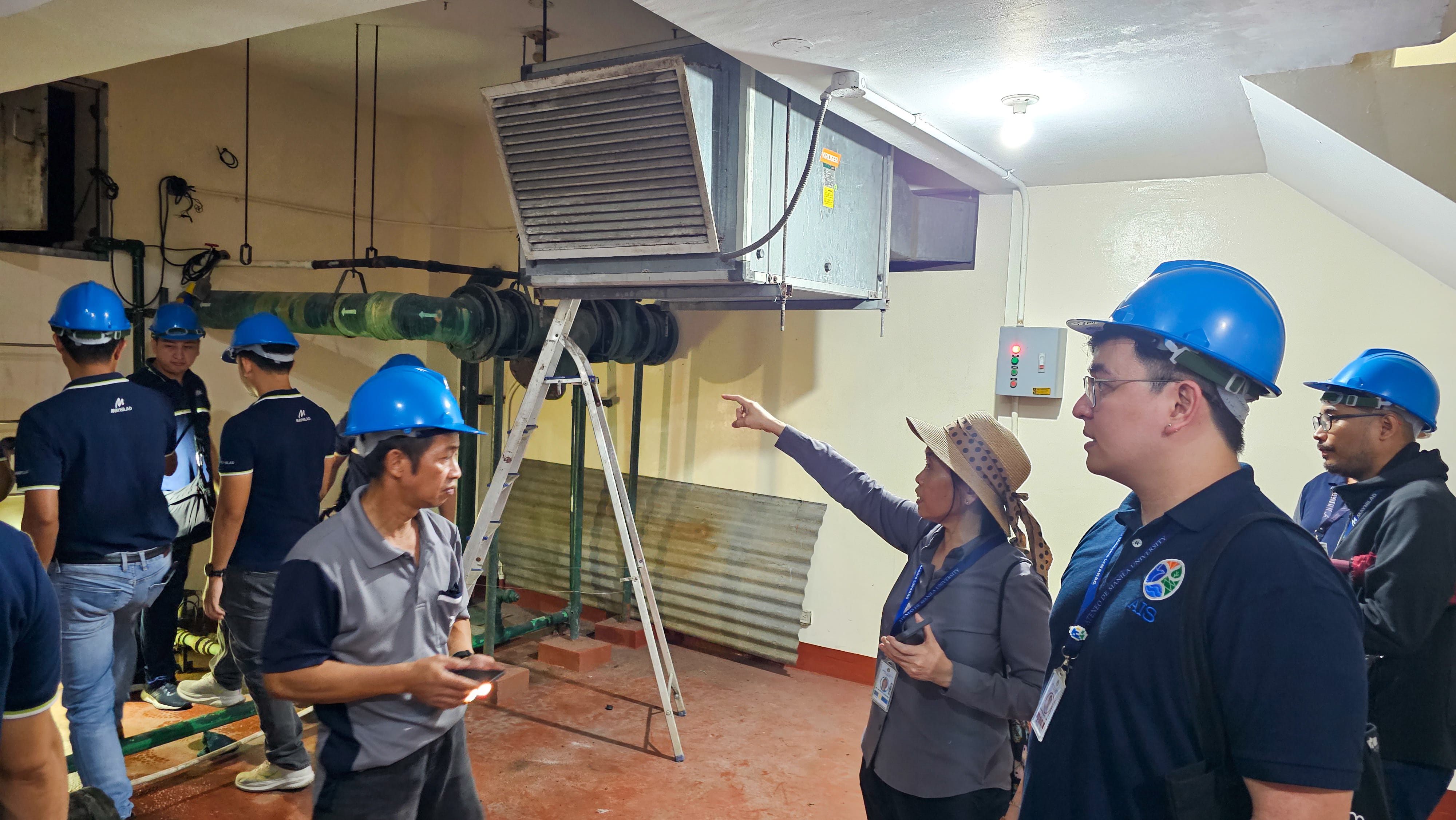
Dr Cuyegkeng, who was the proponent of the rainwater harvesting system, also imparted her stories on how this initiative was transformed from idea to implementation. Rizal Library Director Ms Joenabie Arevalo and Reference and Information Services Section Head Mr Mark James G Cayabyab were also present in the library segment of the walk.
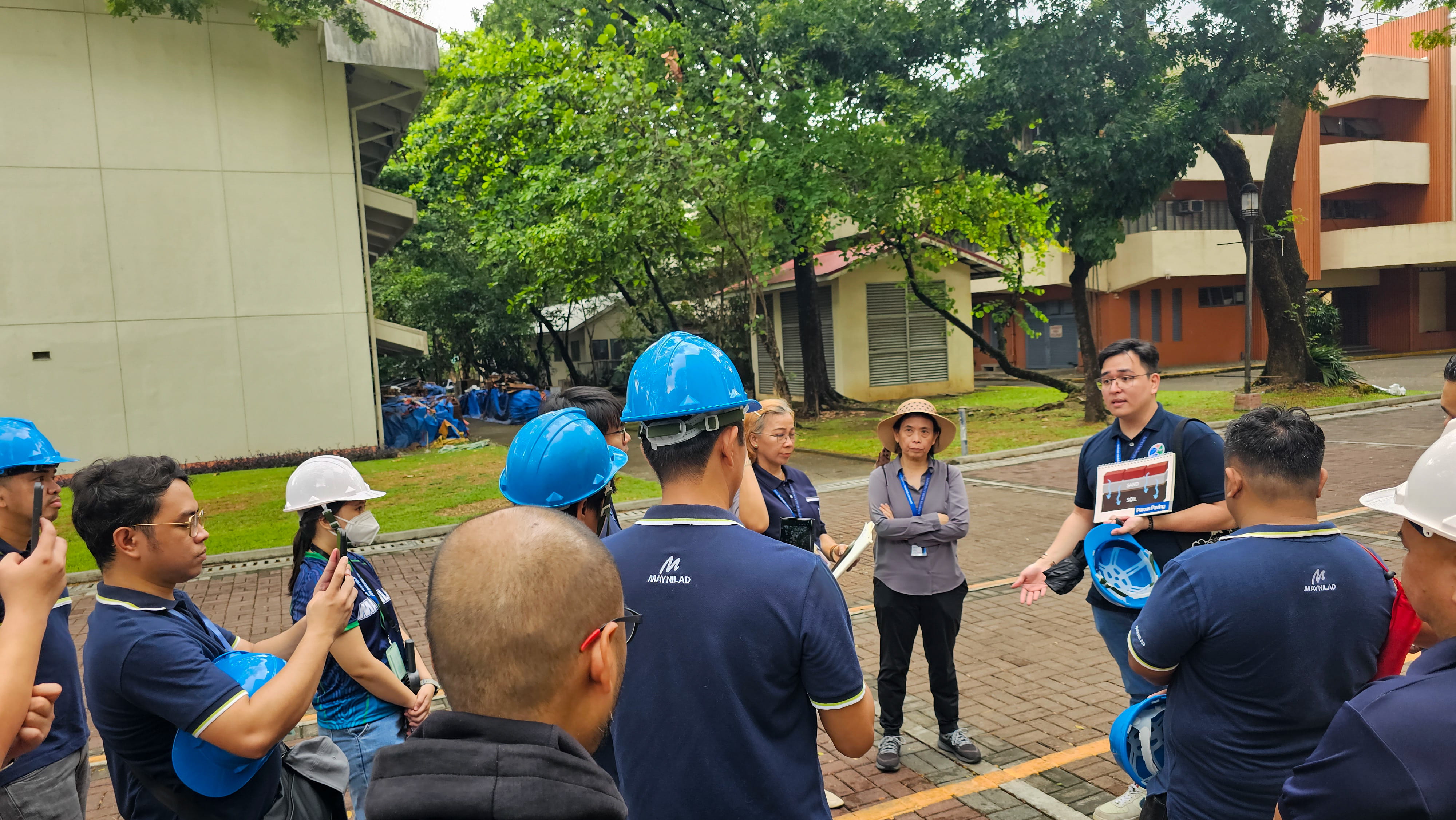
Another stop is the iconic Red Brick Road, which features the porous paving that acts not just as an additional campus aesthetic but also as a flood control strategy. Unlike cemented roads that move water to storm drains and later to downstream tributaries, porous pavements move water from surface to the soil underneath, which thus recharge groundwater. This also benefits the soil of surrounding green spaces on campus by redirecting rainwater from the storm drainage back to the natural environment.

Maynilad was also given the opportunity to visit the water detention pond behind the University Dormitory. In the Loyola Heights campus, there are four detention ponds that capture rainwater before they flow to downstream communities. Through these ponds, porous pavements, and rainwater harvesting systems, Ateneo is able to reduce the amount of runoff that may contribute to downtown flooding.
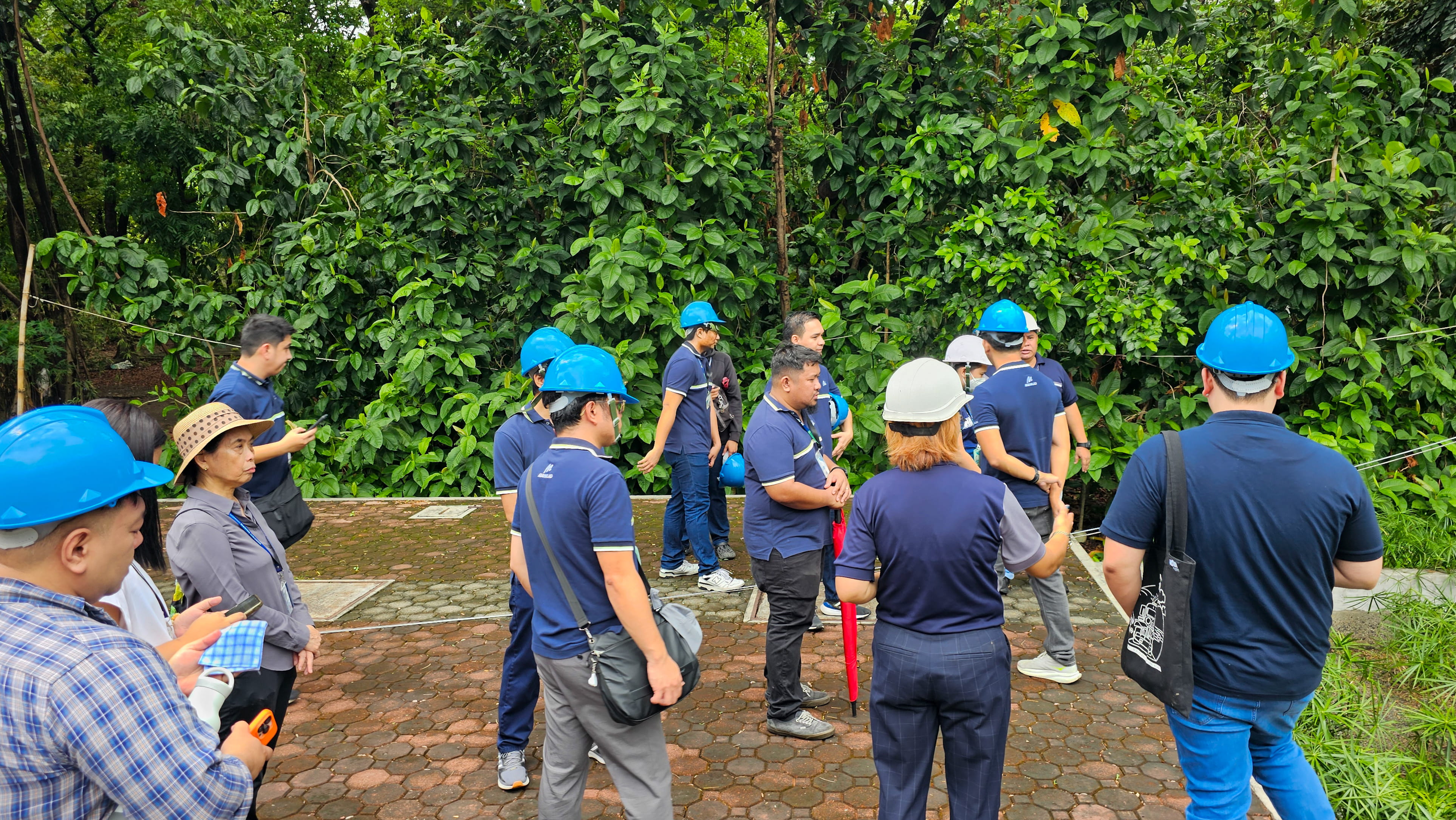
Also featured in the walk are the wastewater treatment systems. For older buildings, wastewater from toilets and faucets go down to the Decentralized Wastewater Treatment System (DeWaTS), which recycles the wastewater from ten adjacent buildings on campus. This facility, hidden within the green spaces near Katipunan Avenue, features a passive system of aerobic and anaerobic processes using microbes to filter wastewater, which is then collected and used to irrigate campus green spaces.
The walk ended at the Building Wastewater Treatment System (BWaTS) of the International Residence Hall (IRH). After the enactment of the 2016 Sustainability Policies and Specific Guidelines, future buildings on campus are required to have their own BWaTS. Aside from the IRH, the Matteo Ricci Building also has its own wastewater treatment system. Over school years 2019 to 2022, the University recycled 15,000 cu. m of wastewater from all its treatment systems, which was used for irrigating green spaces.
The walk has exposed Maynilad officials not just to infrastructures, but also to systems in place that allow sustainability to take root in Ateneo. This immersive experience, according to Dr Cuyegkeng, gives Maynilad a picture of how water conservation happens in localized contexts like the Loyola Heights campus. Finally, this validates the University’s sustainability commitments towards the UN Sustainable Development Goal #6 (Clean Water and Sanitation), in which Ateneo remains to be the No. 1 Philippine Institution and No. 100 globally in SDG 6 according to the recent 2025 Times Higher Education Impact Rankings.
AIS sends its gratitude to partners who made this Sustainability Walk possible, namely the New Rizal Library, Central Facilities Management Office (CFMO), and Campus Safety and Mobility Office (CSMO).
AIS offers its Sustainability Walk to Ateneo stakeholders and external visitors. For inquiries, you may reach out via email through ais@ateneo.edu.
Recent News
You may also like these articles

Growing with purpose: How Mekeni Food Corporation turns adversity into shared value
From a small backyard operation in Porac, Pampanga, to an internationally recognized food brand exporting to 25 countries, Mekeni Food Corporation's journey demonstrates how businesses

Three Ateneo-incubated startups secure DOST-PCIEERD’s startup grant fund
Last 9 November, during the opening day of Philippine Startup Week 2026, Soolok Properties Inc, Pili AdheSeal Inc, and Saltric Power (PDG Engineering Services), three

Ateneo de Manila Grade 2 students are the little Earth helpers
It was a great day for saving the world when Ateneo Institute of Sustainability (AIS) came to Ateneo Grade School to give a session on
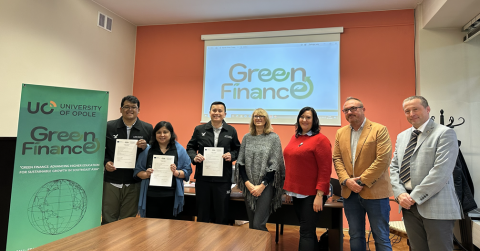
JGSOM representatives complete green finance training in Poland, sets sights on 2027 micro-credential launch
Representatives of Ateneo de Manila University's John Gokongwei School of Management (JGSOM) completed the second phase of their Erasmus+ Green Finance international mobility activities at
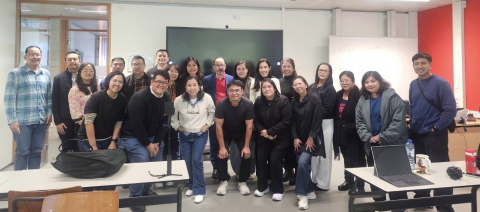
JGSOM Representatives Participate in Green Finance Training at the University of Twente
Enschede, Netherlands | October 15–16, 2026 Representatives of Ateneo de Manila University's John Gokongwei School of Management (JGSOM) participated in a specialized Green Finance training

Professor Emeritus Dr Emma Porio highlights climate resilience and biodiversity at international conferences
Emma E Porio, PhD, Professor Emeritus of Ateneo de Manila University and Principal Investigator of Ateneo's Manila Observatory Center for Climate Resilience and Public Health