AIS joins workshop on roadmapping towards more resilient Philippine food systems
18 Apr 2026 | Andre Jacques Tigno






The Ateneo Institute of Sustainability (AIS) attended the Food Systems Countdown Initiative (FSCI) Workshop, a national workshop on food systems transformation held at Astoria Plaza, Pasig City from 24 to 25 March 2026. The workshop featured a multistakeholder approach with technical experts and representatives from other reputable academic institutions, government agencies, and civil society organizations. Contributing to the pool of expertise, AIS was represented in the two-day event by its Program Officer for Organizational Sustainability, Mr Andre Jacques Tigno.
Organized by the Department of Science and Technology - Food and Nutrition Research Institute (DOST-FNRI), the workshop aimed to develop an agreed upon comprehensive framework for monitoring Philippine food systems from local to national levels. Grounded on scientific evidence, statistical data, and cultural contexts, the developed framework will inform the formulation of policies and the establishment of sustainable programs and projects to ensure sufficient, healthier, and more sustainable food supply for the Filipino society.
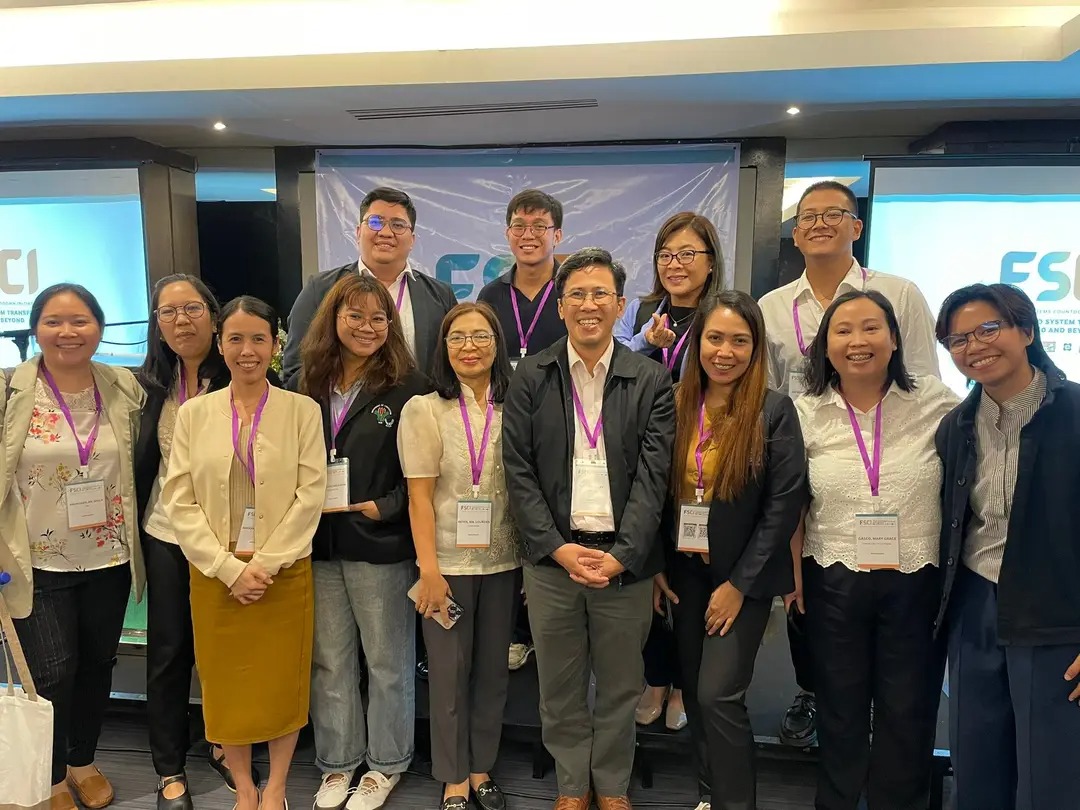
The workshop centered on the food system indicators by FSCI, a global interdisciplinary scientific alliance that tracks where we are now in our progress towards more sustainable food systems. The FSCI indicators are under five themes that influence and that are influenced by food systems: 1) diets, nutrition, and health, (2) environment, natural resources, and production, (3) livelihoods, poverty, and equity, and two crosscutting themes namely (4) resilience, and (5) governance.
In the workshop, Tigno was assigned to the resilience theme which aligns with the work of AIS. Each thematic group was asked to score the indicators according to a set of standards, such as accessibility for policymakers to interpret them and availability and/or feasibility of getting the data. Learn more about the FSCI framework and global food system indicators here.
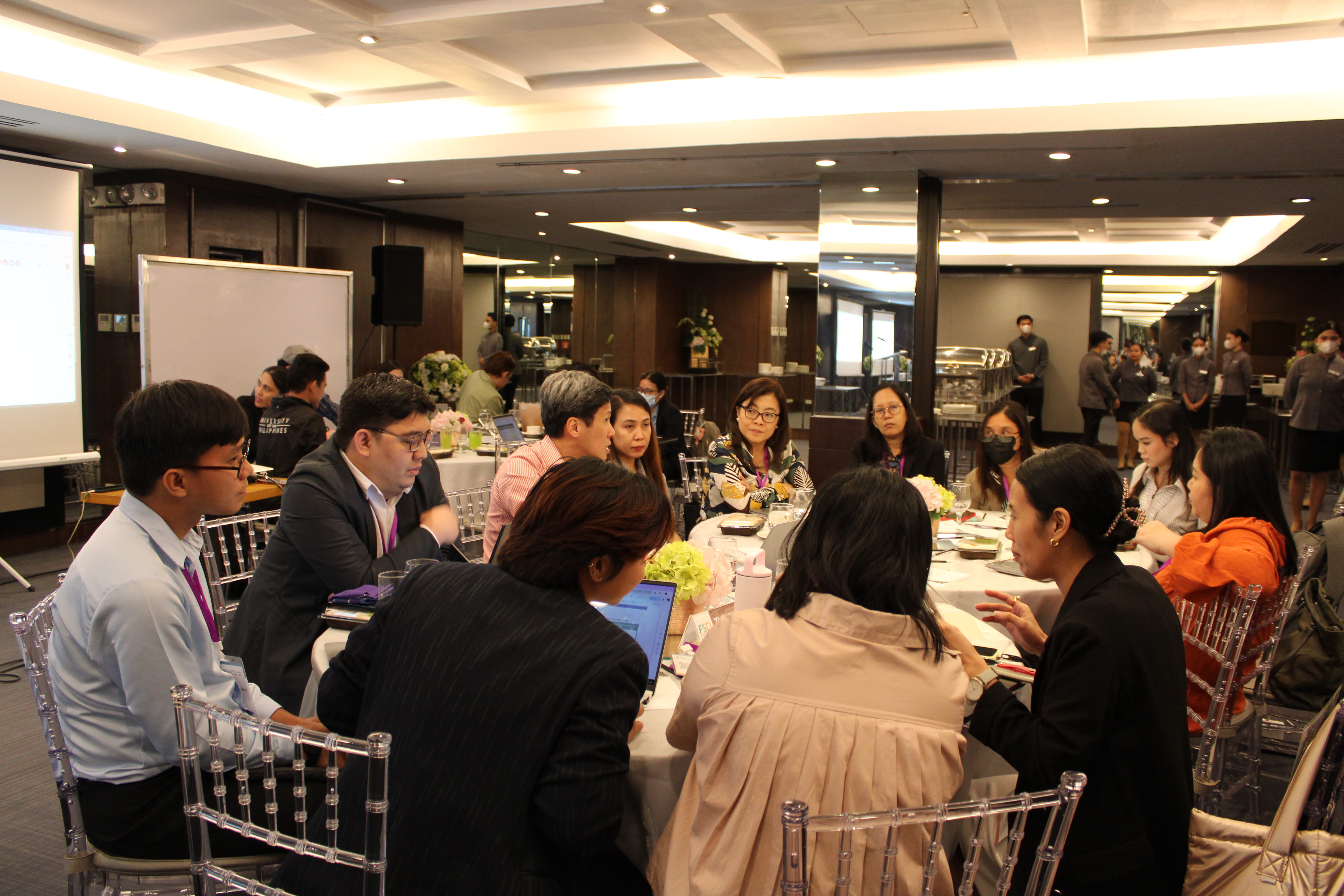
After two days, the FSCI workshop resulted in a uniquely identified set of national and subnational indicators that were still anchored on the globally set indicators, but with differences in terms of the availability of data sources in the Philippine context. This came with an agreement that not all global standards align with the geographical, cultural and socioeconomic contexts of the Philippines. While the set of new indicators is not yet final, they will be subject to validation in a future workshop.
In the end, food systems transformation is essential in achieving the Sustainable Development Goals (SDGs) by 2030. How we make our food should not harm the planet. How we deliver our food from farms to tables should not lead to further inequalities. This transformation is not an optional intervention, but an imperative to achieve a sustainable future. The future is to eat food without guilt, knowing that our food would come from a transformed system of care for one another and for the planet.
The FSCI Workshop of DOST-FNRI is organized in partnership with Global Alliance for Improved Nutrition (GAIN), and in collaboration with different stakeholders like government agencies, academic and research institutions, private sector and civil society organizations across the Philippines.
The Ateneo Institute of Sustainability can help provide guidance on systems transformation for sustainability with local partners and communities, whether in food, energy or resource management. You may book a consultation with AIS by sending an email to ais@ateneo.edu.
Recent News
You may also like these articles

Growing with purpose: How Mekeni Food Corporation turns adversity into shared value
From a small backyard operation in Porac, Pampanga, to an internationally recognized food brand exporting to 25 countries, Mekeni Food Corporation's journey demonstrates how businesses

Three Ateneo-incubated startups secure DOST-PCIEERD’s startup grant fund
Last 9 November, during the opening day of Philippine Startup Week 2026, Soolok Properties Inc, Pili AdheSeal Inc, and Saltric Power (PDG Engineering Services), three

Ateneo de Manila Grade 2 students are the little Earth helpers
It was a great day for saving the world when Ateneo Institute of Sustainability (AIS) came to Ateneo Grade School to give a session on
JGSOM representatives complete green finance training in Poland, sets sights on 2027 micro-credential launch
Representatives of Ateneo de Manila University's John Gokongwei School of Management (JGSOM) completed the second phase of their Erasmus+ Green Finance international mobility activities at
JGSOM Representatives Participate in Green Finance Training at the University of Twente
Enschede, Netherlands | October 15–16, 2026 Representatives of Ateneo de Manila University's John Gokongwei School of Management (JGSOM) participated in a specialized Green Finance training

Professor Emeritus Dr Emma Porio highlights climate resilience and biodiversity at international conferences
Emma E Porio, PhD, Professor Emeritus of Ateneo de Manila University and Principal Investigator of Ateneo's Manila Observatory Center for Climate Resilience and Public Health