Archīum: A step forward in Atenean research
03 Mar 2021 | Karl Eli Alconis

Christened after the Latin word for archive, the Loyola Schools’ Archīum is set to revolutionize the way we showcase our scholarly work, collaborate with our academic peers, and engage with the world.
On 24 January 2020, Ateneo de Manila University launched Archīum—an online institutional repository for the research and creative work produced by its faculty, professionals, and students. The first of its kind in the nation, Archīum is defining how faculty and student works are archived and presented to the public, thereby opening new avenues and expanding the university’s reach worldwide.

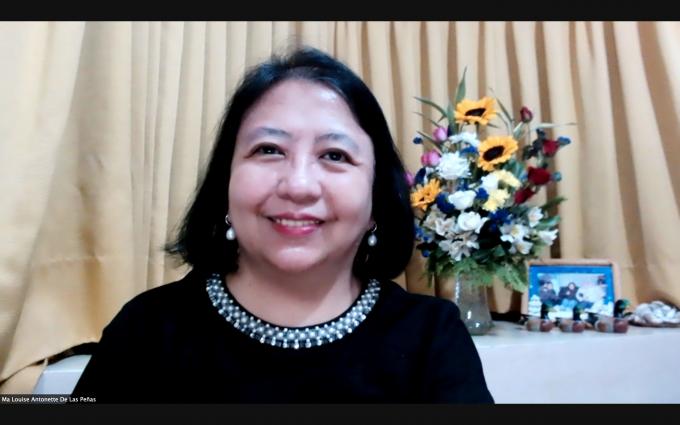
The brainchild of Dr Ma Louise Antonette De Las Peñas, Associate Dean for Research and Creative Work, Archīum was first conceived as a website to highlight the university’s scholarly work while following Intellectual Property guidelines. To help in its conceptualization, the Office of the President created a committee composed of select offices as well as representatives from the Loyola Schools and the Ateneo Professional Schools. The project’s development was collaborative with the Office of the Associate Dean for Research and Creative Work working closely with the University Marketing and Communications Office, the IT Resource Management Office, the Rizal Library, and Bepress. The Archīum is also made possible through the support of the Office of the President as well as the University Research Council which is headed by Dr Filomeno V Aguilar.
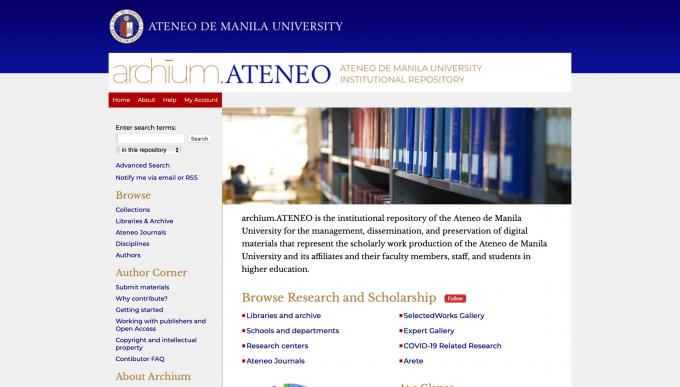
Archīum paves the way for enhanced visibility by making Atenean scholarly work easily accessible to the rest of the world. Search engine optimization allows entries on the Archīum website to be more visible in search results, attracting more people to the archive. In a nod to the university’s academic reputation, Archīum offers a centralized platform that showcases the knowledge it produces. Specifically in accreditation, the Archīum allows accreditors easier access to faculty and student output. The Archīum even fosters opportunities for collaboration beyond the university. By making university research available online, and also by highlighting researcher specializations, bridges are built for communication between possible collaborators.
The vision is for Archīum to really help the university, to put forward the research agenda of the university, and to make the university more connected to the outside world: people reading our scholarship, people using our work for the good.
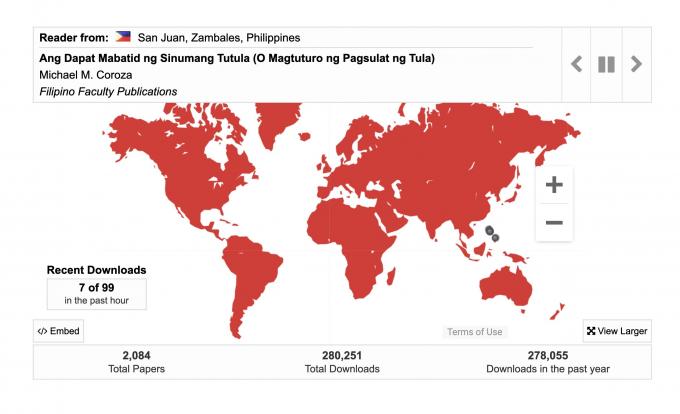
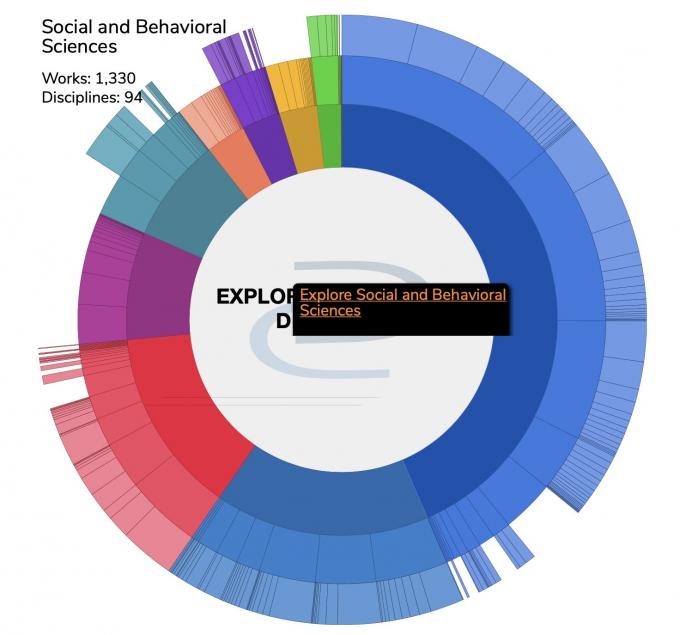
The archive also allows researchers—and in some cases, everyone—to view and connect with the readership of their work. The home page features a map that shows where readers are situated, whether in the Philippines or elsewhere. Works archived include faculty journal publications (organized both by field and faculty profile), special scholarly features (including the Arts of Magis series), content from Areté’s Magisterial Lectures, along with articles from Ateneo-based academic journals. Of these, 2,084 papers in 334 disciplines have been uploaded—at least five years’ worth of academic work shared to the website’s worldwide audience. Audience reception has been warm and encouraging as evidenced by 278,405 downloads at the time of writing.
Despite its already extensive collection and impressive numbers, De Las Peñas says that Archīum is just getting started. “The vision is for Archīum to really help the university, to put forward the research agenda of the university, and to make the university more connected to the outside world: people reading our scholarship, people using our work for the good.” Alongside the continued collection of past and upcoming research, plans are in place to expand the archive to include student theses, and to utilize the website in the hosting of academic conferences. This is exemplary of Archīum’s forward and outward gaze as it strives to achieve its long-term goal: to populate the archive, to highlight the university’s output, and to engage not just academics, but the world at large through research work.
Visit the Archīum website here. Learn more on how to submit your research here.
Photos courtesy of the Office of the Associate Dean for Research and Creative Work
You may also like these articles
Updating of Medical Records Second Semester SY 2026-2027
14 November 2026 TO: Undergraduate and Graduate Students FROM: Higher Education Office of Health Services-College SUBJECT: Updating of Medical Records Second Semester SY 2026-2027 Please

Promotion of Faculty in the Senior High School (Memo U2627-050)
(Memo # U2627-050) I am pleased to announce that upon the recommendation of the Senior High School Committee on Faculty Rank and Permanent Appointment and the endorsement of the Vice President for Basic Education, I am approving the promotion of the following faculty members in the Senior High School:

Demise of Mr Silvestre P Villarin(Memo U2627-049)
(Memo U2627-049) We extend our condolences to Fr Jose Ramon “Jett” T Villarin SJ and his family on the passing of his father, Mr Silvestre Villarin, on 18 November 2026 at the age of 96. Fr Villarin is the former University President, a faculty member of the Department of Physics, and the Executive Director of the Manila Observatory.

[AGS] National Book Week
Open a Book, Stories Unfold, Wonders Flow Let us come together as one AGS community to celebrate the 92nd National Book Week with the theme

Three Ateneo-incubated startups secure DOST-PCIEERD’s startup grant fund
Last 9 November, during the opening day of Philippine Startup Week 2026, Soolok Properties Inc, Pili AdheSeal Inc, and Saltric Power (PDG Engineering Services), three
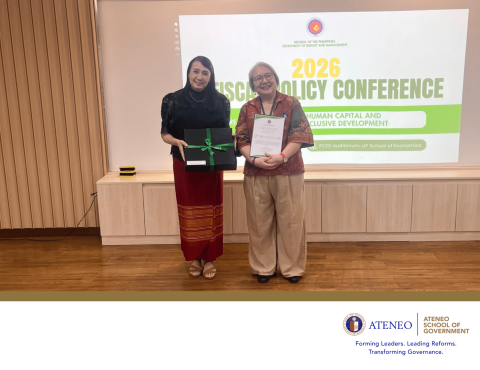
Ateneo Policy Center presents study on local health spending at DBM Fiscal Policy Conference 2026
On 19 October 2026, the Ateneo School of Government, through its research and policy unit, the Ateneo Policy Center (APC), presented findings from a study