Interdiscipline: Global and Area Studies Conversations
27 Oct 2026 | Ricardo Leong Institute for Global and Area Studies


Public Mental Health in Southeast Asia
By: Maria Regina Hechanova*
In 2021, 80.4 million cases of mental disorders were reported across ASEAN countries - an 87% increase since 1990 (Szucs et al, 2025). The rise in mental health concerns can be attributed to several reasons. Countries in Southeast Asia (SEA) are in the Pacific Ring of Fire and are prone to natural disasters (Hechanova et al, 2020). Technology has also exposed us instantaneously to natural and man-made disasters that have vicarious effects. On the other hand, mental health literacy has increased, and people speak more freely about experiencing depression and anxiety and are getting diagnosed (Szucs et al, 2025).
Culture can also influence the experience of trauma. Many countries in SEA are collectivist and trauma is often experienced interdependently. Feelings of self-blame, guilt, and shame are common when a loved one experiences trauma. However, in collectivist cultures, healing is also a function of both individuals and their reference groups. As such, group-based interventions may be effective because they reduce shame, alienation, isolation, passivity, and helplessness (Hechanova et al, 2020). We saw this in our community-based interventions for mental health and substance use for low and moderate-risk individuals. In their peer support groups, people took comfort knowing they were not alone and others had similar experiences.
Culture is critical in determining how people deal with mental health problems. For example, a belief in traditional Chinese culture is that illness is caused by excessive, undisciplined, or unbalanced emotion and talking about painful issues can stir up painful feelings. Hence, rather than talking about their experience, people may cope by comforting others, keeping busy, and volunteering to help others rather than talk-therapy. Projective methods such as art and theater activities that facilitate emotional expression may also be received more positively in these cultures (Hechanova et al, 2020).
Another important component of culture is spirituality. Spirituality shapes our attributions and how we cope. For example, yoga and meditation are integral parts of Hinduism and have been used to treat clinical conditions such as anxiety, substance abuse, insomnia, and pain. In Islam, pure thoughts and deeds bring people closer to Allah and keep them mentally healthy. In Buddhist cultures the belief is that emotions can be regulated by the circulation of ch’i (air) and determined by one’s food and drink. Indigenous healing practices in Buddhist cultures include acupuncture, qigong, and herbal medicine.
Among Christians, the beliefs that God “never gives you a problem you cannot manage” and “God helps those who help themselves" allows hardships to be framed as spiritual opportunities. Church masses, prayer groups, ministries, and religious communities provide a common form of social networks among Filipinos and are important social resources (Hechanova et al, 2020). Given the importance of spirituality, countries such as the Philippines have embraced a bio-psycho-social-spiritual approach to mental health.
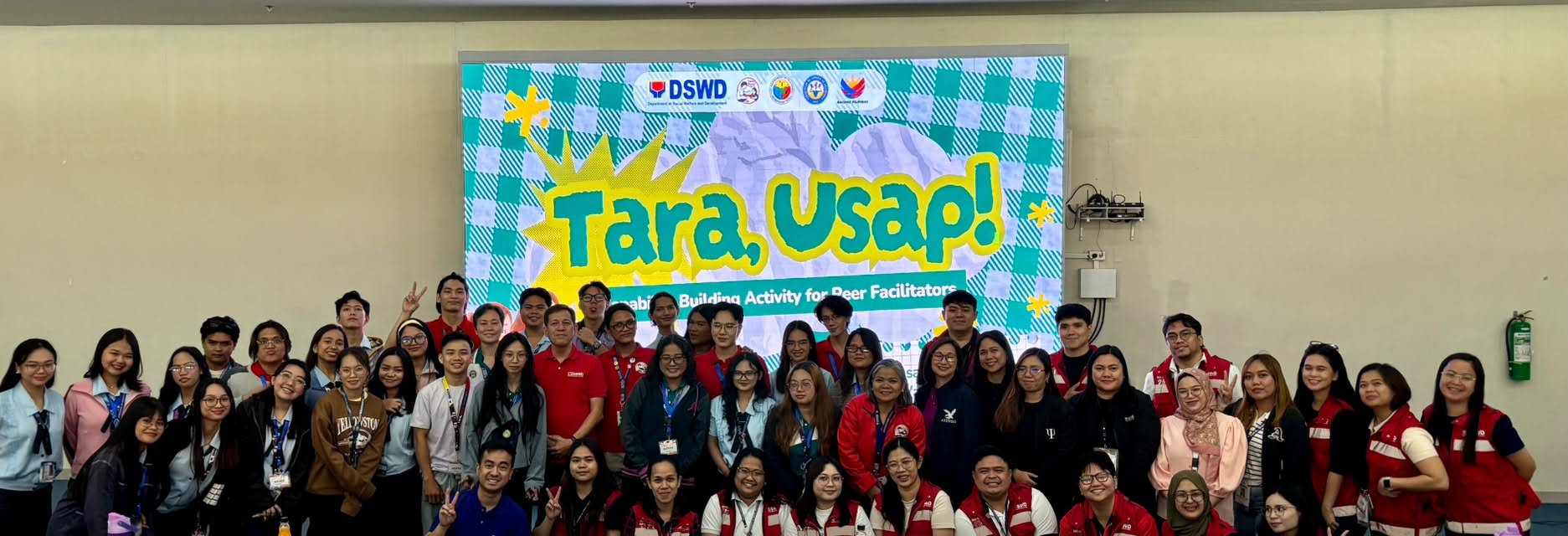
When people think of mental health and interventions, we often put undue burden on the person without acknowledging that behaviors of persons are influenced by their environment. Even if mental health illness may have biological and psychological causes, they may be exacerbated by family, school, community or workplace stressors. To address the gaps in access to mental health, the World Health Organization (2022) has advocated for bringing down mental health services in schools, communities and workplaces. In schools, this means embedding socio-emotional competencies in the curriculum and providing prevention, screening, early interventions and referral to students at-risk. For example, our Ateneo Public Mental Health Collaborative is working with the Department of Social Welfare and Development to design and pilot-test the Tara Usap (Let’s Talk) Circles where college students are trained to deliver mental health prevention programs in peer support groups.
In communities, this may mean embedding mental health services in primary care and promoting mental health literacy and help-seeking and making mental health services in health centers. Workplaces may also do their part by creating workplaces that are psychologically safe, promoting wellbeing, embedding mental health screening as part of annual physical exams, providing early interventions, and putting referral mechanisms in place. In all settings, it is important to allot resources and implement policies to prevent stressors such as harassment, workplace bullying, sexual harassment and discrimination.
Families also have a role to play because mental health conditions may also be caused by harsh parenting, abuse, neglect and poor supervision. The recent spate of school shootings suggests two common factors – access to guns and victimization of children in nihilistic violent extremist groups. Conversely, family support is a protective factor and there are many people with mental health conditions who have full and productive lives because they get the support they need.
In developing countries, mental health problems may also be caused by societal stressors such as poverty, unemployment, traffic, flooding, violence, the lack of access to mental health resources, and poor disaster preparedness. As such, we cannot keep forcing our people to be resilient without making our government accountable for improving our living conditions. We need to move away from thinking of mental health as an individual problem and realize that government, communities, workplaces, schools, families and friends all have a part to play in the mental health and wellbeing of our people.

*Regina “Gina” Hechanova, PhD, RPsy is a professor of Psychology and the Dean of the Dr. Rosita G. Leong School of Social Sciences of the Ateneo de Manila University. She is a registered psychologist and heads the Ateneo Public Mental Health Collaborative.
References:
Hechanova, M. R. M., Waelde, L. C., & Torres, A. N. (2020). Cultural implications for the provision of disaster mental health and psychosocial support in Southeast Asia.
Szücs, A., van der Lubbe, S. C., de la Torre, J. A., Valderas, J. M., Hay, S. I., Bisignano, C., ... & Ng, M. (2025). The epidemiology and burden of ten mental disorders in countries of the Association of Southeast Asian Nations (ASEAN), 1990–2021: findings from the Global Burden of Disease Study 2021. The Lancet Public Health, 10(6), e480-e491.
World Mental Health Report (2022).
https://www.who.int/publications/i/item/9789240049338
Interdiscipline: Global and Area Studies Conversations is a community space for commentaries, dialogue, and expert analysis by RGLSOSS faculty and researchers working across global and area studies. It brings together scholars of China, Europe, Japan, Korea, Southeast Asia, and other regions to examine pressing regional and global issues while reflecting on the changing ways in which we understand regions, connections, and the world.
Area studies has long brought disciplinary perspectives into conversation through sustained attention to particular places, histories, languages, societies, and cultures. Yet the boundaries that define regions and fields of study are neither natural nor fixed. They have been shaped by changing political, economic, and intellectual contexts, and continue to be reworked as people, ideas, institutions, commodities, and problems move across borders (Cumings, 1997).
Global studies responds to these connections by moving beyond exclusively national or disciplinary frames. Rather than treating the “global” as a scale that supersedes the regional or local, it invites interdisciplinary, multicentric, and multilevel approaches that examine interactions among global, regional, national, and local processes (Nederveen Pieterse, 2013). From this perspective, global and area studies are complementary forms of inquiry: global perspectives illuminate connections and processes that traverse regions, while area-based knowledge provides the historical, cultural, and empirical grounding necessary to understand how those processes take different forms in particular places.
Interdiscipline creates a space for this conversation. Taking interdisciplinarity to mean the interaction and hybridization of knowledge across established disciplinary boundaries (Frickel, 2004, as cited in Fuchsman, 2012), the forum encourages scholars to think across disciplines, regions, and scales. In doing so, it seeks more context-sensitive, critically reflexive, and plural understandings of contemporary regional and global affairs.
Works cited
Cumings, B. (1997). Boundary displacement: Area studies and international studies during and after the Cold War. Bulletin of Concerned Asian Scholars, 29(1), 6–26.
Fuchsman, K. (2012). Interdisciplines and interdisciplinarité: Political psychology and psychohistory compared. Issues in Integrative Studies, 30, 128–154.
Nederveen Pieterse, J. (2013). What is global studies? Globalizations, 10(4), 499–514.
You may also like these articles

Tickets available for Heiwa no Senritsu: Mga Himig ng Kapayapaan
Tickets are now available for the upcoming orchestral concert, Heiwa no Senritsu: Mga Himig ng Kapayapaan, which will take place on 8 December 2026, 7:00

Join Ateneo Art Gallery for the Curator's Walkthrough and Exhibition Reception of "Printmaking: From Albrecht Dürer to Kiki Smith"
Ateneo Art Gallery presents a Curator’s Walkthrough of Printmaking: From Albrecht Dürer to Kiki Smith with guest curator Tony Godfrey on 20 November 2026 (Friday)

Interdiscipline: Global and Area Studies Conversations
Imagining the Mahjong Table as a Third Space By: Erwin Guile Dizon* Once a game reserved for private gatherings at home, mahjong is seeing a
Ateneo Confucius Institute empowers local Chinese teachers through creative skills workshop
The Confucius Institute at Ateneo de Manila University (CI-Ateneo) held its annual training program for local Chinese language teachers on 24 October 2026, adopting a

Cultures of care: Mental health and pathways to well-being in Southeast Asia
The Ateneo Initiative for Southeast Asian Studies (AISEAS) and the Department of Psychology, both under the Dr Rosita G Leong School of Social Sciences (RGLSOSS)

[Ateneo Press Review Crew] All Love Lost: Duterte and China’s Entangled Shadow, A Review of Unrequited Love: Duterte’s China Embrace
On 20 May 2026, a harrowing report about a radioactive steel plant located in Tagoloan, Misamis Oriental, Northern Mindanao, hit the headlines. Among the over