Interdiscipline: Global and Area Studies Conversations
22 Sep 2026 | Ricardo Leong Institute for Global and Area Studies




Japan in Asia: Agency, Partnerships, and Regional Change
By: Maria Thaemar C. Tana*
How do we understand Japan’s changing role in a regional environment where the boundaries between development, diplomacy, and security are increasingly blurred?
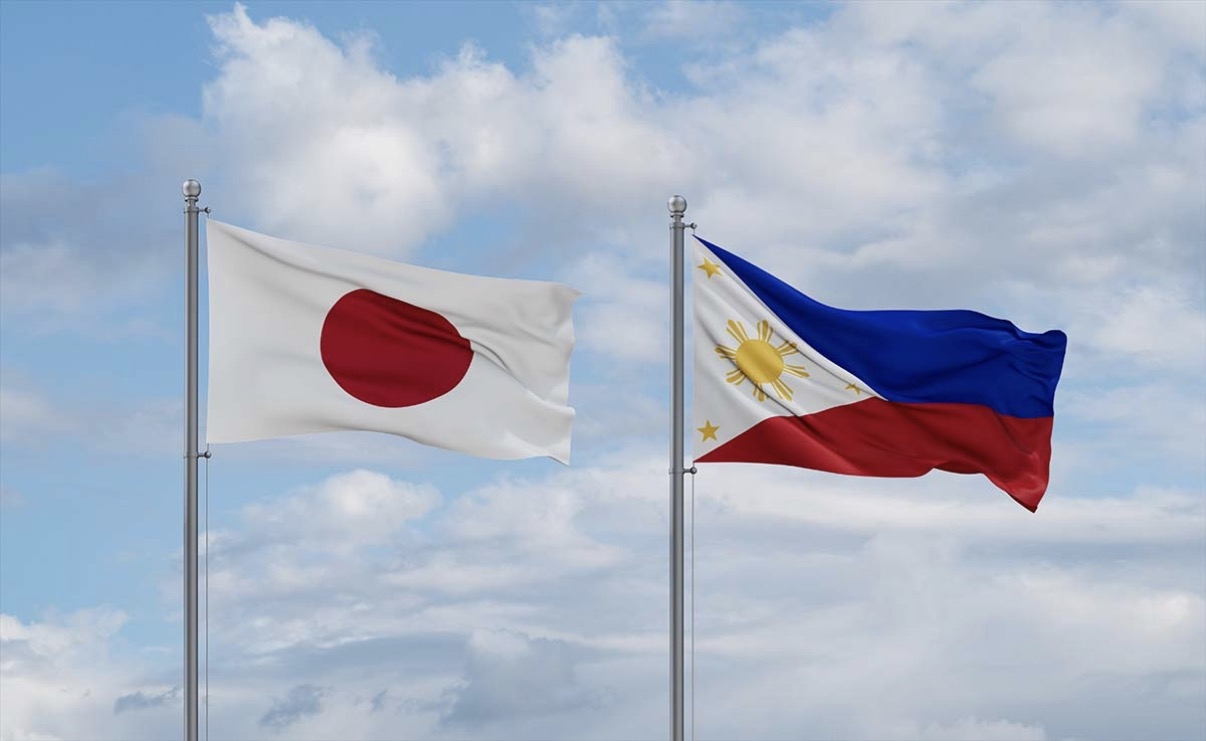
This question is particularly visible in Philippine–Japan relations. The relationship offers an especially useful way of tracing Japan’s transformation in Asia. What began in the postwar period as a difficult process of reconciliation later developed around trade, investment, and official development assistance. Today, the relationship includes maritime security, defense cooperation, coast guard capacity-building, military exercises, and increasingly institutionalized strategic coordination.
I have examined the relationship from the Philippine side during the early postwar years. Rather than asking only what Japan wanted from Southeast Asia, I considered how a newly independent Philippines understood and responded to Japan’s return to the region. Informed by Mohammed Ayoob’s subaltern realism, particularly its emphasis on the security concerns of postcolonial states and on the ways domestic state-building, political vulnerability, and external pressures intersect, I probed into why Philippine policy toward Japan could not be reduced simply to alliance politics or Cold War strategy.
Much of the existing literature explains the deepening relationship through changes in Japanese foreign and security policy or through shifts in the regional strategic environment. These explanations are important but they can leave the Philippines looking largely reactive.
In one of my current research projects, I ask how the Philippines, despite being the materially weaker partner, has helped shape the relationship. Drawing on scholarship on recipient-government agency, I develop the idea of recipient-state agency around four processes: priority setting, negotiation, domestic adaptation, and institutionalization. By tracing these processes across different Philippine administrations, from the postwar period through Aquino III, Duterte, and Marcos Jr., I examine how Philippine agency has persisted even when foreign policy orientations have changed significantly. The broader argument is that asymmetry does not necessarily mean passivity. The weaker state can still influence what cooperation looks like, how it develops, and how deeply it becomes institutionalized.
Expanding the scope of my research to Japan and South Korea’s strategic engagement with the Philippines, I ask what happens when two important regional actors independently expand their security relationships with the same partner. The project develops the idea of competitive complementarity. Japan and South Korea are not formally dividing responsibilities in the Philippines, nor are they simply competing against each other. Their separate engagements nevertheless produce areas of complementarity. Japan has become particularly prominent in maritime security, coast guard cooperation, surveillance, and institutional capacity-building, while South Korea has played a major role in defense-industrial cooperation and military modernization. These roles increasingly overlap, making the relationship more complex than a simple division of labor. At the same time, Philippine choices matter: Manila’s procurement decisions, capability requirements, and partnership strategies help determine how Japanese and South Korean contributions fit into its broader security policy.
Moving from Japan’s relations with the Philippines to its relationship with China, I examine why intensifying strategic competition has not resulted in a broader collapse of Japan–China relations. Japan has strengthened its defense posture, deepened its alliance with the United States, and become more concerned about China’s military capabilities. Yet extensive economic ties and diplomatic engagement continue. My interest is therefore not simply whether Japan is “balancing” or “engaging” China, but how it manages both competition and interdependence at the same time.
Through research, I find the intersection of area studies and International Relations particularly productive. Japanese Studies provides the historical, institutional, and regional grounding necessary to understand Japan on its own terms. International Relations offers concepts for thinking comparatively about power, asymmetry, interdependence, agency, and regional order. Philippine Studies and Philippine foreign policy, meanwhile, provide an important corrective to approaches that view regional politics mainly from the perspective of larger powers.
While Japan remains the principal point of departure, my research moves across levels and borders — how Japan’s role in Asia has changed over time and how these changes are reflected in its foreign relations, development cooperation, society policy, and regional diplomacy; how Japan adapted the concept of human security to changing international and domestic pressures; and how development cooperation and peacebuilding intersected in a difficult conflict environment.
Studying contemporary Japan increasingly requires looking at the relationships through which its regional role is constructed—with the Philippines, South Korea, China, and other Indo-Pacific actors. At the same time, examining these relationships reminds us that regions are not simply geographic containers. They are produced and continually reshaped through historical experiences, political choices, institutional ties, and interactions among states and societies. For me, this is also where area studies and global studies meet: in understanding a country deeply while also tracing the connections, pressures, and interactions that extend beyond it.

*Maria Thaemar Camañag Tana, PhD is an Associate Professor in the Japanese Studies Program at Ateneo de Manila University. She was previously a Japan Foundation-Global Japan Studies (JF-GJS) Fellow at the Institute for Advanced Studies on Asia, the University of Tokyo. Her research focuses on Japan's foreign policy, specifically its relations with Southeast Asia and South Korea.
Interdiscipline: Global and Area Studies Conversations is a community space for commentaries, dialogue, and expert analysis by RGLSOSS faculty and researchers working across global and area studies. It brings together scholars of China, Europe, Japan, Korea, Southeast Asia, and other regions to examine pressing regional and global issues while reflecting on the changing ways in which we understand regions, connections, and the world.
Area studies has long brought disciplinary perspectives into conversation through sustained attention to particular places, histories, languages, societies, and cultures. Yet the boundaries that define regions and fields of study are neither natural nor fixed. They have been shaped by changing political, economic, and intellectual contexts, and continue to be reworked as people, ideas, institutions, commodities, and problems move across borders (Cumings, 1997).
Global studies responds to these connections by moving beyond exclusively national or disciplinary frames. Rather than treating the “global” as a scale that supersedes the regional or local, it invites interdisciplinary, multicentric, and multilevel approaches that examine interactions among global, regional, national, and local processes (Nederveen Pieterse, 2013). From this perspective, global and area studies are complementary forms of inquiry: global perspectives illuminate connections and processes that traverse regions, while area-based knowledge provides the historical, cultural, and empirical grounding necessary to understand how those processes take different forms in particular places.
Interdiscipline creates a space for this conversation. Taking interdisciplinarity to mean the interaction and hybridization of knowledge across established disciplinary boundaries (Frickel, 2004, as cited in Fuchsman, 2012), the forum encourages scholars to think across disciplines, regions, and scales. In doing so, it seeks more context-sensitive, critically reflexive, and plural understandings of contemporary regional and global affairs.
Works cited
Cumings, B. (1997). Boundary displacement: Area studies and international studies during and after the Cold War. Bulletin of Concerned Asian Scholars, 29(1), 6–26.
Fuchsman, K. (2012). Interdisciplines and interdisciplinarité: Political psychology and psychohistory compared. Issues in Integrative Studies, 30, 128–154.
Nederveen Pieterse, J. (2013). What is global studies? Globalizations, 10(4), 499–514.
Recent News
You may also like these articles

Tickets available for Heiwa no Senritsu: Mga Himig ng Kapayapaan
Tickets are now available for the upcoming orchestral concert, Heiwa no Senritsu: Mga Himig ng Kapayapaan, which will take place on 8 December 2026, 7:00

Join Ateneo Art Gallery for the Curator's Walkthrough and Exhibition Reception of "Printmaking: From Albrecht Dürer to Kiki Smith"
Ateneo Art Gallery presents a Curator’s Walkthrough of Printmaking: From Albrecht Dürer to Kiki Smith with guest curator Tony Godfrey on 20 November 2026 (Friday)

Interdiscipline: Global and Area Studies Conversations
Imagining the Mahjong Table as a Third Space By: Erwin Guile Dizon* Once a game reserved for private gatherings at home, mahjong is seeing a
Ateneo Confucius Institute empowers local Chinese teachers through creative skills workshop
The Confucius Institute at Ateneo de Manila University (CI-Ateneo) held its annual training program for local Chinese language teachers on 24 October 2026, adopting a

Cultures of care: Mental health and pathways to well-being in Southeast Asia
The Ateneo Initiative for Southeast Asian Studies (AISEAS) and the Department of Psychology, both under the Dr Rosita G Leong School of Social Sciences (RGLSOSS)

Interdiscipline: Global and Area Studies Conversations
Public Mental Health in Southeast Asia By: Maria Regina Hechanova* In 2021, 80.4 million cases of mental disorders were reported across ASEAN countries - an