The Gray Areas of Trade Secrets in the Google-Uber Dispute
10 Jul 2023 | Jose Miguel Francisco



The infamous dispute between Google and Uber for its self-driving technology is among the long line of events that contribute to the historical memories of residents in Silicon Valley, technology enthusiasts, and more turbulently, technology-based company employees. This fiasco is deeply rooted in the concept of intellectual property (IP) that, to put it simply, determines ownership rights over the property. That said, the type of IP argued in this case is Trade Secrets, a form of IP rights classified as confidential information that legally binds authorized persons to secrecy.
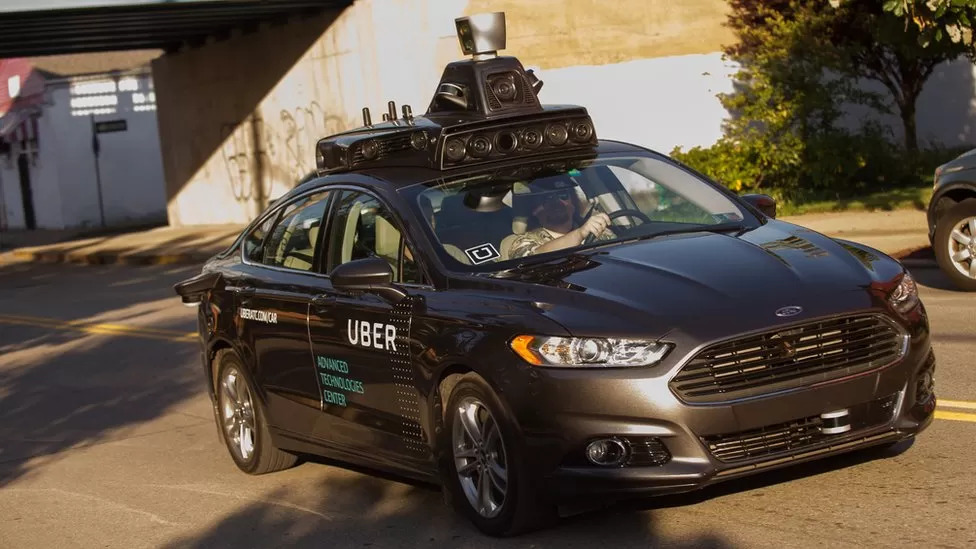
Ultimately, Google claimed that Uber allegedly stole trade secrets from them (Wakabayashi and Isaac, 2017) by conspiring the acquisition of Otto, a self-driving truck startup, with its owner and ex-google engineer, Anthony Levandowski. Levandowski was the former head of Google’s self-driving technology experiment, Project Chauffeur, presently known as Waymo. The project invested millions into research through the direction of Levandowski. This included the purchase of assets relevant to self-driving technology from his independently owned hardware firms (Duhigg, 2018). The dispute ended in 2018 in favor of Google by having Uber transfer a 0.34% equity stake which amounted to a whopping USD 245 million payment at the time of the reports (Bhuiyan, 2018).
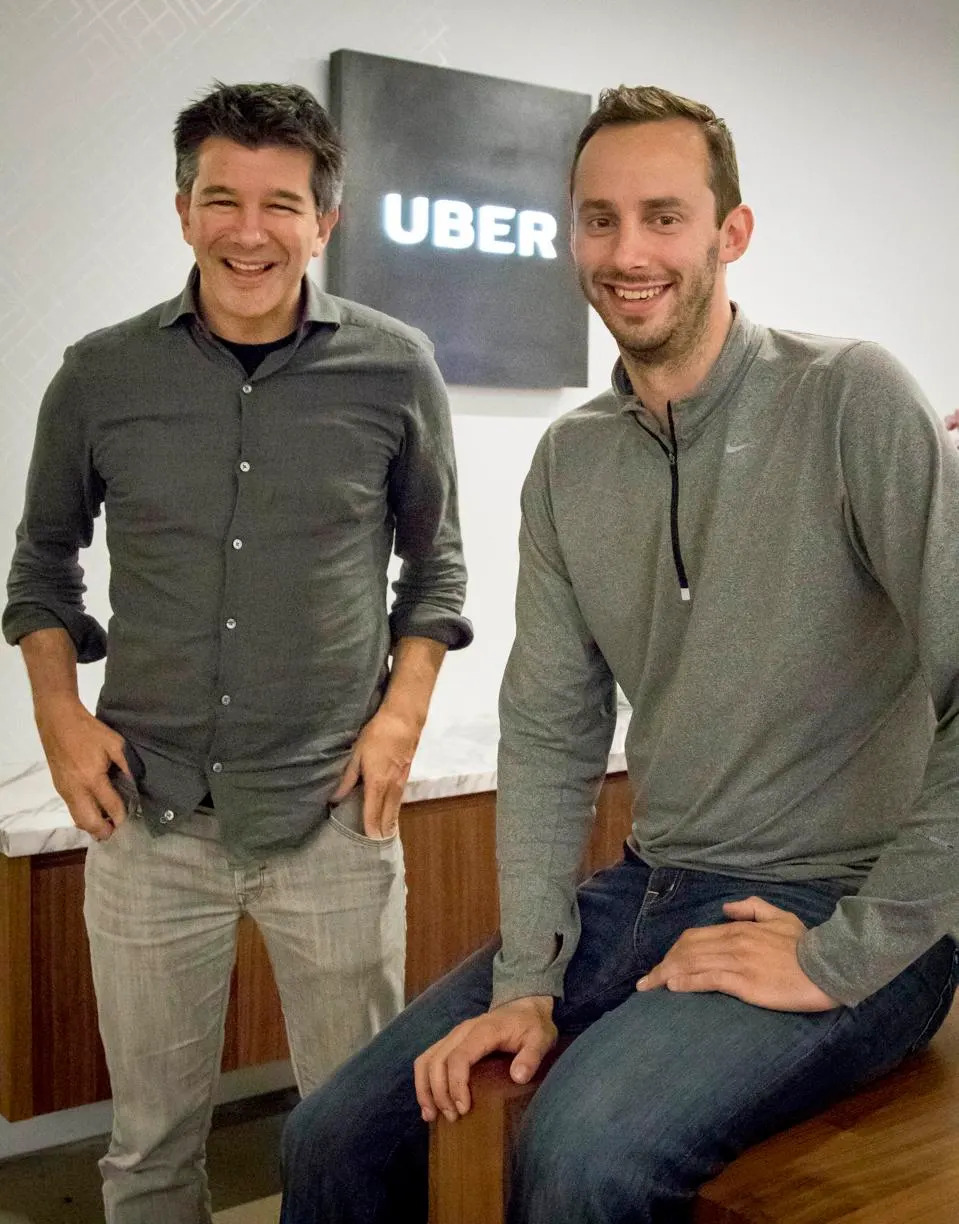
Despite this, prosecutors continued to hunt down Levandowski. The judge, who eventually sentenced him to prison, even mentioned the importance of his decision towards the danger of future cases related to trade secrets theft whereas a non-custodial sentence would implicate “a green light to every future brilliant engineer to steal trade secrets” (BBC, 2020). The ex-Googler pleaded guilty to one count of trade secrets theft, was sentenced to 18 months in prison, and agreed to pay an approximate total of USD 845,000 in 2020 (Harris & Korosec, 2020). He was later pardoned by former US President Donald Trump 5 months after the verdict (Kharpal, 2021). At present, Levandowski runs a blockchain-based mobile network and commercial AI trucking service.

The escalation of such issues prompts thought-provoking questions related to the extent of trade secrets laws. These are what may be regarded as “gray areas” because they challenge the status quo and look at facts from different points of view. For instance, one may question the extent of ownership an employer has over a trade secret: “Is it fair for companies to claim FULL ownership of ideas built by an employee? Should financing projects constitute full ownership of a trade secret? What if ownership for trade secrets were split like publicly owned companies in an exchange?” In relation to the case, it is given that Levandowski committed heinous acts but it does not change the fact that some of the ideas originated from him. While it is also understood that there would not be such inventions without the finances provided by Google, it is also worth asking whether they have the right to fully own the invention.
Another issue hooked to this is power trips. For instance, it is worth dissecting the very definition of a trade secret because it may serve as a ground for employers to exploit and threaten employees with, and vice versa. This is especially important for careers like software engineering which create algorithms and products for commercial purposes. It is then worth asking whether the current legal definition of a trade secret encapsulates and completely possesses what is needed: “Does the current definition of a trade secret fully embody the purpose and essence of the intellectual property?” The Google vs Uber case proved that Levandowski stole some 14,000 files. In fact, the premise of Google’s Trade Secrets Theft case is built around this fact. Despite this, some experts deemed the recovered files as invaluable while some saw them as grounds for the accusation. In another instance, Levandowski threatened his departure from Google several times to ensure he got his way and in many instances, he did. For a prestigious company like Google and a financially-capable individual like Levandowski, this may have been acceptable to deal with but could the same be said for a smaller organization or less fortunate person? At present, protection is only given to employers through the United States (US) Defend Trade Secrets Act which grants companies the power to sue and block employees from working for competitors. The absence of protection for employees may cause an uproar as evidenced by The New Yorker which provided testimonies of employees who were frightened to leave technology companies fearing that they may be threatened upon an attempt of departing (Duhigg, 2018).
This may also be exploited for the purpose of retaining talent, which consequently diminishes competition and potentially, innovation. Companies would only need to threaten employees for violating the US Defend Trade Secrets Act to get them to stay, hindering them from career-advancing job opportunities. That said, it is worth exploring how this may be best done by serving both parties without compromising the other. In other words, it is about finding the right balance between companies protecting their businesses and not robbing employees of holistic opportunities.
“In technology, all that matters is tomorrow.”
- Anthony Levandowski
In summary, the case of Google, Uber, and Levandowski highlight three key gray areas of trade secrets that contain questions related to ownership, power tripping, and employment retention. These gray areas may be addressed by engaging in discourses that question these areas in relation to trade secrets at its core and must be addressed to eradicate possible temptations that prompt exploitation and deception. More importantly, it must be addressed to deliver protection to those who deserve it. By doing so, talent and innovation may flourish the way it should, especially in emerging markets like the Philippines. Duhigg’s ender in his New Yorker eye-opening piece prompts this especially when he recounted his conversation with Levandowski who questioned the very importance of history in a world of technology. To end, it is worth, rather, it should be asked if it is worth burying the mistakes of the past when building the world for tomorrow.
Jose Miguel Francisco (the author), is a BS Management graduate with a specialization in Decision Sciences and a minor in Data Science & Analytics from the Ateneo de Manila University. Miguel was involved in the Young Innovators Leadership Program (YILP) 2022 cohort of the Ateneo Intellectual Property Office (AIPO).
As of writing, Miguel currently works at Mastercard as an Associate Analyst for Business Development under their LAUNCH program.
For more information about AIPO and its services, please visit www.aipo.ateneo.edu or email them at aipo@ateneo.edu. You may also check out their Facebook and LinkedIn pages for the latest updates and announcements.
Disclaimer: The views and opinions expressed in this article are those of the author/s and do not necessarily reflect the official policy or position of the Ateneo de Manila University
References
BBC. (2020, August 5). Anthony Levandowski: Ex-google engineer sentenced for theft. BBC News. Retrieved January 5, 2023, from https://www.bbc.com/news/world-us-canada 53659805
Bhuiyan, J. (2018, February 9). Uber and Alphabet have settled their self-driving lawsuit with a $245 million equity payout. Vox. Retrieved January 5, 2023, from https://www.vox.com/2018/2/9/16993598/uber-waymo-alphabet-self-driving-… lawsuit-245-million-payout
Duhigg, C. (2018, October 15). Did Uber steal Google's intellectual property? The New Yorker. Retrieved January 5, 2023, from https://www.newyorker.com/magazine/2018/10/22/did uber-steal-googles-intellectual-property
Kharpal, A. (2021, January 22). Trump pardons Anthony Levandowski, the engineer who stole self-driving car secrets from Google. CNBC. Retrieved January 5, 2023, from https://www.cnbc.com/2021/01/20/anthony-levandowski-pardoned-after-stea… secrets-from-google.html
Korosec, K., & Harris, M. (2020, August 4). Anthony Levandowski sentenced to 18 months in prison as new $4B lawsuit against Uber is filed. TechCrunch. Retrieved January 5, 2023, from https://techcrunch.com/2020/08/04/anthony-levandowski-sentenced-to-18-m… prison-as-new-4b-lawsuit-against-uber-is-filed/
S.1890 - Defend Trade Secrets Act of 2016 - congress. (n.d.). Retrieved January 4, 2023, from https://www.congress.gov/bill/114th-congress/senate-bill/1890
Wakabayashi, D., & Isaac, M. (2017, February 24). Google self-driving car unit accuses Uber of using stolen technology. The New York Times. https://www.nytimes.com/2017/02/23/technology/google-self-driving-waymo…
Recent News
You may also like these articles

Updating of Medical Records Second Semester SY 2026-2027
14 November 2026 TO: Undergraduate and Graduate Students FROM: Higher Education Office of Health Services-College SUBJECT: Updating of Medical Records Second Semester SY 2026-2027 Please
Promotion of Faculty in the Senior High School (Memo U2627-050)
(Memo # U2627-050) I am pleased to announce that upon the recommendation of the Senior High School Committee on Faculty Rank and Permanent Appointment and the endorsement of the Vice President for Basic Education, I am approving the promotion of the following faculty members in the Senior High School:
Ateneo Law reaches semifinals, earns top oralist honors at MyBar SAMCO 2026
Ateneo Law School made a strong debut at the Malaysian Bar Sports Arbitration Mooting Competition (MyBar SAMCO) 2026, with one of its teams advancing to
Demise of Mr Silvestre P Villarin(Memo U2627-049)
(Memo U2627-049) We extend our condolences to Fr Jose Ramon “Jett” T Villarin SJ and his family on the passing of his father, Mr Silvestre Villarin, on 18 November 2026 at the age of 96. Fr Villarin is the former University President, a faculty member of the Department of Physics, and the Executive Director of the Manila Observatory.

Growing with purpose: How Mekeni Food Corporation turns adversity into shared value
From a small backyard operation in Porac, Pampanga, to an internationally recognized food brand exporting to 25 countries, Mekeni Food Corporation's journey demonstrates how businesses

[AGS] National Book Week
Open a Book, Stories Unfold, Wonders Flow Let us come together as one AGS community to celebrate the 92nd National Book Week with the theme