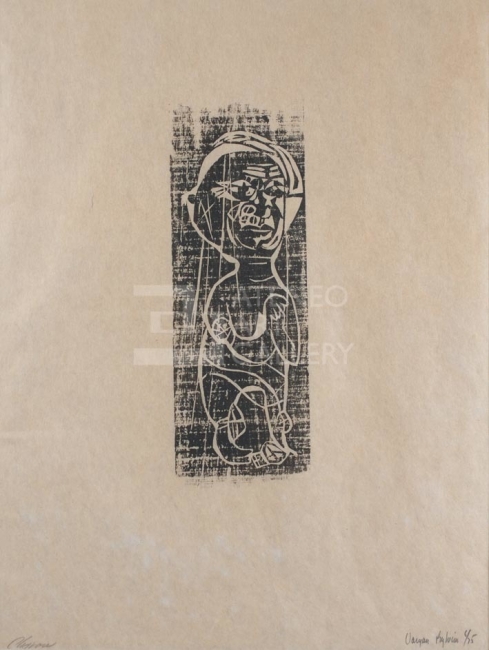
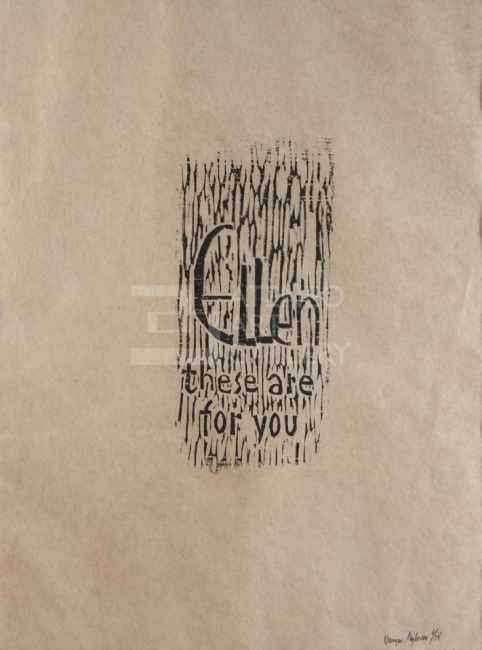
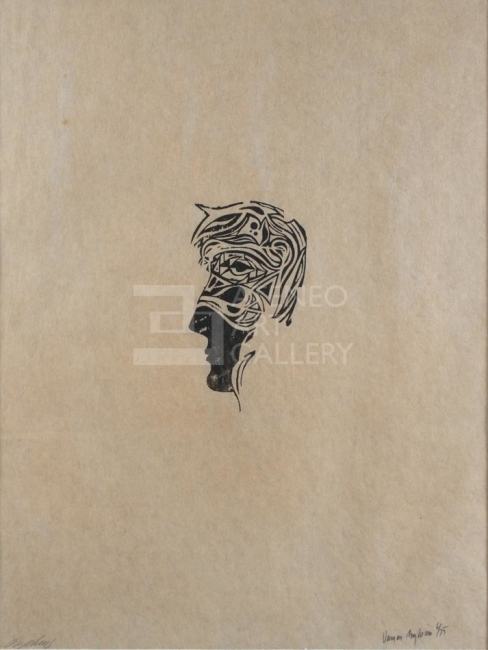
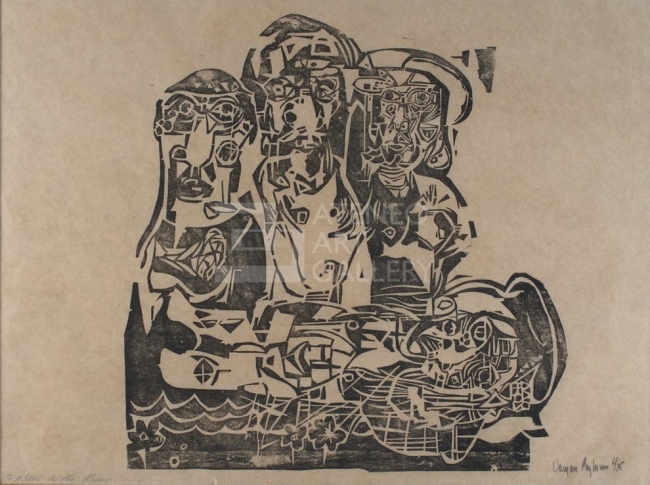
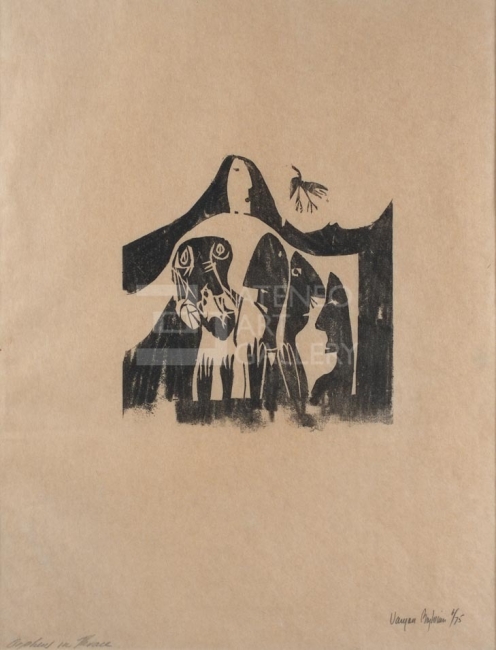
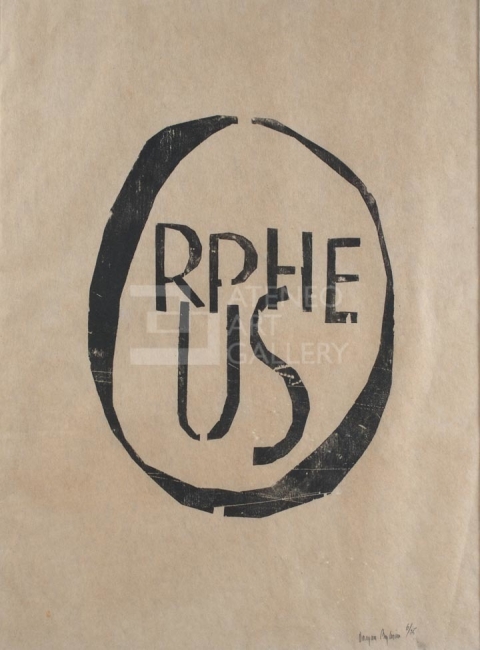
Varujan Boghosian (b. 1926 - d. 2020) was an American artist renowned for challenging conventional perspectives as he invites his viewers to reconsider everyday objects within novel contexts, infusing his creations with universal themes such as love, death, success, and failure, often drawing inspiration from mythology. With his proficiency in drawing, watercolor, and sculpting, he crafts thought-provoking and subtly-humorous works of art.
Born to Armenian immigrant parents, Boghosian’s upbringing in New Britain was shaped by his father’s occupation as a cobbler and laer as a worker for Stanley Tools.
While his early education followed a traditional path, he found inspiration in classes led by poet Constance Carrier, which sparked his interest in literature.
His artistic journey flourished under the guidance of Josef Albers at Yale University from 1956 to 1959. Prior to this, Boghosian had already gained recognition, including a Fulbright Grant for Painting in Italy in 1953. His talent and dedication were further recognized with a residency at the American Academy in Rome in 1966 and a Guggenheim Fellowship in 1985.